Follow Us on Google
By Lukman Olabiyi
Lagos State Government has begun installing modern concrete floating pontoons across key jetties as part of a major safety-driven upgrade of the state’s water transport system.
The Commissioner for Waterfront Infrastructure Development, Hon. Dayo Bush Alebiosu, disclosed the development, emphasizing that the new pontoons are designed to significantly improve stability, reduce boarding risks, and enhance passenger confidence on Lagos waterways.
According to Alebiosu, installations are already underway at jetties in Agboyi Ketu (Kosofe LGA), Ijegun Egba (Amuwo Odofin LGA) and Bayeku/Ikorodu (Ikorodu LGA).
The floating concrete structures—crafted from rigid blocks engineered to withstand wave pressure, serve as steady docking platforms that address one of the most common safety concerns among ferry users: unstable, shaking boarding points.
“These pontoons provide a flat, firm surface that feels almost like stepping onto solid ground. They take away the fear many passengers experience when boarding boats,”Alebiosu said.
The Commissioner added that additional installations are planned for Ebute Ero (Lagos Island), Ijede (Ikorodu), Apa (Badagry), Mile 2 (Amuwo Odofin), Mowo (Ojo LGA), and several other locations.
Beyond stability, the pontoons come with modular features that allow them to double as temporary bridges during seasonal flooding or shoreline erosion—enhancing overall resilience and emergency accessibility.
Other News
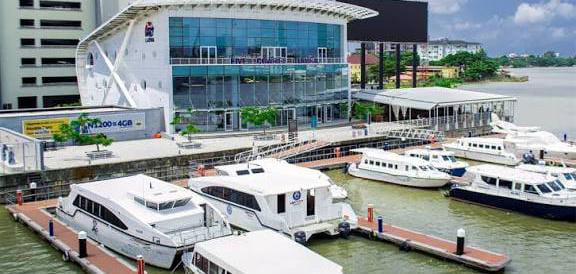
While the Falomo Jetty (Five Cowries Terminal) currently uses a partial two-sided pontoon system, the new jetties will feature six-sided rigid pontoons that allow safer, 360-degree docking and crowd movement.
The pontoon rollout forms part of the €410 million Omi Eko Project, a comprehensive effort to modernize Lagos’ water transport infrastructure under Governor Babajide Sanwo-Olu’s THEMES+ agenda.
The initiative, funded by the French Development Agency (AFD), the European Investment Bank (EIB), and the European Union will introduce 78 high-capacity electric ferries, expand and upgrade 25 terminals, dredge 15 waterways, and deploy a unified Cowry Card ticketing system to integrate ferries with buses and the Lagos Metro.
Other key objectives include reducing road congestion, improving commuter safety, cutting emissions through electric vessels, and strengthening climate resilience along Lagos’ coastline.
Alebiosu said the state remains committed to making water transport not only efficient but safe for all residents.
“This goes beyond infrastructure,” he said. “It is about protecting lives and transforming the way Lagosians move, work and connect. We are building a safe, sustainable and globally competitive water transport system that complements our roads and rail.”