Follow Us on Google
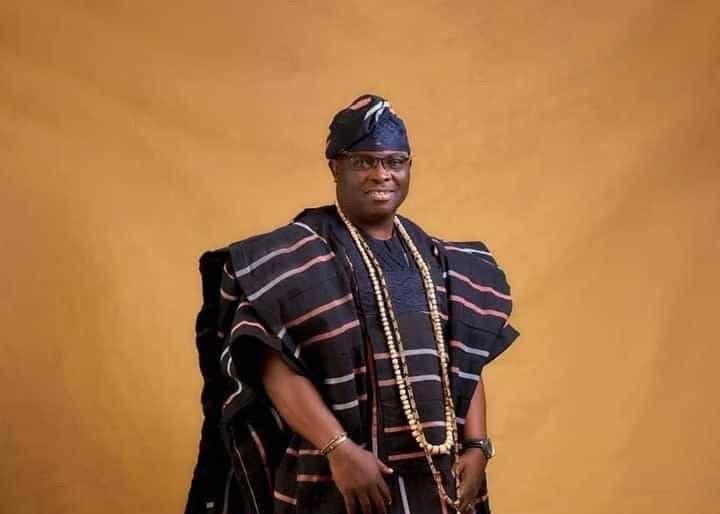
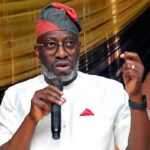
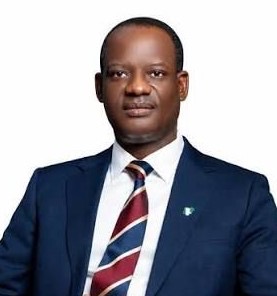
In a nation where leadership is increasingly measured by transparency, competence, and impact, Hon. Ademorin Aliu Kuye stands as a compelling figure whose career bridges tradition and modern governance.
Born into the royal Fusengbuwa ruling house of Ijebu Ode, Ogun State, Kuye represents a rare blend of heritage and hard-earned public service credentials. His journey from grassroots administration to federal legislative oversight illustrates how royal lineage, when matched with integrity and professional depth, can align seamlessly with public trust.
Today, as Chairman of the House of Representatives Committee on Public Assets and a ranking federal lawmaker representing Somolu Federal Constituency of Lagos State, Kuye’s record offers insight into why many regard him as fitting the vision of a new-age Awujale of Ijebu, one grounded not only in tradition, but also in institutional reform, accountability, and progressive leadership.
Born on February 11, 1963, Hon. Kuye’s formative years were shaped by both cultural heritage and academic discipline. He earned his LL.B (Hons) degree from Obafemi Awolowo University, followed by a B.L from the Nigerian Law School. Further strengthening his expertise, he obtained a Master of Laws (LL.M) in Maritime and Commercial Law from Lagos State University.
His early professional career reflected precision and ethical grounding. As a legal practitioner at T.O. Benson & Co., and later as Company Secretary at Vigilant Insurance (now NEM Insurance), Kuye developed a reputation for diligence, compliance, and sound corporate governance. These early experiences laid the foundation for a public life marked by orderliness and strategic thinking.
His transition into politics in the early 2000s was not abrupt but deliberate: an evolution from professional excellence to community leadership. It was a progression that saw him master local governance complexities before ascending to state and federal responsibilities.
Kuye’s political career began in earnest when he served as Executive Secretary (2003–2004) and later Executive Chairman (2004–2007) of Somolu Local Government under Governor Bola Ahmed Tinubu. In these roles, he implemented infrastructure and community-based projects that strengthened service delivery and enhanced local administration.
His administrative acumen earned him appointment as Commissioner for Local Government and Chieftaincy Affairs in Lagos State from 2011 to 2015 under Governor Babatunde Raji Fashola. As Chairman of the State Joint Account Allocation Committee, he supervised equitable allocation of funds to 57 Local Council Development Areas (LCDAs), ensuring accountability and viability of projects at the grassroots.
Beyond fiscal oversight, Kuye played a critical role in mediating chieftaincy disputes and strengthening relationships between traditional institutions and government. Simultaneously serving as Executive Chairman of the Lagos State Boundary Commission, he resolved inter-state and intra-state boundary conflicts-often initiating intervention projects to stabilize affected communities.
These experiences sharpened his ability to manage competing interests, balance tradition with modern governance, and foster unity; qualities that resonate strongly with the expectations of traditional leadership in Ijebu land.
Between 2017 and 2019, Kuye served as Federal Arbitrator and Head of Panel at the Industrial Arbitration Panel under the Federal Ministry of Labour and Productivity. In this capacity, he mediated government-labour disputes, investigated grievances, and advised on industrial relations—helping to prevent disruptions to national productivity.
Since 2015, he has represented Somolu Federal Constituency in the House of Representatives, now serving in his third term in the 10th National Assembly. His legislative influence has been significant.
As Vice Chairman of the House Committee on Rules and Business (2019–2023), he helped shape legislative procedures and priorities. Currently, as Chairman of the House Committee on Public Assets, he has led high-profile oversight efforts aimed at strengthening accountability in the management of national assets.
Notably, he chaired an Ad-hoc Committee investigating the Nigeria Sovereign Investment Authority (NSIA), scrutinizing statutory compliance and investment performance. Under his watch, the committee examined the Authority’s growth from N156 billion in 2013 to over N1 trillion in 2022, while interrogating its domestic infrastructure investments exceeding $500 million.
He has also demanded transparency in the enumeration and valuation of federal assets by agencies such as the Ministry of Finance Incorporated (MOFI), and spearheaded probes into abandoned federal projects across the country, an efforts aimed at reviving infrastructure and curbing waste.
While his federal oversight work commands national attention, Kuye’s constituency initiatives reveal his grassroots commitment. In Somolu and Bariga, he has:
Equipped hundreds of artisans with working tools to boost small-scale enterprises. Distributed thousands of free JAMB/UTME forms to students, expanding access to tertiary education. Constructed over 100 boreholes to provide clean water.Facilitated road infrastructure projects to improve mobility and commerce.
These interventions have directly supported youth empowerment, economic resilience, and educational advancement. Beyond physical projects, Kuye has contributed intellectually to governance discourse. He authored a 328-page book examining the benefits and challenges of local government administration, and has published seminar papers on Nigeria’s Cabotage Act and shipping policy. As a Fellow of the Chartered Institute of Arbitrators, Institute of Chartered Mediators and Conciliators, and Institute of Public Administrators, and a member of both the Nigerian Bar Association and International Bar Association, he brings analytical rigor to legislative work.
Colleagues often describe Kuye as measured, strategic, and discreet. His arbitration background informs a leadership style that favors mediation over confrontation. He is known to personally inspect projects, engage with students, and interact directly with artisans—an approachable posture uncommon in high-level public office.
Integrity remains central to his public persona. From managing local council finances to interrogating billion-naira federal portfolios, he has maintained a consistent focus on due process and accountability.
This ethical orientation, combined with his extensive political and professional networks, positions him as a bridge-builder—capable of aligning tradition with progressive governance.
Ijebu land is renowned for its intellectual depth, commercial acumen, and cultural pride. A new-age Awujale would be expected not only to preserve tradition but also to elevate the region’s economic and intellectual capital in a rapidly changing Nigeria.
Hon. Ademorin Aliu Kuye’s profile aligns with such a vision. His royal Fusengbuwa lineage connects him deeply to Ijebu heritage, while his governance experience equips him with modern administrative tools. His exposure to arbitration, fiscal management, legislative oversight, and infrastructure development provides a framework for strategic regional transformation.
His capacity to harness networks across political, economic, and professional spheres could position Ijebu land as a hub of innovation, investment, and policy influence—drawing from its rich pool of scholars, entrepreneurs, and technocrats.
As Chairman of the House Committee on Public Assets, Kuye continues to champion transparency in national resource management and infrastructure revival. His trajectory suggests sustained contributions to public sector reform and economic policy.
In an era where Nigerians increasingly demand ethical leadership and measurable results, Hon. Ademorin Aliu Kuye embodies a governance model rooted in integrity, competence, and service.
Where royal lineage meets public trust, his journey offers a compelling narrative: that tradition, when guided by accountability and vision, can inspire a new chapter of progress—both for Ijebu land and for Nigeria at large.