Follow Us on Google
From Ndubuisi Orji, Abuja
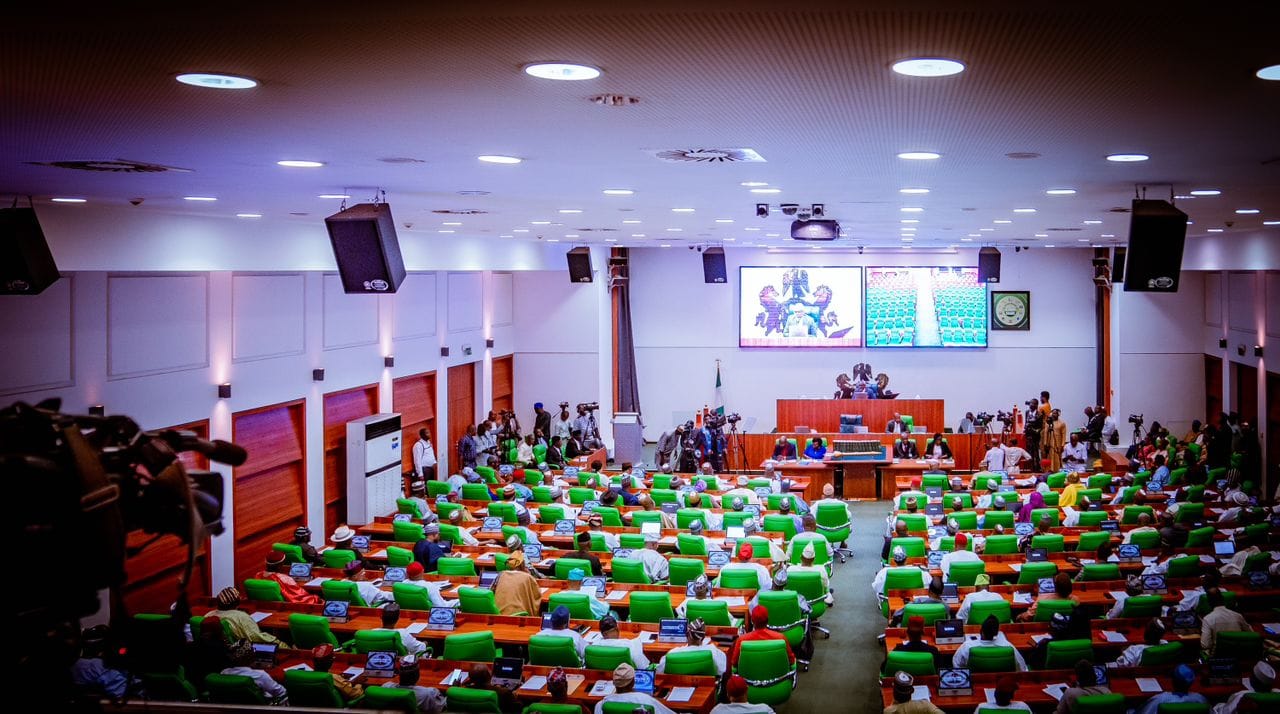
House of Representatives has charged President Bola Tinubu to establish a coordinated inter-agency framework for disrupting ransom financing.
It also mandated the Central Bank of Nigeria (CBN) and the Nigeria Financial Intelligence Unit (NFIU) and other relevant regulatory authorities to conduct a comprehensive audit of suspicious Point of Sales (POS).
The parliament equally charged the apex bank to strengthen real-time monitoring and reporting mechanisms for suspicious financial transactions linked to kidnapping, banditry, terrorism and other organised crimes.
The Green chamber, while calling for strengthened oversight of Bureau de Change operators and other financial intermediaries, demanded sanctions against operators found to be involved in ransom-related activities.
This followed the adoption of a motion by Ademorin Kuye on “Need for Executive Action to Halt the Ransom Cash Economy, Strengthen Financial Intelligence Coordination, and Enforce Compliance with Anti-Money Laundering Frameworks in Nigeria.”
Kuye, in his motion, informed the House that available data indicate that Nigerians paid an estimated N2.23 trillion in ransom between January 2021 and June 2025.
The lawmaker, who stated that the ransom payment is sustaining kidnapping and other organised criminal activities, noted that investigation by the Office of the National Security Adviser (ONSA) revealed that POS operators and other financial channels are used to facilitate ransom payment.
He expressed worry that weak financial intelligence coordination and anti-money laundering enforcement is exposing the country to increased security threats, undermining public confidence.
Other News
“The Money Laundering (Prevention and Prohibition) Act, 2022 and the Terrorism (Prevention and Prohibition) Act, 2022 impose obligations on financial institutions, designated non-financial
businesses, and relevant government agencies to detect, report, and disrupt illicit financial flows, including ransom payments.
“Reports from the Nigeria Financial Intelligence Unit (NFIU), the National Bureau of Statistics’ Crime Experience and Security Perception Survey (CESPS) 2024, and independent security
research organisations indicate that Nigerians paid an estimated N2.23 trillion in ransom between January 2021 and June 2025, thereby sustaining kidnapping and other organised criminal activities.
“Investigations by the National Counter Terrorism Centre (NCTC) under the Office of the National Security Adviser (ONSA) revealed that Point-of-Sale (POS) operators and other financial
channels have been used to facilitate ransom payments and conceal financial trails, thereby frustrating recovery efforts and law enforcement investigations.
“Criminal and terrorist networks continue to exploit formal and informal financial systems,
including Bureau De Change operators, hawala networks, cryptocurrency platforms, livestock transactions, and trade-based money laundering schemes to launder ransom proceeds and reintegrate them into the legitimate economy.”