Follow Us on Google

By Henry Akubuiro
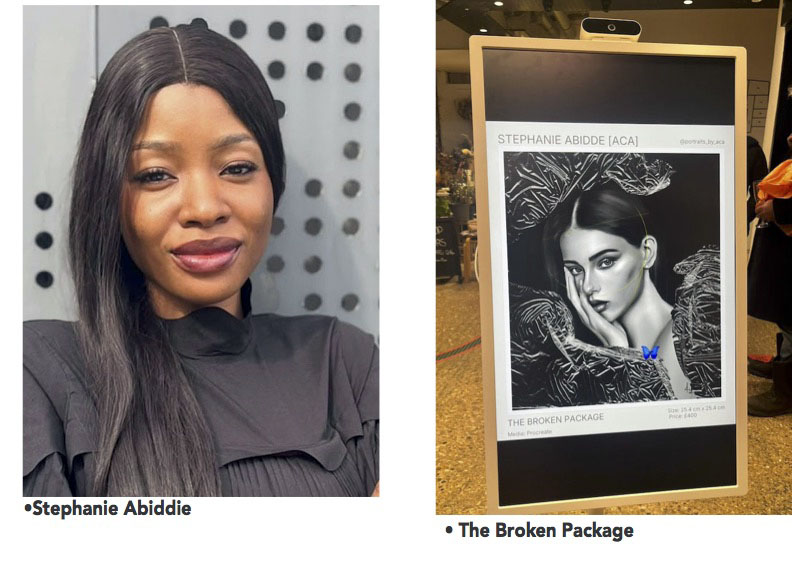
As digital tools become increasingly embedded in contemporary art, questions about authorship, originality and creative control have taken on new urgency. For Stephanie Abidde, professionally known as ACA, the answer is not to reject technology but to ensure that it remains guided by human intention, Daily Sun discovers.
ACA describes her practice as tradigital: an approach that combines traditional artistic principles with the possibilities offered by digital tools. Working primarily with Procreate, she uses technology as a medium through which ideas are developed, refined and communicated. Yet the emotional and conceptual foundations of each piece remain firmly human.
Her work offers a timely argument about the relationship between art and technology: digital innovation can expand creative expression, but it should not displace the identity, judgment or authorship of the artist.
Technology as a tool, not the author
The distinction between using technology and surrendering creative authority to it is central to ACA’s practice. Digital software provides flexibility, allowing her to experiment with colour, form, texture and composition. It also gives her the freedom to revise ideas without losing the spontaneity and emotional honesty that first inspired them.
However, the presence of sophisticated tools does not remove the artist from the creative process. Every visual decision still requires judgment. The artist determines what the work is trying to communicate, which emotions it should hold and how viewers should encounter it.
For ACA, this human responsibility is particularly important because her work is rooted in personal and social experience. Technology may help construct the images, but it cannot independently understand the emotional history behind it. It does not carry the artist’s memories, cultural awareness or lived understanding of expectation and identity.
This is where her practice challenges the belief that digital art is somehow less personal or less intentional than work created through physical media. The screen may replace the canvas, and the stylus may replace the brush, but the essential creative questions remain unchanged: What is the artist trying to say? Why does the work need to exist? What should the viewer feel?
The emotional weight of *The Package*
These questions are explored in ACA’s six-piece collection, *The Package*. The collection examines the often-invisible weight of social, cultural and personal expectations and considers how these forces shape identity, self-perception and emotional experience.
The idea of a “package” operates on several levels. It can refer to what a person is expected to become, the identity they are encouraged to present or the qualities others assume they should possess. A package may appear complete and carefully arranged from the outside while concealing pressure, fragility or conflict within.
Through this metaphor, ACA draws attention to the distance that can exist between public appearance and private experience. The work asks what happens when individuals are continually shaped by expectations that do not fully reflect who they are.
Rather than presenting identity as fixed, *The Package* approaches it as something negotiated. Its figures and compositions suggest vulnerability, introspection and transformation. The collection is not simply concerned with the burden of expectations; it also considers the possibility of recognising, questioning and eventually redefining them.
The use of digital media strengthens this exploration. Layers can be added, concealed, altered or exposed, mirroring the way identity itself is continually constructed and reconsidered. In ACA’s hands, the technical process becomes connected to the emotional subject of the work.
From digital creation to physical exhibition
ACA’s practice moved from the digital environment into a public exhibition setting through her participation in *Blossom: Chronicles of Emergence* in London. The exhibition provided an opportunity for her work to be encountered beyond the screen and placed it within a broader conversation about growth, identity and creative development.
This transition is significant. Digital art is sometimes experienced only through personal devices or social-media platforms, where images are consumed quickly and viewed among competing content. Exhibition creates a different relationship. It asks the audience to pause, observe and engage with the work as an artistic object rather than another passing image.
The presentation of ACA’s work in London also reflects the expanding place of digitally produced art within contemporary visual culture. Digital methods are no longer separate from serious artistic practice; they are increasingly part of how artists document experience, examine identity and communicate across geographical boundaries.
For ACA, exhibiting the work publicly creates a meeting point between the personal origins of a piece and the interpretations brought to it by viewers. Although the artwork begins with her own ideas, its meaning expands when an audience recognises something of its own experiences within it.
Extending the conversation to younger audiences
ACA has also contributed to discussions about creativity and technology through Tech She Can’s WEX Tech Week, where she participated as a Visual Artist Role Model.
During the programme, she introduced young people to the responsibilities and career pathway of a visual artist, explained how technology supports her practice and answered questions in a live virtual session. The wider programme reached 1,801 young people across 37 schools in 11 UK regions.
Her participation extended the ideas within her artistic practice into an educational setting. By speaking openly about the relationship between creativity and technology, she helped demonstrate that digital tools can support meaningful artistic careers while remaining subject to human direction.
This is particularly relevant for young people growing up in an environment where technology is often presented as both the solution to creative challenges and a possible replacement for creative labour. ACA’s experience offers a more balanced position: artists do not have to reject innovation, but they must understand their own voice well enough to avoid being defined by the tools they use
A practice shaped by creativity and analysis
Alongside her visual-art practice, ACA holds an MSc in International Business with Data Analytics from Ulster University. Although art and data analysis may initially appear to occupy different worlds, both require close observation, interpretation and the ability to identify meaning within complex information.
This combination contributes to the reflective character of her practice. Her work is emotionally driven, but it is also concerned with systems: the systems of expectation that shape identity, the technological systems that influence creative production and the social structures through which art is encountered.
Rather than separating creativity from analysis, ACA’s practice suggests that each can deepen the other. Analytical thinking can sharpen an artist’s understanding of context, while artistic thinking can preserve sensitivity, ambiguity and human experience within increasingly technological environments.
Protecting human authorship
The future of digital art will inevitably involve more advanced tools. The more important question is not whether artists should use them, but how they can do so without losing the qualities that make their work personally and culturally meaningful.
ACA’s response is grounded in creative responsibility. Technology can accelerate a process, expand a visual language or make experimentation more accessible. What it cannot provide on its own is the lived experience from which meaningful art emerges.
Her work, therefore, resists the idea that technological progress must result in reduced human involvement. Instead, it presents technology as most valuable when it supports rather than dominates the creative process.
Through *The Package*, her London exhibition and her engagement with emerging creative audiences, ACA is developing a practice that treats digital innovation and human expression as collaborators. The power of the work does not come from the software used to produce it. It comes from the artist’s ability to transform experience into visual meaning.
In an age increasingly fascinated by what technology can create, ACA’s work returns attention to a more fundamental question: what does the artist need to say?
Her answer is clear. Technology may extend the artist’s reach, but creative power should remain human-led, whilst technology remains your creative assistant.