Follow Us on Google

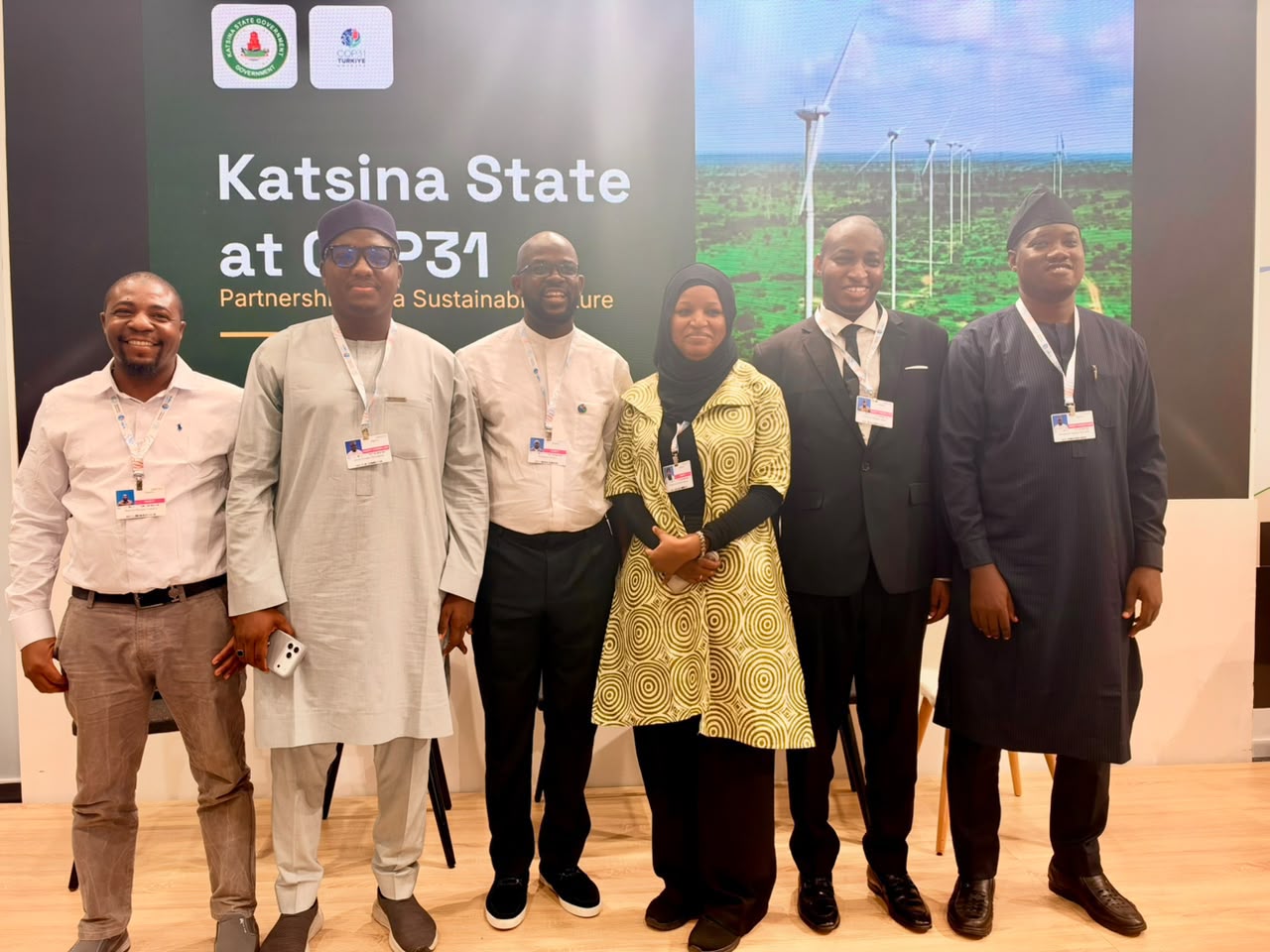
Katsina State has emerged as the best-performing state in Nigeria in climate governance and implementation in 2026, rising from 33rd position in 2023 to second place in 2025 before clinching the top spot.
The Executive Director of the Katsina State Development Board, Mustapha Shehu, disclosed this while highlighting the state’s achievements in climate change mitigation, renewable energy development and environmental sustainability.
Shehu attributed the achievement to the state government’s commitment to translating climate change policies into practical actions capable of delivering tangible benefits to the people.
He explained that Katsina had established a Climate Change Secretariat under the supervision of a Special Adviser, with a dedicated budget line to support its activities and ensure that climate considerations are integrated into government policies and decisions.
According to him, the Special Adviser is also a member of the State Executive Council, giving the office the opportunity to contribute to government decisions and ensure that development programmes comply with climate change objectives.
Highlighting the state’s achievements over the past two and a half years, Shehu said the government had installed more than 100 kilometres of solar-powered streetlights across the state.
He added that the government had converted about 80 per cent of the energy supply at the Government House to renewable energy, with an installed capacity of approximately 1.2 megawatts.
The state, he further disclosed, was constructing a 20-megawatt solar and wind energy farm expected to address more than 60 per cent of Katsina’s energy demand upon completion.
Shehu also revealed that government ministries, departments and agencies had largely transitioned to solar energy, with about 80 per cent of government offices now operating on clean energy.
He said the transition had not only improved the efficiency of government operations but had also significantly reduced the cost of fuelling, servicing and maintaining heavy-duty generators.
Beyond the financial savings and environmental benefits, Shehu noted that the availability of reliable electricity had improved productivity in the civil service, encouraging workers to report to their offices regularly and remain at work throughout official hours.
He explained that the improvements had given the government a clearer understanding of how to deploy resources effectively towards strengthening governance and service delivery.
On the state’s national recognition, Shehu said the 2026 ranking was based on an assessment by the National Council on Climate Change and the Federal Ministry of Environment, which recognised Katsina for its performance in climate governance and implementation.
He noted that the state’s progress demonstrated the importance of moving beyond policy formulation to concrete actions that directly improve people’s lives.
Speaking on the message he was taking to the climate conference, Shehu called on governments and stakeholders to shift from planning to implementation, stressing that the global climate crisis required urgent and measurable interventions.
He expressed the hope that COP32, expected to take place in Addis Ababa, Ethiopia, would place greater emphasis on implementation, with at least 70 per cent of efforts directed towards concrete climate actions rather than merely developing policies.
According to him, Katsina’s experience shows that governments do not necessarily need to make loud promises but should focus on developing sound policies, implementing them and reporting measurable results.
“The best way to address the global climate crisis is not only through policy formulation but through quick action that delivers results for the people,” he said.
Shehu also emphasised the need for greater involvement of young people, women and other critical stakeholders in climate change initiatives, noting that their participation was essential to achieving sustainable environmental solutions.
He urged governments at all levels to adopt practical, locally driven climate solutions while drawing from global best practices to address the growing challenges of climate change.