Follow Us on Google
By David Emmanuel
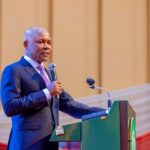
When Governor Uba Sani stepped into the hallowed chamber of the Kaduna State House of Assembly to present the 2026 Appropriation Bill, he did more than fulfil a constitutional requirement. He unveiled what he described as a people-centred financial blueprint, one designed to consolidate peace, accelerate development and lay firm foundations for inclusive prosperity across Kaduna State.
With a total proposed expenditure of N985.9 billion, the 2026 budget stands as one of the most ambitious in the state’s history. More striking is its structure: N699.7 billion, representing 71 per cent, is dedicated to capital expenditure, while N286.2 billion, or 29 per cent, is allocated to recurrent spending. This clear tilt toward capital investment signals an administration determined to build enduring and impactful legacy.
Governor Sani framed the budget as “a solemn civic engagement,” anchored on transparency, equity and the welfare of citizens. It is also the product of one of the widest consultation processes Kaduna has ever witnessed, drawing inputs from traditional rulers, civil society organisations, women and youth groups, academia, business leaders, farmers, artisans, persons with disabilities and widows across all local governments. In many ways, the budget mirrors the voices and priorities of the people it seeks to serve.
Education and infrastructure emerge as the twin pillars of the 2026 budget, each receiving 25 per cent of total allocations. Together, they account for half of the entire spending plan, underscoring the Governor’s belief that human capital and physical connectivity are inseparable drivers of sustainable development.
In education, Governor Sani has continued a reform agenda that prioritises access, affordability and quality. Building on the reopening of 535 schools and the return of over 300,000 out-of-school children to classrooms in 2025, the new budget sustains investments in classroom construction, teacher training, learning facilities and vocational education. The administration’s decision to slash tuition fees in state-owned tertiary institutions by 40 per cent remains a defining intervention, easing the burden on families and expanding access to higher education.
Infrastructure spending, meanwhile, reflects an aggressive push to unlock economic corridors and bridge long-standing development gaps. The state is currently executing 140 road projects spanning 1,335 kilometres, with 64 already completed. These roads are not just concrete and asphalt; they are lifelines reconnecting rural communities, easing movement of goods and people, and stimulating local commerce.
Transport reforms feature prominently. Kaduna is on course to launch Northern Nigeria’s first Bus Rapid Transit (KBRT) system, powered by compressed natural gas, CNG, complete with digital ticketing and a 24-kilometre dedicated corridor. The nearly completed Kakuri Interstate Bus Terminal is expected to sanitise intercity travel, while subsidised transport schemes have already saved residents over N500 million through free and discounted rides. The Kaduna Light Rail project, with phased corridors linking key urban and industrial hubs, further reflects long-term thinking about urban mobility.
Health commands 15 per cent of the 2026 budget, a strong statement of intent in a sector often strained by infrastructure gaps and workforce challenges. Governor Sani’s administration has upgraded all 255 Primary Healthcare Centres to Level 2 status, renovated 15 General Hospitals and completed five others, while commissioning the 300-bed Bola Ahmed Tinubu Specialist Hospital as a flagship facility.
Beyond bricks and mortar, the government has implemented CONMESS and CONHESS for health workers, strengthened emergency medical services, built an oxygen plant and improved the state medical warehouse. Notably, N1 billion has been earmarked to insure vulnerable households, reinforcing the administration’s commitment to universal health coverage and social protection.
With 11 per cent of the budget allocated to agriculture and food security, Governor Sani is doubling down on a sector he sees as both an economic engine and a peace-building tool. The recovery of over 500,000 hectares of abandoned farmlands marks a turning point for rural revitalisation, complemented by feeder roads, markets and extension services.
Agricultural investment has surged dramatically, from N1.4 billion in 2023 to N74.2 billion in 2025, enabling the distribution of more than 900 trucks of free fertiliser, alongside support for irrigation, mechanisation, livestock vaccination and seed improvement. The African Development Bank–supported $510 million Special Agro-Industrial Processing Zone positions Kaduna as an emerging agro-industrial hub, while the African Quality Assurance Centre is set to help farmers access regional and global export markets.
Security receives 6 per cent of the 2026 budget, reflecting the administration’s recognition that development cannot thrive without peace. Governor Sani acknowledged the evolving threats facing Kaduna, from banditry to kidnappings and communal conflicts, but highlighted improved collaboration with federal security agencies and the success of the Kaduna Peace Model.
Communities once fractured by violence are gradually reconciling, farmlands are reopening, and schools previously shut due to insecurity are back in full operation. The budget seeks to consolidate these gains, blending security spending with social interventions that address root causes of conflict.
Social development accounts for 4 per cent of the budget, targeting vulnerable populations through social protection, skills acquisition and community development initiatives. Governance and administration receive 5 per cent, reflecting efforts to maintain efficient public service delivery without crowding out developmental spending.
A standout feature of the budget is the ward-based development model: each of Kaduna’s 255 wards will receive N100 million for community-identified projects. Described by the Governor as Nigeria’s largest grassroots budgeting initiative, it decentralises development and empowers communities to define their priorities.
In his response, Speaker of the Kaduna State House of Assembly, Hon. Yusuf Liman, praised the budget as ambitious and comprehensive, noting its strong alignment with the state’s development priorities. He commended the Governor for involving legislators directly in constituency projects, an unprecedented move that strengthens separation of powers and deepens collaboration between the Executive and Legislature.
Governor Sani’s 2026 budget is, at its core, a statement of values: that development must be people-driven, capital-intensive and future-focused; that peace and prosperity are mutually reinforcing; and that inclusive growth begins from the ward level upward. As lawmakers consider the proposal, the document stands as both a financial plan and a moral contract, one that seeks to ensure progress in every home, every ward and every local government across Kaduna State.
•Emmanuel writes from Zaria, Kaduna State