Follow Us on Google

From Noah Ebije, Kaduna
In Nigerian politics, where actors often compete for attention through press statements, public exchanges, media appearances and social media battles, Kaduna State Governor, Senator Uba Sani, appears to be pursuing a different approach to leadership. He is allowing government activities, policy decisions and development projects to occupy the centre of public discourse.
Governor Sani has said on several occasions: “Good governance is not about carrying and pressing laptops, but the practical delivery of the dividends of democracy to the people, with fewer speeches. That is what the people want, not big grammar and bogus permutations on laptops.”
Since assuming office in May 2023, Sani has projected an administration that places considerable emphasis on infrastructure, human capital development, rural transformation, healthcare, education, agriculture and security. His approach has also featured relatively restrained public exchanges with political opponents, creating the impression of a governor more inclined to respond to criticism through policy implementation than through prolonged verbal confrontation.
As the 2027 general elections approach, this style of governance is becoming an important part of the political conversation in Kaduna State, where questions about performance, inclusion, public accountability and the future direction of the state are likely to feature prominently.
For the governor’s supporters, his approach reflects a preference for measurable development over political theatrics. For his critics, however, the real test is whether the projects and programmes being announced will translate into sustained improvements in the daily lives of residents across the state’s 23 local government areas. Whatever the interpretation, one thing is clear: the administration’s development agenda has become a major feature of the political narrative in Kaduna State ahead of 2027.
One defining feature of Sani’s public leadership is the emphasis on policy announcements, project implementation and engagement with communities rather than constant exchanges with political opponents. In a political environment where a single statement can trigger days of controversy, the governor’s approach suggests a preference for keeping attention on the business of government.
This does not mean that his administration has remained entirely outside political debates. Rather, the governor’s public interventions have often been accompanied by discussions of infrastructure, social services, economic opportunities and the responsibilities of government.
The strategy has implications for political communication. When a government continues to announce projects, commission facilities and introduce programmes, opposition parties must respond not only to the governor’s political arguments but also to the substance of his policies. For the opposition, the challenge is therefore twofold: scrutinising the government’s performance while presenting credible alternatives that address the same concerns affecting ordinary residents.
In this sense, the phrase “keeping the opposition in the dark” is best understood as a description of the political perception surrounding Sani’s restrained communication style, rather than proof that opposition parties have been unable to challenge his administration. The ultimate question is whether the government’s actions, rather than its communication strategy alone, will sustain public confidence.
Beyond the policy programmes, the governor’s style of political communication is an interesting subject for analysis. Nigerian politics frequently rewards visibility. Politicians issue statements to counter criticism, respond to opponents, defend their records and shape public opinion.
Social media has intensified this dynamic, often encouraging rapid reactions to political controversies. Against this background, a leader who does not respond publicly to every criticism may create a different kind of political environment. Rather than allowing each controversy to dictate the administration’s agenda, such a leader can seek to keep attention on planned activities, policy implementation and government priorities. For Sani, the perception that he speaks less and concentrates more on governance forms part of the political narrative around his leadership.
But restraint should not be confused with an absence of accountability. Public communication remains necessary in a democracy, particularly when residents seek explanations about public expenditure, project delays, security challenges or the results of government policies. The important distinction is between unnecessary political exchanges and substantive engagement with legitimate public concerns.
A governor can avoid verbal confrontations with political opponents while still ensuring that citizens, journalists, civil society organisations and the legislature have access to information about government decisions. Indeed, the strongest form of an action-oriented leadership style would combine project delivery with transparent reporting, measurable targets and regular explanations of public policy. That would make the government’s record easier to assess and leave less room for speculation about its intentions.
With the 2027 general elections approaching, the political significance of the administration’s activities is becoming increasingly difficult to separate from the debate about its future. The governor’s supporters can point to the government’s reported investments in roads, education, healthcare, agriculture and public infrastructure as evidence of an administration seeking to establish a development-focused identity.
Opposition parties, meanwhile, have an important role in examining those claims, identifying gaps in implementation and presenting alternative policies. Their task is not simply to criticise the governor’s communication style or challenge the government’s public relations. It is to determine whether the administration’s programmes are delivering the outcomes promised, whether public resources are being used efficiently and whether all communities are benefiting fairly.
A serious opposition can assess project costs, procurement procedures, completion rates, service quality and the distribution of development expenditure. It can also ask whether rural communities are receiving adequate attention, whether public services have improved and whether security challenges are being addressed effectively. A political analyst said such scrutiny is an essential component of democratic governance.
The emergence of political competition ahead of 2027 should therefore encourage a closer examination of the administration’s record, not replace policy debate with personal exchanges.
For the governor, the challenge is equally clear: to demonstrate that the projects and programmes being highlighted can withstand scrutiny and produce lasting improvements. The central question surrounding Sani’s leadership is not whether he can avoid political confrontations. It is whether his administration can sustain implementation, demonstrate results and respond effectively to the concerns of residents.
Road construction, classroom rehabilitation, hospital development, agricultural support and investments in sports all offer opportunities to improve living conditions. Their ultimate significance, however, depends on completion, accessibility, quality, affordability and long-term sustainability.
Similarly, a restrained communication style may help keep the government’s agenda in focus, but its effectiveness depends on whether it is accompanied by openness and responsiveness.
In a democracy, political opponents are not the only audience for government actions. Citizens are entitled to know what is being done, how public money is being spent, which projects have been completed and what remains outstanding. The administration’s reported activities across multiple sectors provide material for assessing its development priorities. Independent verification, transparent budget information and evidence of outcomes will be necessary to establish the extent of their impact.
As Kaduna State moves towards another electoral cycle, Governor Sani’s leadership style is likely to remain part of the conversation about governance, political communication and development. His administration has placed considerable emphasis on infrastructure, rural transformation, education, healthcare, agriculture, public utilities and sports. Government-reported figures suggest a broad programme of interventions across the state’s 23 local government areas, although the extent of implementation and the resulting benefits require continuing scrutiny.
The governor’s preference, as perceived by his supporters, for allowing government activities to take precedence over verbal political exchanges has also become part of his public image. Whether this approach ultimately strengthens his administration’s standing is a question that voters, rather than political rhetoric, will answer through their assessment of the record.
For now, the more important measure is whether the development agenda translates into safer communities, better schools, accessible healthcare, improved rural roads, stronger agricultural livelihoods and more reliable public services. In the final analysis, the enduring test of leadership is neither the volume of political statements nor the number of exchanges with opponents, but the difference it makes to the lives of the people.
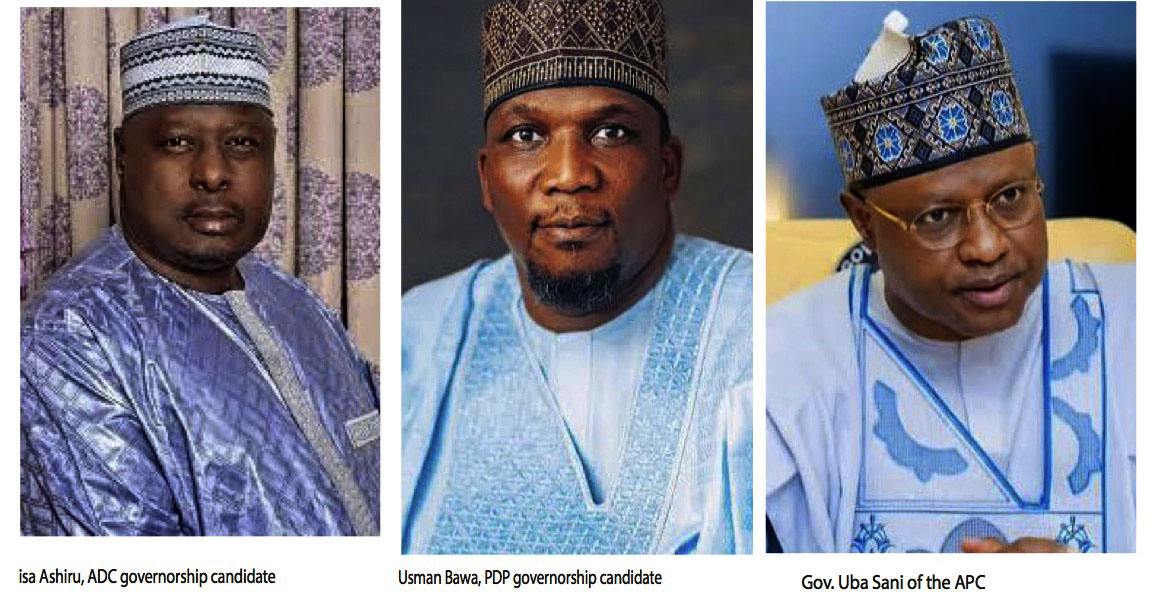
Meanwhile, despite the perception that Governor Sani prefers to let government activities speak louder than political exchanges, opposition figures in Kaduna State have continued to challenge his administration on governance, education funding, political freedoms and the direction of the state ahead of the 2027 general elections.
One of the most recent criticisms came from the 2027 Peoples Democratic Party (PDP) governorship candidate, Usman Shehu Bawa, who, in September 2026, accused the administration of prioritising foreign travel and publicity over the resolution of the industrial dispute at Kaduna State University. Bawa questioned the government’s expenditure priorities and argued that the continuing disagreement with university lecturers raised fundamental questions about its commitment to tertiary education. His claims, based on figures he said were drawn from government budget implementation reports, remain subject to independent verification.
The African Democratic Congress (ADC) has also accused the authorities of applying political pressure against opposition figures, including former governor Nasir El-Rufai. In April 2026, the party called for greater protection of due process, political freedoms and the rights of opposition politicians.
These criticisms show that the governor’s development agenda has not eliminated political disagreement. Opposition parties are contesting the administration’s record from different angles, questioning not only the delivery of public projects but also expenditure priorities and the environment for political competition.
The opposition’s challenge, however, extends beyond issuing statements. In July 2025, opposition stakeholders drawn from the ADC, PDP, Labour Party and former members of the APC announced plans to unite against the ruling party in 2027, pledging to pursue a more people-centred development agenda.
For Sani, the continued criticism presents an opportunity to demonstrate the effectiveness of his policies through transparent budget reporting, verifiable project completion records and measurable improvements in education, healthcare, security and rural development. For the opposition, the task is to substantiate its allegations, distinguish documented shortcomings from political rhetoric and offer credible alternatives to the administration’s programmes.
The emerging contest in Kaduna is therefore not simply a question of whether the governor speaks less than his opponents. It is increasingly a debate over which political actors can best demonstrate accountability, effective governance and tangible benefits for the people. As the 2027 elections approach, the strength of each side’s argument will depend increasingly on the evidence it can present to the electorate.