Follow Us on Google
From Sola Ojo, Abuja
Kaduna State Government, UNICEF Kaduna State Government, UNICEF Kaduna State Government, UNICEF Kaduna State Government, UNICEF and Civil Society-Scaling Up Nutrition in Nigeria (CS-SUNN) have stepped up efforts to tackle malnutrition by mobilising spouses of chairmen of the 23 Local Government Areas and other stakeholders to drive nutrition interventions at the grassroots.
The state government said effective nutrition programmes must go beyond policies and funding to reach homes and communities where decisions on food, childcare, breastfeeding and maternal health are made.
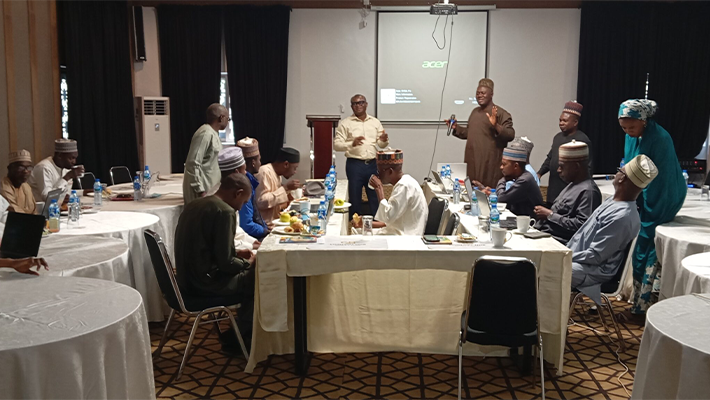
Commissioner for Planning and Budget, Mukhtar Ahmed Monrovia, stated this at a meeting with the wife of the Governor, Hajiya Hafsat Uba Sani, and spouses of the 23 council chairmen on advocacy and resource mobilisation for nutrition interventions in the state.
Monrovia said the government’s commitment to nutrition was informed by the far-reaching impact of the food children eat, care given to pregnant women and breastfeeding mothers, and access to appropriate nutrition services.
“The food a child receives, the care provided to a pregnant woman, the support given to a breastfeeding mother, and the availability of appropriate nutrition services at the community level all have consequences that extend far beyond the household,” he said.
According to him, nutrition outcomes affect survival, learning, productivity and ultimately the economic and social development of communities.
He stressed that the grassroots remained critical to the success of nutrition programmes because primary healthcare services were delivered there while families also made most decisions about food and childcare within their communities.
Other News
Nutrition Specialist, UNICEF Kaduna Field Office, Mrs Chinwe Ezeife, who represented the UNICEF Chief, Kaduna Field Office, Dr Gerida Birukila, said UNICEF was committed to supporting the state to improve access to quality nutrition services for children, adolescents and women, particularly in vulnerable communities.
“Because UNICEF is committed to working in the most vulnerable communities to ensure equitable access to nutrition services, this meeting is very apt,” she said.
CS-SUNN Coordinator in Kaduna State, Ms Celestina Ayim, called for a broader understanding of resource mobilisation, saying it should not be restricted to funding.
“Resource mobilisation has to do with deliberate efforts to identify, secure, coordinate and manage available resources. It is not necessarily about funds alone,” she said.
Ayim identified human resources, skills, commodities, equipment, information, partnerships, time, infrastructure and services as critical resources needed to improve nutrition outcomes.
She urged stakeholders to place greater emphasis on preventing malnutrition through maternal nutrition, breastfeeding promotion, growth monitoring and screening, community mobilisation, provision of nutrition commodities, capacity building and behaviour-change communication.
“Times are changing, and we are now moving from a focus on cure and treatment to prevention. The messages we want to hear more of should be centred on prevention, not just cure,” she said.