Follow Us on Google
The Kaduna State Government says construction of the Kaduna Bus Rapid Transit (KBRT) project is expected to commence soon, with the Kawo terminal among the first major facilities to be constructed.
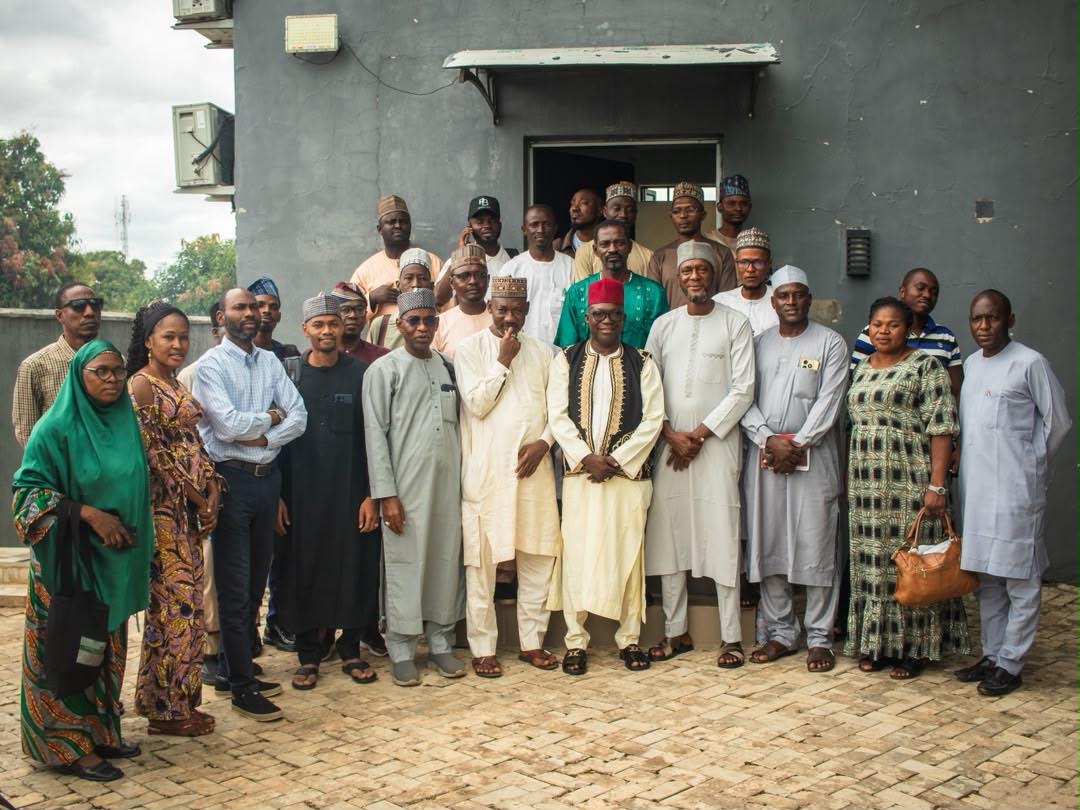
Officials disclosed this on Tuesday, 29 September 2026, at a media consultation and roundtable discussion organised by the Kaduna State Transport Regulatory Authority (KADSTRA) for journalists to explain the progress, design and expected benefits of the project.
Speaking at the event, the Director-General of KADSTRA, Engr Inuwa Ibrahim, described the KBRT as a landmark transportation project and called on journalists to play an active role in educating the public about the initiative.
He said the project would be “one of the first of its kind in the entire history of Northern Nigeria and the second after Lagos”.
According to him, effective media engagement was necessary to ensure that residents understood the difference between the existing state-supported CNG buses and the proposed BRT system.
“Most people perceive these CNG buses as the BRT, but they are not,” Ibrahim said.
He explained that the 100 CNG buses currently operating in Kaduna were introduced by the state government as part of measures to cushion the effects of fuel subsidy removal, while the BRT would constitute a separate, dedicated mass-transit system.
“It is more than one year since the state government started this,” he said, referring to the CNG bus programme.
The KADSTRA boss urged journalists to “follow us bumper-to-bumper” throughout the planning and implementation of the BRT project, stressing that the initiative was important to the state government.
“My only advice to media outlets is, please continue to handle your work with professionalism, expertise and transparency,” he said.
In a presentation on the importance of BRT to Kaduna, Engr Mahmud Musa, Deputy Team Lead, Project Management and Operations Design, said an efficient urban transportation system required more than simply constructing roads.
According to him, three major components were necessary: adequate transport infrastructure, effective traffic management and an efficient public transport system.
“You need to have adequate infrastructure – roads, network, flyovers, underpasses and other transport infrastructure,” Musa said.
He added that traffic management included “road signs, road markings, traffic signals, enforcement of traffic rules and regulations”.
Musa said the three components had to work together, warning that improving road infrastructure alone would not necessarily eliminate congestion.
“It is just like a drug – a doctor gives you three medicines and you take one – you cannot get well,” he said. “So you have to have these three in proportion.”
Using examples from Abuja, Kaduna and Mumbai, Musa argued that increasing road capacity without strengthening public transportation and traffic management could still result in severe congestion.
He said studies conducted with support from the French Development Agency, AFD, examined Kaduna’s transport needs before BRT was selected as the most suitable option.
“Feasibility studies were conducted… and they came up with a proposal that a bus rapid transit system is suitable for Kaduna city,” Musa said.
He explained that the studies involved demand analysis, examination of the existing road network and traffic counts to determine the most appropriate transport system for the city.
According to Musa, AFD subsequently provided a facility of about €110 million to support the project, although the process of securing the financing took about two years because of the various federal approval procedures required for international credit facilities.
Following approval of the facility in 2023, he said, preparations began for implementation, including the establishment of a Project Management Unit and the engagement of consultants for the project’s operational and engineering components.
Also speaking, Idris Lawal, Project Coordinator, Engineering Design and Procurement, said the proposed BRT corridor would have 27 stations.
“There are 20 stations between Kawo and Command Junction, and the remaining seven between Command Junction and Refinery Junction,” Lawal said.
Other News
He explained that the system had been subjected to detailed environmental and social studies to identify potential impacts on communities along the corridor.
“We are not just assuming. We are going to base this on effective study which has been carried out,” he said.
Lawal said a Resettlement Action Plan had also been developed to identify people who could be affected by the project, adding that consultations with relevant residents and authorities were continuing.
“We have done a meticulous identification of those people that will be impacted by this project,” he said.
“Once that is done, as I speak to you, we are having continuous engagement with the relevant people and authorities to ensure that people are properly settled without leaving any negative impact.”
Lawal disclosed that the project’s major studies had been completed and that the detailed design was at an advanced stage.
“At the moment, we have completed all our studies. The next step is to go into detailed design, which, of course, we are rounding up in a month’s time,” he said.
He said construction would follow after completion of the design and approval of the project budget.
The project team is also preparing for the relocation of utilities along the corridor, while alternative roads are being rehabilitated to minimise disruption to traffic during construction.
According to Lawal, about 40 kilometres of alternative roads are being rehabilitated to provide motorists with alternative routes once construction begins.
“When construction work starts, there will be alternative routes that people will use while construction is ongoing, so that it will not cause a negative impact on the flow of traffic,” he said.
One of the immediate milestones, Lawal disclosed, is the planned construction of Terminal 1 at Kawo.
“Very soon, the construction work of Terminal 1 is going to start,” he said.
According to him, the commencement of work at the Kawo terminal would provide a tangible demonstration that the long-planned BRT project was moving into its construction phase.
“That is going to prove to us that the BRT project in Kaduna is not fiction, but a reality before us,” Lawal said.
He expressed confidence that construction of the terminal would be active before the end of the year.
The project will also include a depot on about 60,000 square metres of land in Kakuri, where buses will be kept and operational facilities, including a control centre and administrative buildings, will be located.
Lawal said the project would also involve the construction of approximately 17 kilometres of dedicated BRT road and 20 stations along that section of the corridor.
He added that the existing bridge across the Kaduna River would be expanded to accommodate the full BRT corridor.
“The client has graciously approved that the bridge be redesigned and expanded,” Lawal said, adding that detailed designs for the expansion had already been completed.
He said the overall objective was to develop a modern system capable of serving as a model beyond Kaduna.
“The client wants Kaduna BRT to be an example for Nigeria and, of course, the entire West Africa, not just the northern part of Nigeria,” Lawal said.
The media consultation ended with calls for continued engagement between the project team and journalists to ensure that residents receive accurate information about the project’s implementation, expected disruptions, benefits and operational requirements.