Follow Us on Google
From Okwe Obi, Abuja
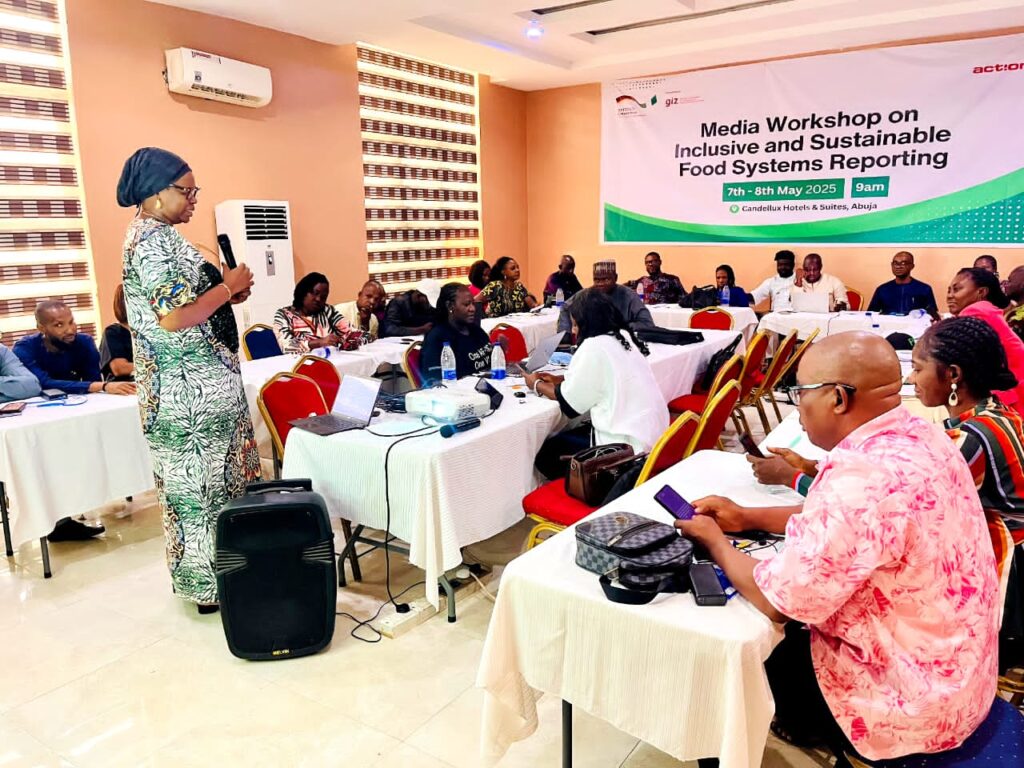
Worried by the information drought on inclusive sustainable food systems reporting in the country, ActionAid Nigeria recently strengthened the capacity of over 30 journalists across print and electronic platforms on agricultural reporting.
The two-day capacity building was supported by the Deutsche Gesellschaft für Internationale Zusammenarbeit (GIZ), a German Corporation for International Cooperation.
Deputy Director of ActionAid Nigeria, Suwaiba Dankabo, said the training was expedient due to the dwindling fortune in the country’s food system.
Dankabo explained that an inclusive food system is a scheme designed to ensure that Nigerians across social standings have access to food production.
She noted that the skills and knowledge gleaned from the training would help journalists amplify the voices of farmers, highlight their struggles and triumphs, and raise public discourse.
She said: “A truly inclusive food system is one in which smallholder farmers, women farmers, youth, including persons with disabilities, and the most vulnerable not only have a voice, but also a stake.”
She highlighted some of the problems faced by farmers, which include climate change, economic shocks, endless crises between herders and farmers, lack of accurate data for farmers, the Land Use Act, and rising inequality.
She tasked journalists to champion the cause of food sufficiency through accurate reportage on inclusive sustainable food systems, stating that “agricultural and climate reporting in Nigeria remains under-resourced and under-represented in mainstream media.”
She pointed out that through the initiative, “we aim to empower local farmers, enabling them to actively participate in decision-making and policy processes that impact their lives and their livelihoods.
“It is about ensuring that no one is excluded from the table, whether in policy rooms or in the pages of our newspapers.
“This workshop also comes at a critical moment. Nigeria is advancing its national agricultural investment plan, aligning with continental frameworks like the Comprehensive Africa Agricultural Development Program, and the role of media in tracking progress, highlighting gaps, and amplifying the voices of local communities is very, very critical.”
A Food System Specialist, Azubike Nwokoye, charged journalists to monitor budgetary allocations and implementation in the agricultural sector among the relevant Ministries, Departments, and Agencies (MDAs) saddled with the implementation of programmes in the agricultural space.
Nwokoye observed that without the watchdog role of journalists, the actualisation of inclusive and sustainable food systems in the country would remain a pipe dream.
On her part, Ebere Agozie, Founder of Journalists Go Organic, said it was imperative for media professionals to understand and highlight women’s contributions to food and nutrition security.
Agozie, who spoke on “Gender and Food Systems: Women’s Roles and Barriers, Gender-Sensitive Reporting,” noted that women play a significant role in food systems, as they engage in every aspect of agricultural production.
She added that in spite of the contributions of women, they still face systemic challenges in accessing inputs, extension services, and markets.
She, however, noted that the implementation gaps in the gender policy still remain, adding that the media could play a vital role in monitoring and raising awareness.
“Journalists are encouraged to report on the gaps in gender policy implementation, advocate for resource allocation, and highlight successful case studies of women farmers,” she concluded.