Follow Us on Google
From Fred Itua, Abuja
It began, as many things in Nigerian politics do, with a whisper. Then the whisper grew into speculation, the speculation hardened into expectation, and before long, the name of former President Goodluck Jonathan was being discussed in the same breath as the 2027 presidential race. For a man who had spent nearly a decade cultivating the image of a statesman at peace with his exit from power, the development was shocking. For those who knew how Nigerian politics truly works, it was something else entirely.
To be candid, Jonathan never declared. That much is beyond dispute. What he said, carefully and with the precision of a man who understands the weight of words, was that he would consult. It was the kind of statement that, in any other political environment, might have been read as a polite refusal dressed in diplomatic language. In Nigeria, it was read as an open door. Through that door walked a procession of events that, in retrospect, appear less like a genuine political movement and more like a carefully choreographed performance.
People purchased the presidential nomination form on his behalf. He did not stop them. His name was published as the sole candidate of the Peoples Democratic Party. He did not deny it. He was screened in his absence by party officials who processed his candidacy as though his participation were already settled. Still, he said nothing to disrupt the narrative.
For weeks, the silence of a man of his stature functioned as consent, or at least that is how the public was invited to read it. Then, as quietly as it had begun, it was over. Jonathan stepped back, and the entire episode dissolved as though it had never quite happened.
The question that lingers, and which deserves honest examination, is whether any of it was ever real.
To understand why Jonathan’s so-called presidential bid collapsed under the weight of its own contradictions, it is necessary to look at what a genuine comeback campaign would have required.
He would have needed to rebuild a credible political structure, re-engage the southern political base that had supported him, negotiate with influential northern stakeholders who had long made their peace with his 2015 departure, and most critically, demonstrate that he had the institutional firepower to withstand the full machinery of a sitting presidency determined to keep him out.
None of that happened. What happened instead was a series of symbolic gestures, form purchases, a party screening, a published candidate list, that created the optics of a campaign without any of its substance. There were no rallies. There were no strategic alliances publicly announced. There were no serious funding conversations that political insiders could point to. The scaffolding of a presidential bid was erected, but there was never any building behind it.
Political observers who watched closely noticed something else. The enthusiasm for Jonathan’s return appeared loudest among voices that had historically been hostile to the PDP mainstream and curiously quiet among the networks that had actually delivered his previous electoral victories. The groundswell, such as it was, lacked the organic quality of a movement driven by genuine political hunger. It had, instead, the managed quality of something being operated from elsewhere.
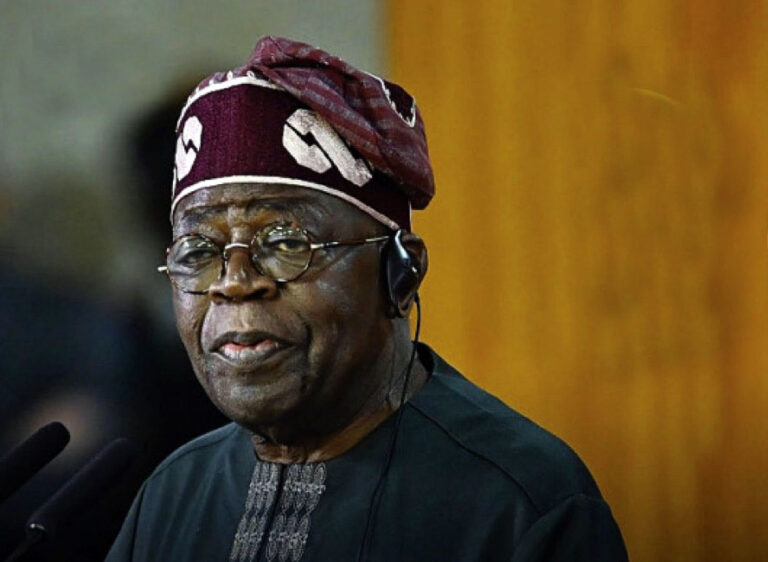
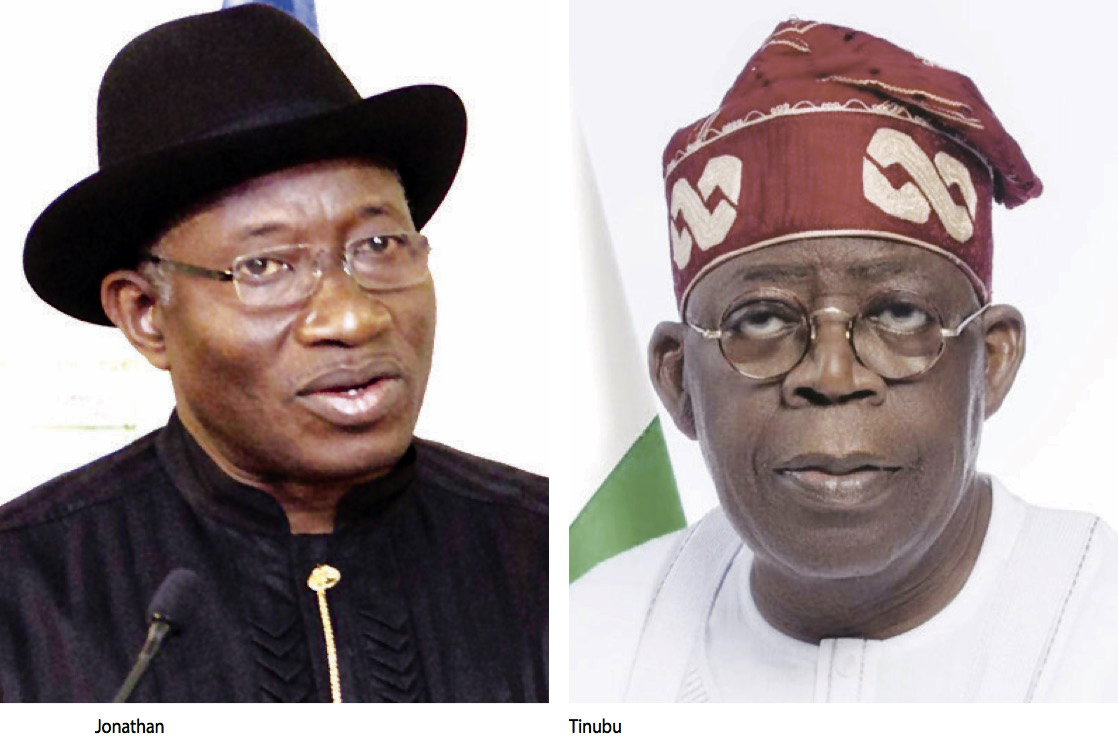
President Bola Ahmed Tinubu and Goodluck Jonathan are not strangers to each other’s political world. Their relationship, cultivated across years of Nigerian elite politics, is one of mutual familiarity and, by most accounts, genuine personal warmth. It is a relationship that has survived party differences, regional calculations and the ordinary turbulence of Nigerian political life. That closeness is not incidental to understanding what may have unfolded with the Jonathan bid. It may, in fact, be central to it.
The argument being made in certain political circles is that Jonathan’s phantom candidacy served a purpose that had nothing to do with Jonathan actually becoming president. The purpose, according to this reading, was to fracture the opposition at its most vulnerable point. The PDP, already struggling with internal cohesion and the aftershocks of its 2023 defeat, faced the prospect of its most electorally credible former president appearing to defect to or at minimum legitimise a rival platform.
Other News
Even without a formal declaration, the speculation alone was enough to sow confusion, distract attention and consume organisational energy that the opposition could ill afford to waste.
If that was indeed the design, it worked. The period during which Jonathan’s name circulated as a potential candidate was a period during which the opposition’s internal conversations were repeatedly pulled toward managing the Jonathan question rather than building genuine electoral alternatives.
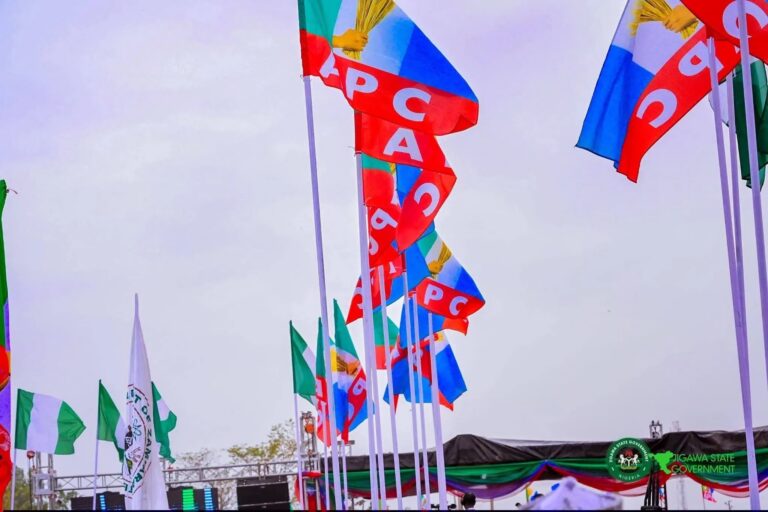
The ruling All Progressives Congress (APC), meanwhile, watched from a comfortable distance as its opponents tied themselves in knots over a candidacy that was never truly in play. Whether President Tinubu’s administration actively encouraged, facilitated or simply observed this dynamic is something that may never be definitively established. What can be said is that the outcome served the interests of the ruling party far more than it served the interests of Jonathan, the opposition or Nigerian democracy.
Had Jonathan pressed forward, the damage to his legacy would have been considerable and, in all likelihood, irreversible. His political reputation rests on a foundation that is genuinely rare in Nigerian political history; a sitting president who accepted electoral defeat and handed over power without the theatrics, legal gymnastics or institutional manipulation that have characterised similar moments elsewhere on the continent.
That singular act of concession in 2015 transformed Jonathan from a defeated incumbent into something approaching a democratic icon. It gave him moral authority that transcended party affiliation and earned him standing in continental and international forums that very few Nigerian politicians have ever enjoyed.
A 2027 presidential run, particularly one conducted under the banner of a fringe platform with questionable national structure, would have placed all of that at risk. It would have invited the obvious question of whether is it the same man who once told Nigerians that his ambition was not worth the blood of any Nigerian? Running again, particularly in the murky circumstances that surrounded the attempted bid, would have exposed him to exactly the kind of cynicism that his 2015 concession had helped him escape.
Beyond reputation, there was the practical mathematics of electoral defeat to consider. Jonathan’s path to winning a presidential election in 2027 was, by any objective analysis, extraordinarily narrow. He would have been running against an incumbent with the full weight of federal resources, against a restructured political landscape that had shifted considerably since his 2011 victory, and without the kind of unified southern support that would have been essential to any competitive bid. A loss under those circumstances would not merely have been a political setback. It would have been the final chapter in a narrative that currently ends on a dignified note.
What the Jonathan episode ultimately reveals is not simply the story of one man’s flirtation with a return to power. It reveals how Nigerian politics routinely uses individuals, even powerful and historically significant ones, as instruments for objectives that serve other interests entirely.
Jonathan’s name has value. His legacy has currency. His association with any political project, however fleeting, generates attention, creates uncertainty in the opposition and signals to the public that the political space is more fluid than it might otherwise appear. That value can be deployed without his formal participation and arguably without his full awareness of how the deployment is being managed.
For now, Jonathan remains outside the arena, his reputation largely intact, his democratic legacy preserved. Whether he understood from the beginning that the bid was never meant to succeed, or whether he eventually recognised the shape of the game being played and chose to exit before the cost became too high, only he can say with certainty.
What Nigerian politics has shown, once again, is that in the contest between genuine democratic aspiration and elite political engineering, it is rarely the loudest name on the ballot that determines the outcome. Sometimes, the most consequential move is the one that was never actually made.