Follow Us on Google
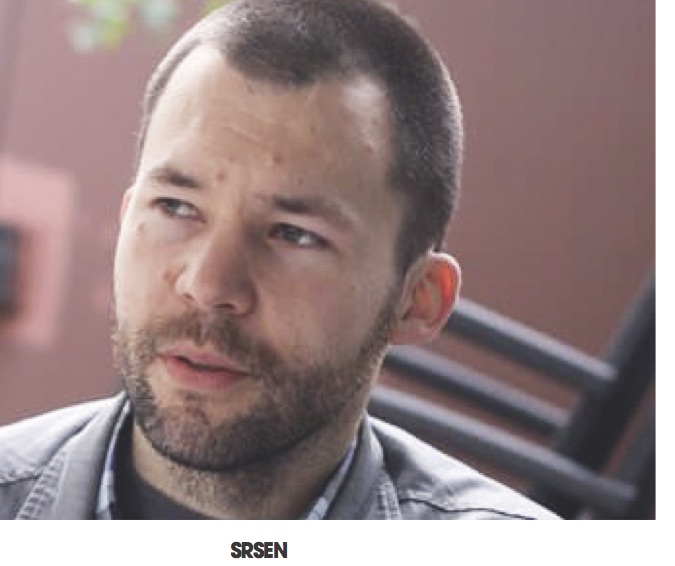
Until you look below the front cover of Harmattan and see the name, Ivan Srsen, you might mistake the novel as one written by a West African other than the Croatian writer. The novel, published ten years again for the Croatian audience, was recently published in the United Kingdom and Nigeria by Abibiman Publishing, which has floated a Nigerian branch.
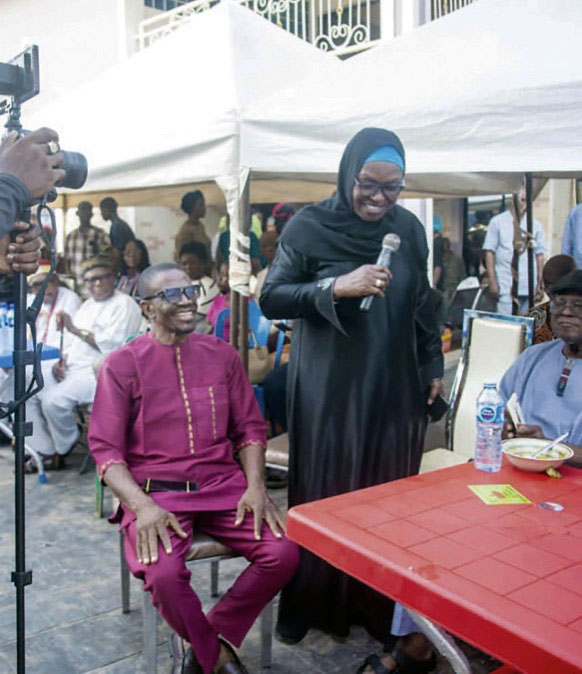
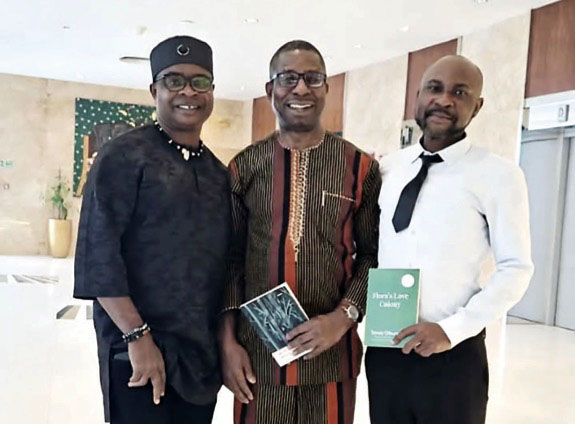
HENRY AKUBUIRO chatted with the Croatian writer, editor and translator, during the recent launch of the book in Lagos on the underlying factors behind the prison odyssey of two West African immigrants in Germany depicted in the novel. Srsen, who is married to a Nigerian, says is excited that Harmattan has finally arrived in Nigeria a decade after its tickling wind reached Europe.
Congrats on the successful launch of the Nigerian edition of your novel, Harmattan, thanks to Abibiman Publishing Nigeria. How did this synergy come about?
Professor Wole Soyinka initiated the UK publication of Harmattan. He connected Onyeka Nwelue, the founder of Abibiman, to me, who read the manuscript and decided to publish it.
Your story dwells on the unsavoury experiences of two African migrants, a Nigerian woman and a Ghanaian woman, in Germany. What inspired this piece?
I have a lot of people from my wife’s family (my wife is a Nigerian) and friends who experienced similar things. I also heard stories of people who experienced incarceration in Europe. Then I realised there were very few pieces of literature on them and these issues. So I embarked on writing Harmattan.
How close to reality is this work?
This is not about one person’s experience. It’s about many people’s experiences that are very rare. It’s fiction but very realistic.
At first, you wrote for the Croatian audience, and never knew the book would impress other readers, why did you think it was a matter of interest for the Croatian readers more than anybody else?
What helped me to write this book paradoxically was that I thought that Croatians wouldn’t be particularly interested in the subject, but then I said, ‘Okay, I have to forget about the public and write it because of myself,’ because I considered the subject very important. But two years later, the audience in Croatia started picking interest in it.
One particular friend of mine, who was a writer, said ironically, ‘Congratulations, you wrote a wonderful Nigerian novel.’ And that was a compliment for me. He said it a bit sarcastically, but that was a compliment, because I managed to portray this world to the Croatian readers who didn’t understand anything about it.
What about the first set of Nigerians to come across Harmattan?
I think Nigerian literature is great literature. The quality of Nigerian writers and readers are very advanced. Nigerian writers are writing basically anything you can imagine. I think Nigerian readers may understand the main motives in the book even better than Croatians. Again, it’s kind of a paradox that the book is coming to its roots after ten years.
For anybody who hasn’t read Harmattan, what’s this book about?
It’s about two African women who find themselves sharing a cell in a German prison because they were caught without proper documents in Germany, and the German authorities put them in a women’s detention camp. It’s fragile as they try to live in a prison from day to day, who to trust, what to hope for –these are basic, deep existential questions. That’s what the novel is about: the inner world of two West African women far from their families and loved ones.
Readers will also read about the position of West African working class women in Europe today. This book has a documentary note titled: “I wanted to make it as close to those conditions as possible.” So if you want to know about the fate of those less fortunate, you will find it there.
Ten years after you wrote the novel, has the migration issue changed and are Africans treated better now in Europe?
It has changed a bit in Europe. It’s getting better and better, but, still, a lot of illegal immigrants are still being imprisoned in asylum centres which are not far from prisons. They are being treated in many European countries below the standard. Some countries are changing, but it depends on the policies and what kind of government there is in some countries. The European Union has a dilemma here whether it will stick to the human right standards or not. This is not being resolved. We have many occupations; unfortunately, the majority of the countries have failed in this regard.
Nigeria means different things to different people, depending on which part of the world you come from. You are married to a Nigerian, what’s your honest impression of Nigeria and Nigerians, especially from an “insider” perspective?
For People from the Balkans, their picture in the West isn’t always very positive: “They are troublemakers”; “they are criminals”; “they always have wars”, and so forth. So I see similarities between people from Balkans and people from West Africa: we are being labelled; we will always be scrutinised; we will always be under somebody else who will exploit it, and, when we come to visit countries that take advantage of us, we are treated as second class citizens.
After this novel, do you intend to write another book with a Nigerian/African subject?
I cannot reveal what it will be about, but, definitely, there is going to be another African-subject book.
Which of the characters gave you the most difficult challenge trying to depict in Harmattan?
This is a good question, but I will answer you with what transpired between my Croatian editor, Nenad Popovic, who has edited many popular Croatian books, when he was working on the manuscript. She told me Nana, the Ghanaian character, is very theatrical. But when I asked him whether I could change it, he said no. So she had to stay the way she was, because Nana plays the role of enormous conscience. She always warns you about the dangers; she warns you about choices. Nana is a character I kind of contrasted, but she plays an important role.
If you were to rewrite this book, where do you think you could tweak?
Maybe it was a certain moment in Europe when migrants were really under the label. Today, what may have changed for the better is that the entire European public is aware of the pressing issue of the people who are stripped of their basic rights. When I was writing this novel, the majority of Europeans were not even aware of these conditions. They didn’t know that people without documents and basic rights did their laundry, cooked in their restaurants, made deliveries, etcetera. What’s better now is that most Europeans are aware. But there are still many steps towards some kind of acceptance, empathy and shame which should happen.
On a lighter note, are there positives in marrying an African different from marrying a fellow European?
(Laughs). For me, it’s a whole world. I cannot judge it like that. I can just say that my marriage made it possible for me to make many journeys into the world that I haven’t known before. Emotion can rarely define it. But I don’t want to generalise. Each has its own advantages and disadvantages. You have to find a person you can understand. That’s what marriage is about.I can’t speak about Croatian and Nigerian marriages in general.