Follow Us on Google
By Prince Steve Akande
There are festivals and there are institutions of history. The Inyama Festival of Igarra, in Akoko-Edo Local Government Area of Edo State, belongs firmly to the latter category. The sacred festival of rain belongs to the Anonyete clan; they speak to heaven and heaven listens to them.
Ancient as memory and sacred as prayer, Inyama remains one of the most revered indigenous festivals of the Igarra people in Akoko-Edo Local Government Area of Edo State. Celebrated annually under the custodianship of the Anonyete Royal Clan; one of the fourteen clans that make up Igarra and widely regarded as one of its most prominent and influential, the festival transcends mere cultural celebration.
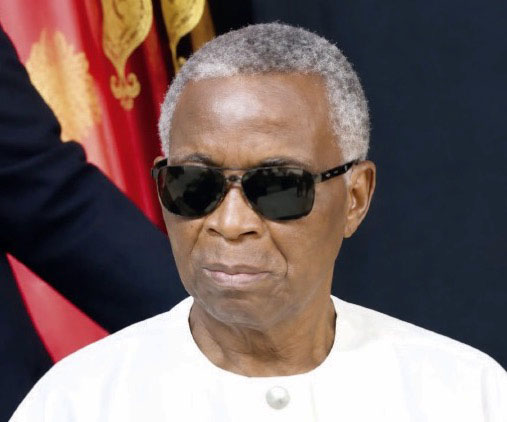
Under the revered leadership of His Royal Highness Oshemdase O’Orenyi of Igarra, the Oshi and traditional ruler of Anoyete people, INYAMA stands as a living expression of faith, identity, history, continuity and communal survival.
The festival derives its name from the Inyama Deity of the Anonyete Clan. Over centuries, the deity has become associated with a unique spiritual endowment: the power to bring rainfall and prosperity. It is this enduring belief that earned the Anonyete people the revered title, “The Rainmakers of Igarra.”
For generations, whenever drought threatened the land, when the earth cracked beneath the scorching sun and anxiety gripped farmers whose livelihoods depended on the weather, the people naturally turned to Anonyete for divine intervention.
According to oral tradition, this extraordinary gift was bestowed by Almighty God upon Igu, the progenitor of the Anonyete Royal Clan, and transmitted through successive generations.
History recounts that Igu, a man reputed to possess mystical powers over rainfall, departed his original settlement after receiving a premonition that disaster would befall the community. Upon reaching a new location, he settled and had a son whom he named Onyete, meaning “land owner.”
In time, the calamity Igu foresaw eventually struck the place he had abandoned. Survivors fled and sought refuge with him in the new settlement. Thereafter, they began referring to Igu and his descendants as Onyete and Anonyete, acknowledging them as the original settlers and custodians of the land.
This account finds support in the work of Alhaji Isah Husaini in his book, The Culture of Egbira (Including Igarra Etuno), where he notes: “When they arrived, the newcomers started addressing and greeting Ezigu as Anonyete and Onyete. So the idea of addressing and greeting the first settlers of the land area as Onyete and Anonyete in Ebira societies was established.”
This historical reality remains central to the identity of the clan and explains the significance of the title Ani-Onyete; the First Settlers of Igarra.
But this is not just a festival, it is a continuity of life. For the people of Igarra, agriculture is far more than an occupation; it is life itself.
The cultivation of yam, cassava, maize and cocoa has sustained generations and formed the bedrock of communal existence.
Rain, therefore, represents much more than a meteorological event. It signifies survival, food security, prosperity, hope and continuity.
It is at this intersection of spirituality, culture and livelihood that the Inyama festival derives its enduring significance.
There is also a reason why Inyama is celebrated. Traditionally observed between April and early June, toward the end of the planting season, the timing of the festival is deliberate and deeply symbolic.
It takes place when seeds have already been committed to the soil and the earth awaits the life-giving rains necessary for germination and growth. Without sufficient rainfall at this crucial stage, crops fail, harvests diminish and the agricultural cycle becomes uncertain.
Inyama therefore serves not merely as a celebration but as a communal appeal to God for a successful farming season and abundant harvest.
Long before the festival day arrives, preparations quietly begin across the community. Compounds are swept clean. Pathways are cleared. Gutters are desilted. Yet these activities extend beyond physical sanitation. Families seek reconciliation where disputes exist. Neighbours mend strained relationships. Old grievances are settled.
The cleansing is both physical and spiritual, reflecting a collective desire to prepare the land and the people for the sacred rites ahead.
And then, there is the royal proclamation which is a defining moment in the preparations.
HRH Oshemdase O’Orenyi of Igarra, seated in council with chiefs and elders; including the Oshi Inyama, Chief Priest and custodian of the Inyama Deity, formally announces the festival date.
Traditional regulations, sacred observances and taboos expected during the festival period are equally proclaimed. This is followed by a period of fasting, abstinence and spiritual preparation.
Custodians of the Inyama Shrine undertake various purification rites involving restrictions on food, sexual relations and certain social engagements. These practices are intended to preserve spiritual sanctity before the performance of the sacred duties ahead.
The spiritual heart of the festival lies within the sacred Inyama Grove. Here, usually at dawn and away from public view, some of the most important rites of the festival are conducted. This remains one of the most sacred and carefully protected dimensions of the tradition.
Following these rites, a solemn procession of chiefs and priests, resplendent in immaculate white regalia, proceeds toward the shrine. Their appearance presents a powerful image of continuity: white garments moving beneath the early morning light, carrying centuries of tradition upon their shoulders.
At the shrine, offerings are presented to God and the ancestors. Kola nuts, alligator pepper, palm wine and a plump she-goat are offered as symbols of reverence, gratitude and supplication.
Under the guidance of HRH Oshemdase, the Oshi Inyama then offers prayers and sacred invocations for timely and adequate rainfall; not excessive rain capable of causing flooding and destruction, and not insufficient rain that would result in drought and crop failure.
Prayers are equally offered for peace in Igarra, fertility among its people and prosperity for sons and daughters of the land, both at home and across the diaspora.
Farmers also participate by presenting yam tubers, seeds, hoes, cutlasses and other agricultural implements for blessings, symbolising hope for a successful farming season.
Among the most fascinating aspects of the festival is the ceremonial use of cowries, known locally as Uto. During the rites, the Chief Priest and his assistants throw cowries into the gathered crowd. Instantly, excitement fills the atmosphere as men, women and children scramble to collect them.
The cowries are highly treasured because of a long-held belief in their spiritual potency to attract prosperity and multiply wealth. Numerous testimonies abound of traders, market women and business owners who keep the cowries in their shops and businesses as symbols of blessing and abundance.
For many observers, this remains one of the enduring mysteries of the Inyama Festival; an aspect that continues to defy conventional explanation while reinforcing popular faith in the tradition.
The rites officially mark the opening of the farming season and are followed by additional sacred observances known only to the custodians of the tradition.
Once the sacred obligations are concluded, the atmosphere undergoes a dramatic transformation. The sounds of the Anonyete Royal Drums reverberate through the community. Traditional songs rise into the air. Dancers move rhythmically through the streets. HRH Oshemdase O’Orenyi proceeds from the Inyama Shrine to the palace in a grand procession accompanied by a sea of jubilant followers.
Along the route, the Chief Priest sprinkles water at strategic locations while offering prayers for peace, prosperity and divine blessings upon every son and daughter of Igarra.
The cultural dimension of the festival comes alive through masquerades and cultural troupes whose performances recount the origins of Igarra and the roles played by Agbogumoza, Igu and Ausere in the founding of the community around 1740.
Costumes portraying Igu as a warrior, conqueror and navigator are displayed, serving as visual reminders of the courage, leadership and resilience associated with the ancestral founders.
As the day progresses, families return home for feasting and reunion. Pounded yam, Apapa (Moi-Moi), kola nuts and palm wine are shared generously among relatives and friends. Sons and daughters of Igarra living in Lagos, Abuja and various parts of the world return home to reconnect with their roots and strengthen family bonds.
The following day, HRH Oshemdase and palace chiefs offer blessings to the people, reinforce the values that define Igarra society and communicate important community development initiatives.
Yet the most anticipated aspect of the festival comes after the sacred rites have been completed.
Traditionally, rainfall is expected to descend as evidence that the prayers have been accepted and the festival has fulfilled its spiritual purpose. This moment represents the climax of Inyama and the ultimate demonstration of the rainmaking heritage associated with the Anonyete Royal Clan.
To the people, the rain is not regarded merely as a natural occurrence. It is seen as heaven responding to earth. It is viewed as the visible manifestation of a sacred inheritance passed down from Igu through generations.
Beyond its religious and ceremonial dimensions, Inyama performs profound cultural, social, economic and spiritual functions within the Igarra community.
It preserves oral traditions and indigenous knowledge systems for younger generations. It strengthens unity among the various clans. It reinforces values of respect, hard work, communal responsibility and reward for labour.
The festival also stimulates local commerce and boosts economic activity. Visitors from neighbouring communities and beyond troop into Igarra to witness what many describe as the wonder of “calling down rain.” Tourists are often drawn by the rare blend of spirituality, history and culture embodied in the celebration.
The resulting influx of visitors benefits local businesses, enhances economic activity and elevates the profile of Igarra as a community proud of its heritage and identity.
Ultimately, the Inyama Festival remains far more than an annual observance. It is Igarra’s enduring mechanism for aligning its ancestors, its land and its people toward another season of peace, abundance and prosperity.
At a time when many indigenous traditions are fading under the pressure of modernity, Inyama endures as a powerful reminder that culture is not merely inherited; it is continually renewed. And in Igarra, every season of renewal begins with faith, tradition and the enduring hope carried by the rain.