Follow Us on Google
From Okwe Obi, Abuja
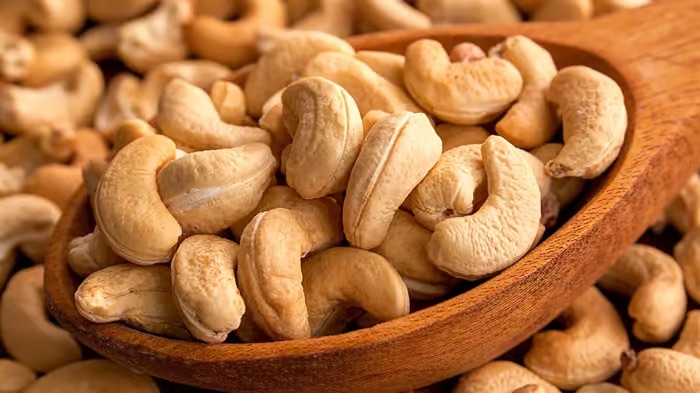
Despite rising global demand for cashew, investors say Nigeria continues to over $10 billion annually as gaps in processing, logistics and value addition have eclipsed the country from realising it is sitting on a goldmine that is begging to be tapped.
Stakeholders in the cashew business and other commodities have called for a reset, given the vast export opportunities and health benefits of cashew seeds.
The National President, Cashew Association of Nigeria (NCAN), Ojo Joseph Ajanaku, said Nigeria could generate more than $10 billion annually from cashew farming, exportation, and create over 50 million jobs if properly developed.
He said Nigeria remained far below its potential in the global cashew market despite having about 92 million hectares of arable land, noting that the country trails Ivory Coast, which has just 32 million hectares.
According to him, Nigeria produces between 400,000 and 500,000 metric tonnes of cashew annually, generating about $700 million.
Ajanaku noted that NCAN would hold this year’s National Cashew Day Conference, to facilitate direct engagement with the Federal Government and stakeholders and lure foreign investors.
He said: “Nigeria is part of the global economic competition. We need a national cashew policy that reflects our own interests, so we can own the industry rather than remain slaves to what we produce.”
He said raising output to two million tonnes and prioritising local processing would significantly increase earnings.
He lamented the absence of processing factories in major producing states like Kogi, saying this forces young people to migrate to cities in search of jobs.
“If we process where we produce, jobs will return to rural communities,” he said.
He referenced the cashew value chain as a viable option for job creation in 2026.
“I know that the Anchor Borrowers Scheme was abused. The Anchor Borrowers Scheme was abused because it was not properly structured. But, there are other measures we can take.
“Like, now, let me talk about cashew, for instance. I just told you about Kano state.
“Kano state today is not recorded among the cashew producing states in Nigeria. But, we ran some experiments recently. Some curious Nigerians who said, first thing, we can plant cashew in our place, and they planted cashew in their place.
“What they are best at, they sent some to us. The product that they sent to us, believe me honestly sir, is better than all the products that we have in Nigeria. We are having, the highest nut count we have was 170 nut count.
“170 nut count, from Kano. And, do you know what our people do? Those foreigners, those Indians that are buying our cashew in Nigeria, they buy cashew from Kogi and take to Kano to go and sun-dry. Because they say there is sun in Kano.
“There’s much sun in Kano. And so, they take wet cashew from Lafayette, from Benue, from Kogi, and take to Kano to go and sun-dry. After drying the cashew, containerize it and take it to Lagos to go and ship.
“Now, if we have processing set up in Kano, and people are processing cashew in Kano, most of our people go back to land and start farming cashew because they know that they have processors close to them.
“They will go to the farm and farm the cashews because they know the food that they will buy from them. And they will start buying, and they start supplying.
“Now, in Kogi State, for instance, where we are, there is no single processing factory in that place. We have three single factory districts in Kogi State. If we set up a factory in Ida, if we set up a factory in Dekina, if we set up a factory in Lokoja, or set up a factory in the Yoruba side, what do you call it kabba.
“And all the cashew produced in that area will be mopped by that factory. And that means to say, somebody’s son, who is in Lagos doing nothing, the father will call him. The company doesn’t call you.
“There’s a company in our village, and they are employing people. He will rush back home. Gainfully employed.
“And when he is gainfully employed, he will add little farming to his employment at home. On weekends when he’s not going to work, he’ll go to his farm. Because that is his community, that is his area.
“So, those are the areas I think that the government of Nigeria should critically look at and see how it empowers people. And if we do that, sir, the Nigerian economy will be drastically improved. And people will be amazed.
“I am talking about only cashew. We have other crops also that should be looked into. Now, if for the cashew, we have the capacity to do over 4 million tons of cashew annually, we have the capacity, we have the land.
“Like I said, we have 34 million arable land. So the year is bright.
“You know, when this president came on board, the exchange rate was, the highest exchange rate was $650. $650 Naira per dollar, let’s say, to a dollar.
“But immediately, he removed this bottleneck in dollar exchange and threw it into a parallel market. We no longer have a black market.
“The dollar rose to about 1,900 Naira at the time before it started dropping down to where it is today, about 1,450 to 1,500 Naira, where it is today.
Now, that has affected the price of commodities.
“Because when it was 1,900, the price of commodities went high. And the economy of production also went high at that period. And so many of them that invested in production at that time are just investing now.
“Because they invested when the economy of production was high.
And they are now selling when the economy of production is not low. So that is the effect, that is the impact, that is what is affecting them.
“Yes. So also, it also affected us in cash. But we believe that it is not a bad trend.
“But if the Naira remains stable where it is now, if the Naira remains stable where it is now, then in the long run, it is going to be a win-win for the farmers. So that means it can be curtailed? It can be curtailed, yes, correct, he added.
Beyond cashew farming, All Farmers Association of Nigeria (AFAN), suggested revival of the Good Manufacturing Practice (GMP) by the administration targeting the staples in the six geopolitical zones of the nation and intervening to bring down the prices of fertilizers and other inputs which he said might avert a food crisis in Nigeria from Mid 2026 to 2027 and beyond.
According to the body, it is necessary for the government to promptly determine fair prices of farm produce by having town hall meetings with small holder farmers, spray service providers and input producers and sellers as well as agribusiness experts.
“The economy of production of the identified staples like maize, rice, Soghurm, Cassava etc. can be arrived at and this should be used transparently as a bench mark for the GMP for each commodity.
“Deliberately identified suppliers or large scale producers who should be directly contacted to assist in the aggregation of these staples without necessarily applying BPP protocol or going to the open market while arranging to Plough back the purchased commodities into the market targeting the vulnerable citizens first.
“Mind you at the current 14% food inflation rate any intervention in the market is already anathema to the principles of GMP but it is a necessary pill to swallow in order to calibrate prices which will make Nigeria’s food system a bit more efficient.
“Creating food banks and transparent and efficient distribution of these items will ensure accountability and probity,” he said.