Follow Us on Google
This is the final part of this journey; a reflection that began with the struggle for survival in the desert and now ends with the struggle for meaning in a nation losing its way. What started as a personal encounter with exhaustion and endurance has become a reflection for something larger: the slow unraveling of our collective mind as a people.
To these questions, I did not have the answers, but perhaps my attempt to find them would be my downfall. 5:30pm came and I wanted to go for another hour, after having driven five minutes or more without encountering another corpse, I had to stop, because there was too little of me left to continue. At this point I had to decide whether to go on living or to lie down and die like those I had just seen. I continued to gaze unseeingly at my car until I started seeing things. I made conscious efforts to snap out of my hallucination, reaching a point where I began to understand the fine line between sanity and insanity.
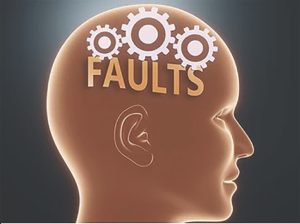
To live is to stand on the fault line of the mind aware that reason and chaos coexist within us all. Sanity is not a fixed condition; it is a balance that must be maintained with care, humility, and empathy. In understanding the thin divide between sanity and insanity, we do not merely study mental illness we study ourselves. We learn that every human being carries within them both light and shadow, order and turmoil. Perhaps the question is not how to avoid the fault line, but how to walk upon it with grace. For it is at the edge where logic meets emotion, and order meets chaos that we discover the fullness of what it means to be human.
In many ways, the story of Nigeria today mirrors that fragile fault line within the human mind, the thin divide between order and disorder, between sanity and collapse. Once described as a developing nation full of promise and potential, Nigeria now appears to be sliding backward from developing to under-developing, and perilously close to the edge of failure. The signs are not hidden; they are felt daily in the streets, in the markets, in the silence of disillusioned youth, and in the hollow laughter that tries to mask despair.
Just as an individual can lose mental balance under the weight of trauma, a nation too can lose its collective sanity when burdened by corruption, mismanagement, and moral decay. Our institutions, once meant to stabilize society, now often feed the very chaos they were created to control. Leadership, instead of inspiring vision, frequently descends into self-preservation; justice bends easily to power; and truth once a guiding compass is now treated as a threat.
Successive governments have come and gone, each promising change, progress, and reform. Yet, the story remains painfully the same. The wealth meant to transform lives disappears into private pockets; public funds that could have built schools, hospitals, and industries instead finance luxury and vanity. Roads remain death traps, hospitals turn to mortuaries, and the youth-the nation’s supposed strength-are left stranded between hopelessness and exile.
Other News
And perhaps even more troubling is the collective behavior that follows. Like a mind trapped in a cycle of self-destruction, the nation seems unable to break free from its own delusions. After every failure, Nigerians still return to the same individuals and the same systems that betrayed them expecting a different result. It is a pattern that borders on collective insanity: to repeat a choice that brings pain, and still call it hope. The great Fela Anikulapo-Kuti, foresaw this descent long ago. His music, bold and prophetic, questioned the sanity of a system where injustice thrives and truth is punished. When he sang “I No Be Crazy Man at All-O,” it was not merely a defense of his individuality, it was a protest against a society that had normalized madness while labeling integrity as insanity.
Today, it seems we live in the very world he warned us about; one where corruption wears respectability, where mediocrity is rewarded, and where integrity is mocked as foolishness. The irony is striking: in a land where everything seems to be crumbling, it is the few who dare to think differently, who demand accountability, who dream of reform that appear “insane.” Nigeria’s struggle, then, is not merely economic or political, it is psychological. It is the battle to reclaim our collective sanity as a people; to resist the normalization of failure; to restore belief in the possibility of a just and functional nation. Like the human mind standing on its fault line, Nigeria too must decide whether to break apart or to heal.
The first step is acknowledgment admitting that the cracks are real, that denial is dangerous, and that silence is complicity. From there, renewal becomes possible.
For just as the mind can recover its balance through awareness and courage, so too can a nation rediscover its path when its people choose truth over comfort and courage over fear.
In the end, the question we must all confront is whether Nigeria has lost its sanity or whether, beneath the chaos, a deeper consciousness still struggles to be heard. The line between sanity and insanity is not always about logic or madness; sometimes, it is about courage, the courage to face truth, to break cycles, and to refuse to accept decay as destiny. Our leaders may have failed us, but the greater tragedy would be if we, the people, fail ourselves. A nation does not go mad overnight; it loses its mind slowly through silence, through compromise, through the repeated election of those who have proven unworthy of trust. Yet, history shows that even from the ruins of dysfunction, renewal is possible.
Perhaps Fela was right all along the real madness lies not in questioning the system, but in accepting it as normal. If we are to reclaim our collective sanity, we must begin by unlearning the habits of hopelessness. We must think differently, act differently, and expect differently. For the fault line that runs through the mind of a nation can either be its point of collapse or its path to awakening. The choice, as always, is ours.