Follow Us on Google

By Chinwendu Obienyi
Nigeria is entering 2026 with a rare convergence of optimism and caution, as the Central Bank of Nigeria projects stronger growth, easing inflation, rising foreign reserves and improved confidence in the financial system. After a bruising period of global shocks and domestic adjustment, the apex bank believes the economy is now positioned to consolidate the gains of far-reaching reforms and move from stabilisation to sustained recovery.
In its 2026 economic outlook, the CBN forecasts real GDP growth of 4.49 per cent and an average inflation rate of 12.94 per cent, a sharp moderation from recent peaks. The projections are anchored on a more stable foreign exchange market, higher oil output, improving non-oil activity and disciplined monetary management. Foreign reserves are expected to climb to $51.04 billion, while borrowing costs are projected to ease as inflation becomes better anchored.
Together, these indicators form the backbone of the CBN’s argument that the reforms undertaken over the past two years are beginning to yield durable results, capable of supporting a stronger, more resilient and globally competitive economy.
Recalibration and recovery blueprint of 2025
The past year was one of intense recalibration. Global uncertainty, tightening financial conditions and geopolitical tensions collided with Nigeria’s own need for deep institutional rebuilding. Yet, according to the CBN, this challenging backdrop has also provided clarity about what works and what must change.
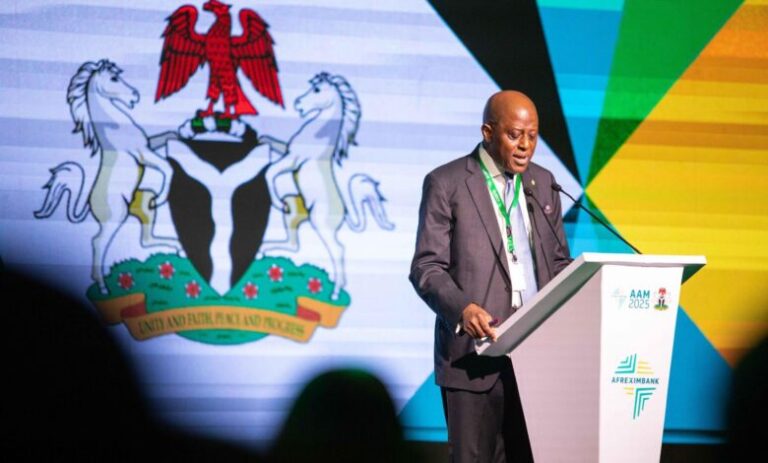
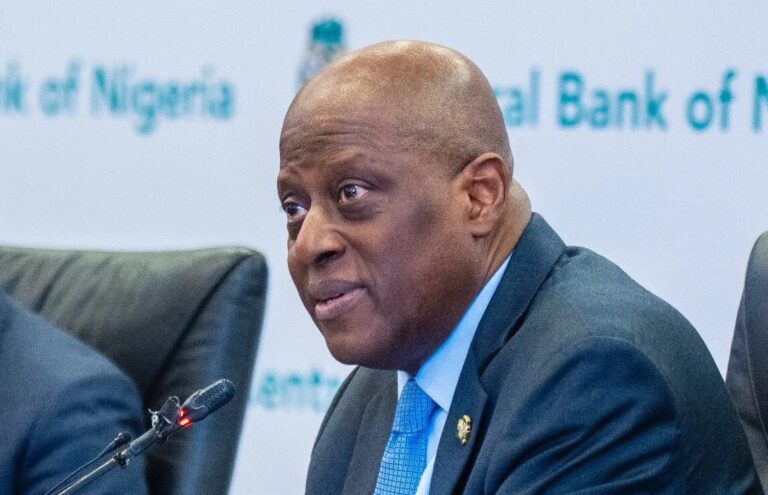
Under the leadership of Governor Olayemi Cardoso, the central bank embarked on a reform agenda aimed at restoring macroeconomic stability, rebuilding trust in policy signals and strengthening credibility across the financial services sector. For many analysts, 2025 marked the turning point when crisis management began to give way to recovery planning.
Reflecting on the past year, Cardoso said the bank had made meaningful progress, even as it remained aware of the work still ahead. “I am pleased to report meaningful progress on all three fronts, even as we remain fully aware of the work ahead.
Our actions continue to reflect the policy direction we articulated from the outset, in other words, we said what we would do, and we have done it, transparently and consistently,” he said.
The emphasis on transparency and consistency has been central to the CBN’s efforts to reset expectations. Key targets for the period ahead are focused on inflation control, growth acceleration, reserve accumulation and stronger non-oil export earnings.
Reserves, reforms and renewed confidence
In its outlook for 2026, the CBN projects that Nigeria’s external reserves will rise to $51.04 billion, a level not seen in years. The forecast reflects optimism that structural reforms in the oil, tax and foreign exchange markets will continue to support inflows and reduce pressure on the naira.
The central bank said the growth outlook for 2026 is positive, driven by continued gains from broad-based reforms and improved exchange rate stability. “The growth prospect in 2026 is positive on account of continued gains from broad-based structural reforms and improved stability in the exchange rate,” the bank said. It added that easing monetary policy would “add impetus to growth following the anticipated reduction in the cost of lending”.
These expectations come after a year in which the CBN maintained a tight policy stance to rein in inflation. At its year-ending meeting in November, the Monetary Policy Committee kept the policy rate at 27 per cent, choosing to allow disinflation to continue, but trimmed the deposit rate in what was widely interpreted as a cautious vote of confidence in the economy.
The decision surprised many economists, who had expected a more aggressive easing following September’s first rate cut since 2020. Instead, the central bank opted for a calibrated approach, signalling that while inflation was easing, vigilance remained necessary.
From crisis response to sustainable growth
According to Cardoso, the past 12 months have marked a decisive shift in Nigeria’s economic trajectory. “Over the past 12 months, Nigeria’s economy has transitioned from crisis management to laying the groundwork for a sustainable recovery,” he said.
He noted that after nearly a decade in which real GDP growth averaged about 2 per cent, reforms have restored momentum and confidence across the macroeconomic environment. “Our economy grew by 4.23 per cent in the second quarter of 2025, the strongest pace in four years, driven by improvements in telecommunications, financial services, and oil production,” he said.
Beyond headline growth, inflation dynamics have been a key focus of policy. Cardoso pointed out that while inflation remains elevated, the direction of travel has changed decisively. “More importantly in terms of long-term stability, inflation, while still high, has moderated consistently. From a peak of 34.6 per cent in November 2024, it has more than halved to 14.50 in November 2025. This marks eight consecutive months of disinflation,” he said.
This steady decline, he argued, is restoring real purchasing power for households and businesses, while also signalling Nigeria’s return to orthodox monetary policy. The central bank has improved data analytics, strengthened communication and ended monetary financing of fiscal deficits, steps designed to strengthen policy transmission and anchor expectations.
“We continue with determination to bring inflation down further. The current double-digit rate cannot be acceptable. Price stability is the foundation of sustainable growth,” Cardoso said. He added that the transition to an inflation-targeting framework is gaining traction and that policy will remain data-driven.
“Our models project continued disinflation in 2026, helped by stronger domestic production, improved FX liquidity, and more disciplined liquidity management. As inflation moderates and becomes firmly anchored, we will calibrate the policy rate in line with evolving data,” he said.
External sector turnaround
The projected rise in reserves builds on a strong external sector performance in 2025. The balance of payments recorded an estimated surplus of $5.80 billion, while external reserves rose to $45.01 billion from $40.19 billion in 2024.
According to the CBN, relative stability in the foreign exchange market during 2025 was driven by domestic reforms, higher capital inflows, increased export receipts and expanding local refining capacity. These factors are expected to strengthen further in 2026, supporting reserve accumulation and reducing vulnerability to external shocks.
In futuristic outlook, the central bank projects that the current account surplus will jump to $18.81 billion in 2026. This outlook is underpinned by strong exports, steady diaspora remittances, increased oil and gas output, improved domestic refining capacity and rising global demand from key trading partners.
Portfolio investment inflows and external borrowings are expected to keep the financial account in a net borrowing position of $10.15 billion, while the International Investment Position is projected to record a net borrowing position of $69.58 billion in 2026, reflecting expectations that attractive yields will continue to draw capital.
Turning point, not finish line
External analysts broadly agree that Nigeria has reached a turning point, but caution that the gains remain fragile. The Director-General of the West African Institute for Financial and Economic Management, Dr Baba Musa, said improvements in growth, inflation moderation and investment confidence mark important progress, but are not an end in themselves.
In a report titled Nigeria’s Economic Outlook at a Turning Point, Musa described the country’s economic story as one of resilience, renewal and strategic recalibration. “To sustain the recovery, Nigeria must maintain macroeconomic stability, deepen structural reforms, and ensure that growth translates into tangible improvements for citizens,” he said.
He stressed that achieving this would require collaboration across government, the private sector, civil society and development partners. “By committing to policy consistency, human capital investment, and inclusive growth, Nigeria can consolidate its recovery and emerge as a more competitive, resilient, and equitable economy in the years ahead,” he said.
Musa placed Nigeria’s performance within a challenging global context. “Globally, economies are grappling with slowing growth, projected at 2.7 per cent in 2025 by the IMF for advanced economies, and heightened geopolitical risks that affect trade and investment. Against this backdrop, Nigeria has demonstrated remarkable determination,” he said.
Domestically, he acknowledged that inflationary pressures, infrastructure deficits and unemployment persist, but argued that they now represent policy frontiers rather than defining constraints. Recent measures, ranging from fiscal consolidation to targeted monetary adjustments, have laid the groundwork for a sustainable growth trajectory.
“The real test, however, lies not only in achieving stability but in ensuring that it translates into tangible socio-economic outcomes: decent jobs, rising incomes, improved productivity, and broader social welfare,” Musa said. He added that deeper reforms, strategic investment in human capital and effective use of Nigeria’s structural advantages could deliver inclusive and durable transformation.
Sectoral drivers of growth
Musa identified several drivers underpinning Nigeria’s growth outlook. These include stronger oil production following operational improvements and policy reforms in the petroleum sector, recovery in services such as telecommunications, financial services and transport, and improved agricultural output supported by favourable weather and government initiatives on mechanisation and inputs.
He also highlighted the impact of recent GDP rebasing, which has provided a more accurate picture of the economy by capturing growth in high-potential sectors such as digital services, modular refining and the creative industries. This broader view underscores opportunities for job creation, innovation and revenue generation that were previously underappreciated.
World Bank endorsement amid global headwinds
Nigeria’s improving outlook has also been echoed by the World Bank, which recently delivered a positive verdict on the country’s growth trajectory. In its Global Economic Prospects report, the bank projected that Nigeria would record three consecutive years of growth, expanding by 3.6 per cent in 2025, 3.7 per cent in 2026 and 3.8 per cent in 2027.
This assessment stands in contrast to a more downbeat global outlook. The World Bank slashed its global growth forecast for 2025 by 0.4 percentage point to 2.3 per cent, citing higher tariffs and heightened uncertainty as significant headwinds for most economies.
In its twice-yearly report, the bank lowered forecasts for nearly 70 per cent of economies worldwide, including the United States, China and Europe, as well as six emerging market regions. While it stopped short of predicting a recession, it warned that global growth in 2025 would be the weakest outside a recession since 2008.
By 2027, global GDP growth is expected to average just 2.5 per cent, the slowest pace of any decade since the 1960s. Global trade growth is forecast at 1.8 per cent in 2025, down sharply from 3.4 per cent in 2024 and far below levels seen in the 2000s.
The report also warned that global inflation is likely to remain above pre-pandemic levels, reaching 2.9 per cent in 2025, as tariff increases and tight labour markets continue to exert pressure.
“Risks to the global outlook remain tilted decidedly to the downside,” the bank said, noting that further tariff escalation could shave another 0.5 percentage point off global growth.
Sub-Saharan Africa, however, stands out as one of the few regions expected to see acceleration. Growth in the region is projected to strengthen to 3.7 per cent in 2025 and average 4.2 per cent in 2026–27, assuming inflation declines as expected and external conditions do not deteriorate further.
Deeper integration and resilience
World Bank Chief Economist Indermit Gill warned that outside Asia, much of the developing world risks stagnation. He noted that growth in developing economies has steadily slowed over the past three decades, alongside a decline in global trade growth and a rise in debt levels.
Deputy Chief Economist, Ayhan Kose, added that emerging and developing economies, having benefited from trade integration, now find themselves on the frontlines of a global trade conflict. “The smartest way to respond is to redouble efforts on integration with new partners, advance pro-growth reforms, and shore up fiscal resilience to weather the storm,” he said.
For Nigeria, these global realities reinforce the importance of the reform path outlined by the CBN. Stronger growth, sustained disinflation and rising reserves are not ends in themselves, but tools to build resilience, attract investment and improve living standards.
As 2026 approaches, the central bank’s projections paint a picture of cautious optimism. The challenge will be to ensure that macroeconomic gains are translated into inclusive growth, job creation and tangible improvements in the daily lives of Nigerians. If that link is forged, the reforms of the past two years may well mark the foundation of a more stable and prosperous era.