Follow Us on Google
…Tinubu, Shettima to spend N8.74bn on travels
…Presidential Air Fleet to gulp N14.7bn, honorarium N2.12bn
By Uche Usim
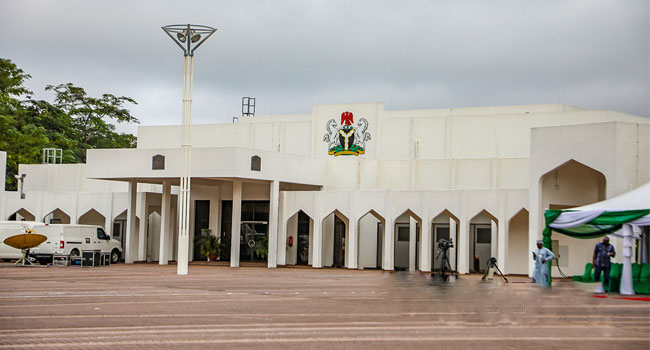
The State House headquarters will gulp a whopping N43,191,309,690 billion in 2026, as fresh budget details reveal how Nigeria’s seat of power plans to spend public funds on everything from electricity and internet access to welfare packages, food supplies and sitting allowances.
Of this amount, capital expenditure takes the lion’s share with N30.49 billion, followed by N10.06 billion earmarked for overhead costs, while personnel expenses account for N2.64 billion.
President Bola Tinubu and Vice President Kashim Shettima will spend a combined N8.74 billion on local and foreign travels in 2026.
The figures also reveal that maintaining executive mobility will come at a premium, with the Presidential Air Fleet projected to gulp N14.7 billion to support presidential and vice-presidential operations.
Domestic travel is also well provided for, allowing officials to maintain close links with states, agencies and institutions nationwide.
From the President’s own travel budget outlook, N6.14 billion is set aside for international journeys.
The Vice President’s office has a more modest spending scale. A total of N1.73 billion has been budgeted for travel and transport, with N1.31 billion earmarked for international engagements.
Behind these movements is the Presidential Air Fleet, one of the most critical enablers of executive mobility.
In 2026, the fleet is projected to cost N14.7 billion to operate. This includes N1.55 billion for aircraft fuel and N1.26 billion for maintenance, ensuring that aircraft are safe, reliable and mission-ready.
In addition, over N1.25 billion has been allocated for international training transport for pilots and crews.
Other News
From keeping the lights on to feeding officials and maintaining vehicles, the budget shows that governance at the centre comes with a heavy logistical price tag.
Electricity alone will cost the State House N311.09 million in 2026, making it the single largest item under general utilities. This figure reflects the enormous power demand of the sprawling complex, which houses offices, residences, security facilities and support services operating round the clock.
Internet access charges are pegged at N22.53 million, underlining the importance of constant connectivity for official communication, coordination and administration. Water rates will consume N15.92 million, while sewerage charges are put at N12.01 million, highlighting the routine but unavoidable costs of maintaining a high-profile government facility.
Telephone services, though relatively modest by comparison, will still take N3.73 million from public funds, bringing the total allocation for general utilities to N365.27 million for the year.
Beyond utilities, however, the budget raises eyebrows with several large overhead items grouped under administrative and welfare-related expenses. Top among them is honorarium and sitting allowance, which alone will swallow a staggering N2.12 billion. This allocation suggests extensive committee work, meetings and official engagements that attract allowances within the State House system.
Welfare packages are also generously funded, with N513.84 million set aside to cater for the wellbeing of officials and workers attached to the headquarters. In a period of economic strain for many Nigerians, this figure is likely to spark debate about priorities at the highest level of government.
Publicity and advertisements will cost N298.21 million, reflecting sustained spending on image management, public communication and official messaging from the presidency. This includes announcements, media placements and other forms of public engagement aimed at projecting government activities.
Food-related expenses also feature prominently. The supply of foodstuff and catering materials is budgeted at N77.12 million, while refreshments and meals will take another N150.07 million. Together, these figures underline the continuous demand for catering services at Aso Rock, where meetings, events and official functions are part of daily life.
Keeping the fleet moving is another major expense. Maintenance of motor vehicles and transport equipment is allocated N220.53 million, covering repairs, servicing and upkeep of official vehicles used for operations within and outside the State House.
The buildings themselves also require constant attention. Maintenance of office buildings and residential quarters will cost N102.45 million, ensuring that offices, official residences and support facilities remain functional and secure.
Healthcare needs are not left out. Drugs and medical supplies are allocated N43.62 million, pointing to the cost of providing medical support within the State House complex.