Follow Us on Google
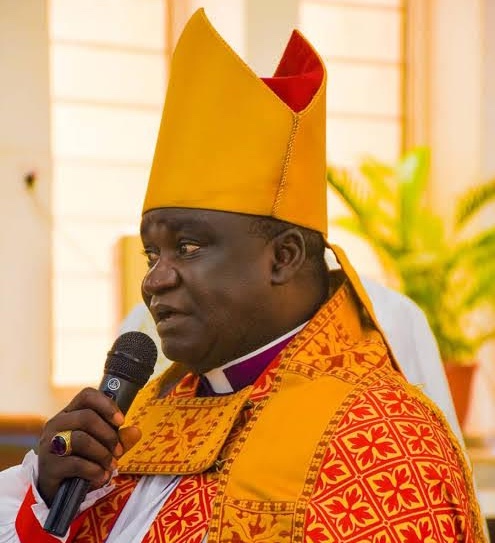
From Noah Ebije, Kaduna
Bishop of the Anglican Communion, Kaduna Diocese, Timothy Yahaya, has delivered a scathing assessment of Nigeria’s democratic practice, declaring that the country is operating at ‘minus zero’ democracy, amid worsening insecurity and political manipulation.
In his Easter message, Bishop Yahaya expressed frustration with the nation’s leadership and governance, warning that Nigerians are being taken for granted.
Describing the current system as a distortion of democratic principles, the bishop said: “Democracy has rules and regulations, but what we are seeing now is not democracy. It is ‘Democrazy’ because of the way they are manipulating things.”
He warned that Nigeria risks falling below even the lowest benchmark among democratic nations in Africa. “When you look at the terrorism index in this country, I hope we will not soon begin to look at the political index and discover that Nigeria is minus zero, not even zero,” he stated. “This is a country where we are among the most dangerous places to live in the world.
“Personally, I am getting tired of watching television in Nigeria and I try to switch it off so I don’t get mad,” he said. “Why? Our leaders think we don’t have brains. The way they manipulate this country, I hope they will not manipulate this country until they cannot manipulate it anymore.”
The Anglican cleric cautioned political leaders against a false sense of security, stressing that no one is immune from the consequences of poor governance.
“They should know that in those places they think they are safe, they are not safe. We have seen places where people think they are safe but they are not safe anymore,” he warned. “The way our leaders are toying with the brains of Nigerians, they should know that other people are intelligent, far more intelligent than they are.”
He also dismissed official claims of improved security across the country, questioning the reality presented by the government officials.
“I was shocked to hear one of the ministers saying there is relative peace everywhere in Nigeria. In which country? Are there two Nigerians on the continent of Africa?” he asked rhetorically. “Maybe there is another Nigeria in Europe or Asia.”
He decried what he described as a shrinking democratic space, where dissent and criticisms are increasingly criminalised.
Other News
“Today, in this country, to be an opposition is a crime. To tell the government the truth is a crime. To say you are suffering is a crime,” he said. “Now that I have spoken the way I have spoken, they will say I belong to the opposition. Is that how this country will get better?”
The bishop decried the persistent killings and kidnappings across the country, insisting that the crisis has never abated.
“The killings are frequent like never before. They have been there; they never stopped,” he said. “Just because the media may not reach remote areas does not mean the violence is not ongoing. We, who serve in those areas, know the truth.”
He questioned the effectiveness of Nigeria’s security spending, criticising what he described as outdated tactics in modern warfare.
“The money allocated to security; I wonder where it is going,” he said. “Today, technology and warfare are synonymous. Drones can do some magic, yet it is as if we are still operating in the Stone Age, using catapults, while terrorists are using sophisticated weapons. Our soldiers are dying in numbers, and it is as if nobody cares.”
According to him, the country’s leadership crisis is rooted in mediocrity rather than competence.
“Our excellent minds should be in leadership, not mediocre individuals who have become professors of mediocrity,” he said. “Let sincere people take over this country and within one year, the glory of Nigeria will be restored.”
Despite his criticism, he struck a note of hope in his Easter message, urging Nigerians not to lose faith in the country.
“Just like the disciples were demoralised and thought Jesus would not rise again, there was suddenly a resurrection morning,” he said. “Nigeria will also experience a resurrection morning.
How it will happen, I do not know, but I believe in the God of resurrection.”
He added: “The Nigeria we once knew, where our currency was strong and life was better, God can restore it. But, we must have hope and we must believe.”