Follow Us on Google
Without doubt, an absence of an integrity-based political leadership of Africa’s largest democracy that is high of morals and ethical values has ensured its stunted national development within the context of a united, socially cohesive, secure and prosperous Nigerian nation. On the contrary, it would seem that Nigeria has been plagued by more of corrupt, inept and incompetent political leadership in varying forms throughout its existence as an independent country. That Nigeria is currently confronted on multiple fronts with heightened insecurity, ranging from the Boko Haram insurgency in the North East, banditry in the North West, violent farmers/herders conflicts across the country and oil theft and sea piracy in the Niger Delta region is a consequence of leadership failure of Nigeria’s political class. With various armed groups controlling large swathes of Nigeria’s vast ungoverned spaces and unleashing terror on defenceless Nigerians, maiming, killing, kidnapping, robbing and displacing thousands of people from their homes, farmlands and other places of work, it would seem that Nigeria is in a state of undeclared war; an undeclared war that is not against a foreign enemy but against itself.
Aggravating the mounting problem of insecurity is also the worsening economic situation in the country. With a growing population now exceeding 200 million people but sources of national revenues still largely dependent on less than two million barrels daily exports of crude oil, it has become abundantly clear that revenues generated from the internal exploitation of Nigeria’s rich deposits of hydro carbons alone are not enough to sustain the socio-economic development of Nigerians; hence the growing problem of unemployment, poverty, hunger, destitution and desperation. Nigeria’s inability to cater adequately for its citizens is the reason Nigeria has sunken to all-time low in Human Development Index as the poverty capital of the world that is one the most pauperized, traumatized and terrorized countries in the world.
The role of corruption as well as economic and financial crimes that appears endemic in governments at all levels in Nigeria cannot be overemphasized as fundamental contributory factor to Nigeria’s twin problems of insecurity and economic woes. The pervasive culture of corrupt practices such as nepotism, cronyism, favouritism and sectionalism that often result in conflict of personal and public interests in the management of state resources inevitably degenerates into the outright stealing of public funds, otherwise known as economic and financial crimes, with severe consequences in the form of Nigeria’s arrested socio-economic development and ineffective national security. Nigeria’s perennial poor position in Transparency International corruption perception ratings in recent years is a clear indication of Nigeria’s worsening problem of corruption. And Nigeria’s corruption-induced socio-economic problems have contributed immensely to Nigeria’s heightened problem of insecurity. Therefore, the nexus between leadership deficit, corruption, economic problems and insecurity should open a robust and frank conversation about the roots of Nigeria’s fundamental and seemingly intractable problems heightening insecurity, which now poses an existential threat to the continuous cooperate existence of the most populous Black nation in the world.
Overview
In the face of mounting corruption induced economic and security challenges, that has weakened the Nigerian state to such an extent that governments at all tiers and arms are increasingly finding it difficult if not impossible to carry out their primary function of providing for the welfare and security of the citizens as enshrined in section 14-[2]-[b] of the 1999 constitution as amended, has led many to believe that Nigeria may be inching closer to the end stage of state failure. The anxiety, concern and palpable fear over the collapse of our dear country Nigeria on the positive side affords us an opportunity to put on our thinking caps and with open minds reflect sincerely on how we are collectively driving Nigeria down the road to a failed state destination but only with the aim of bringing up practical solutions that can pull Nigeria back from the brinks of state collapse.
Background
Although seemingly worse off today, the underlining socio-cultural issues that are driving Nigeria’s existential problems of corruption induced economic dislocation of many abled bodied young men and women leading them into sundry acts of violence, criminality and terrorism did not start with the current administration and neither did the problem begin in 1999 when the transition from military to civil democratic rule took effect. The problems of Nigeria began before the beginning of Nigeria’s journey to nationhood in 1960. And these problems have its root causes in the disunity in Nigeria of Nigerians and the associated unresolved question of national identity, which has left Nigeria in perennial crisis of nationhood.
Convinced that the constituent peoples of Nigeria were irreconcilably different to such an extent that a united, strong and virile Nigerian nation could not evolve from the 1914 British created country of Nigeria, our founding fathers will go on to negotiate an independent Nigeria with a federation that is structured along ethno-geographic fault lines, from the regions to the provinces just like the defunct Yugoslavia. Whereas, the first republic Nigerian federation of three and later four regions substantially satisfied the requirements of fiscal federalism, its structural rigidity along ethno-geographic fault lines without a mechanism for the assimilation and integration of Nigerians wherever they chose to reside outside their region of origin with full political and economic rights extended to them effectively made Nigeria a country of indigenous tribesmen of the over 500 constituent ethnic nationalities and not a nation of citizens. And the consequent contestation for political power to decide who gets what and when from Nigeria’s internal resources by its many ethno-geographic groupings will find expression in the crudest form of politics of ethnic and religious identity.
As a representative constitutional democracy, the first republic federation, which was structured along ethno-geographic fault lines inevitably, gave rise to a political culture of ethnic, regional and religious identity. And with identity politics becoming entrenched in our polity meant that the democratic leadership recruitment process of Nigeria’s political leaders will be primarily determined by primordial sentiments of ethnicity, region of origin and religion. Consequently, the post independent political leadership class of Nigeria in their bid to retain their privileged positions devised sundry means to deepen the dividing ethno-geographic fault lines by influencing their respective peoples to always align their democratic choices with their ethnicity, region or religion. This was how a solid foundation for a Nigerian state that will be increasingly weakened by the ravages of identity politics up until 2026 was laid and concretised more than 65 years earlier at our independence in 1960. Note that the Socialist Federal Republic of Yugoslavia, with six ethno-geographic federating units of Slovenia, Croatia, Serbia, Montenegro, North Macedonia and Bosnia-Herzegovina, only existed between 1945 and 1992 [47 years] and had since collapsed leaving the entire Balkans in turmoil, including a genocide nearly four decades later.
Nigeria’s 4th Republic
Unfortunately, Nigeria will once again embrace identity politics fully following the transition from military to civil democratic rule in 1999. Retrogressive in nature, identity politics is divisive, parochial and bigoted and negates every norm of modern nation building. And if identity politics is allowed to take root in the political system of any country, as has been the case of Nigeria in the 25 years of democracy, it will spread like a cancerous cell and sap life out of that country. Sadly, after 25 years of civil democratic rule in Nigeria the promise of dividends of democracy in the form of improved welfare and security of lives and properties remain largely elusive no thanks to our collective wrong choices of aligning our democratic choices with our ethnicity, region and religion. As Nigerians our purveyance of identity politics has made us victims of corruption induced economic dislocation and heightened insecurity as much as we are its victims.
In identity politics the seeds of corruption were sown. This is so because the only reward system for identity politics is patronage at the expense of the public treasury. Therefore, such corrupt practices as nepotism, cronyism, tribalism, favouritism and all other forms of sectionalism are legitimate cultural tools by the elected and appointed representatives of the over 500 ethno-geographic groupings in government to extract from the common wealth [national cake] to their respective sections of the country with them as the major beneficiaries. International scholars of political science described Nigeria’s unique form of corruption as Prebendalism i.e a situation where elected and appointive public officers have a sense of personal entitlement over state resources domiciled in their Areas of Responsibility. And this is precisely why corruption with its debilitating effects has become intractably endemic because in Nigeria the ugly phenomenon is sanctioned by culture and with Nigeria now a ground for supremacy competition between the leading Abrahamic faith [Christianity and Islam], corruption also enjoys the ratification of religion. If the principle of zoning and rotation of elected and appointive offices among the competing ethno-geographic groupings in Nigeria that was adopted by the 4th republic political leaders was an affirmative action to ensure the equitable distribution of resources, then it not only failed to achieve the objective but actually resulted into the equal distribution of loot by conniving political leaders from all divides of our ethno-geographic and religious fault lines in what seems like an official affirmation of corruption in government. Consequently, Nigeria’s identity driven political process has degenerated into a criminal franchise of power grab by the political ruling elite for self service at the detriment of public service delivery. And with the problem of corruption in Nigeria enjoying a legitimacy that is sanctioned by culture, ratified by religion and administered by government, the primary responsibility of the government, which is the provision of welfare and security of lives and properties of the citizens have been abdicated or at best put in abeyance, thereby inching Nigeria closer to a failed state.
Nigeria on the Road to Mogadishu
Whilst Nigeria may not be a failed state yet, our beloved country is undoubtedly exhibiting mild symptoms of state failure, which includes but not limited to [a] the loss of control of its territories and the monopoly of the use of legitimacy of force within those territories, [b] increasing erosion of legitimate authority to make collective decisions and [c] inability to adequately provide public services. It is important to note that the causative pathogen for the afore mentioned symptoms of state failure, is always and almost the inability of failed states to resolve their question of national identity as a means of achieving a united, just, fair, egalitarian and strong nation state. From British India, Somalia, Sudan to Iraq, Syria, Lebanon and Yemen, the absence of an inclusive and pragmatic political leadership to harmonise the preponderance of ethno-geographic and religious identity dissonance through an excellent diversity management system in line with the rule of law is fundamentally responsible for the fragility, failure or collapse of some of these countries. In India, the inability of the post-colonial political leaders of that country to harmonise the religious identity dissonance of its Muslim and Hindu peoples resulted into the breaking away of Pakistan in 1947. Similarly, the split of Sudan into north and south was caused by the poor diversity management by its political leaders who could not provide an inclusive leadership for its Black African Christian, Arab Muslim, and non-Arab Muslim peoples. Today, Yemen, Syria, Lebanon and Iraq are embroiled in a devastating sectarian war between its Sunni and Shite communities, which has all but resulted into near total state collapse. Nigeria and troubled countries such as Yemen, Syria, Sudan, Lebanon and Iraq have something strikingly in common; their leadership recruitment processes are firmly hinged on the politics of ethno-geographic and religious identity, which has given rise to sectional, parochial, clannish, bigoted and divisive leadership presiding over severely weakened nation states.
Other News
A combination of the aforementioned leadership problems are similarly responsible for Nigeria’s heightening insecurity, where armed non state actors appear to be overwhelming the state and effectively sharing its sovereign authority.
Definition of terms
Boko Haram insurgency, which is Nigeria’s longest running conflict since 2010 is violent manifestation of Islamism, which has set the Nigerian state on a collision course with the Muslim religion in order to violently substitute its current secular, democratic and constitutional order with a puritan Islamic state along its radical ideological leanings. But it must be remembered that Jihadi Islamism drew breath from the preponderance of political Islam, a form of politics of religious identity in northern Nigeria, which preyed on sentiments and sensibilities of the predominantly Muslim population of the region as means of mass mobilization for political power. In the process of using religion to mobilize for political power in exchange for Islamism i.e a Muslim political ideology that is opposed to secularism and which seeks to influence the legal, administrative, economic and political affairs of the state with the dictates of their interpretation of Islam. It was when political Islam failed to deliver Islamism to the satisfaction of Islamists in northern Nigeria that they decided to explore the option of violent Jihadism .
Whilst, Boko Haram is a religious problem that is ideologically induced, the problem Fulani Banditry is a cultural problem that emerged forcefully in the last decade as the Nigerian state and its authority receded around their spheres of influence under the administration of President Muhammadu Buhari. A northern Nigerian Muslim and a Fulani tribal chieftain, President Buhari whose presidency was a product of the vilest form of ethno-geographic and religious identity politics in the history of Nigeria left no one in doubt that his loyalty was more to region, religion and in this instance his Fulani ethnic group, when as Commander in Chief, Fulani banditry blossomed under the cover of farmers/herders clashes. And when President Buhari and his government were not making excuses for Fulani bandits, they simply sat by and did next to nothing to restrain or contain them. It was only when this deadly phenomenon spread across his home region of the North West to his home state in Katsina that President Buhari sluggishly woke up from slumber to act feebly. By this time it was already too late as this criminal enterprise, which characterised by kidnapping for ransom, mass murder, sacking of communities and attack on security forces had spread across the country.
Closely related to Fulani banditry are the murderous activities of killer herdsmen in farming communities in central and southern Nigeria, with places like southern Kaduna, Plateau and Benue worse affected. Believed to have its roots in clashes between sedentary farming communities and nomadic herdsmen over land and water resources, the violent activities of killer herdsmen are characterised by mass killings of targeted farming communities and occupation of their farm lands. Unfortunately, while this conflict has clearly gone beyond the normal clash between farmers and herders, official state security policy influenced by certain bigoted interests, still categorizes these terrorist attacks against unarmed and defenceless Nigerians as ‘’communal conflicts’’ between Fulani herders and their host communities. Together with Boko Haram insurgency, Fulani banditry and herdsmen terrorism are currently the major drivers of insecurity in Nigeria on a scales that pose existential threat to Nigeria’s continuous existence. This is because, these conflicts are identity based and seemingly draws legitimacy from religious beliefs and cultural practices that emerged as the Nigerian state weakened over time and its authority receded.
A critical review of history
Many Historians and political commentators have attributed Nigeria’s problem of identity dissonance to the colonial misadventure of lumping together different peoples without much in common into a single geographic entity by the amalgamation act of 1914. Variously described as a ‘’mere geographic expression’’ that was a ‘’mistake’’ Nigeria it would seem was programed to failed even before it started. However, are we to continue to blame the past for the present or should the present start taking responsibility for future? 107 years after amalgamation, 65 years after independence and 25 years into civil democratic rule of the 4th republic, with the promise of a united, strong and prosperous nation still elusive, now is the time to reflect appropriately on our yesterday with the aim of making our tomorrow better starting from doing the right thing today.
However, contrary to the entrenched narrative that says Nigeria is a country of people with too much irreconcilable difference to be a united nation, historical and sociological evidences suggests otherwise. The peoples of Nigeria long before the British amalgamation of 1914 shared deep and close cultural, linguistic and traditional ties within a common geographic area extending beyond the borders of modern Nigeria into Benin, Niger, Cameroun and Chad republics. A mostly mono racial [Black] people, the various ethnic groups, tribes and kingdoms of pre-colonial Nigeria have interacted through diplomacy, trade and war fare, which served to integrate the peoples of Nigeria long before independence. There was a pre-existing traditional citizenship system in pre-colonial Nigeria, which allowed for the seamless assimilation and integration of individuals, families and communities wherever they chose to reside within Nigeria of old. If diversity is to be measured in term of the racial composition of a geographic entity, then a mono racial Nigeria hardly qualifies to described as a diverse country. Nigeria is best described as plural country because the various ethnic groupings such as Hausa, Igbo, Yoruba, Ijaw, Nupe, Igala, Tiv, Kanuri etc., are simply a plurality of the same one big Black African linguist and cultural family.
While by no means justifying colonialism, it is important to state that some of the greatest nation’s in the world were once colonies of a superior power. Great Britain, Nigeria’s colonial master was once a Roman colony between 43 and 410 AD. And like the Black mono racial peoples of Nigeria, mono racial White Britain was a plurality of ethnicities. Sir George Goldie who played the biggest role in the formation of modern Nigeria was Scottish just as Flora Shaw, the British essayist whose suggestion was the name ‘’Nigeria’’ was of Irish ancestry. At the time of amalgamation of the protectorates of the North and South of Nigeria into one entity in 1914, the British crown was seating on the head of King George V an ethnic German who was the grandson of Queen Victoria by her consort, Prince Albert of Germany through their son King Edward VII. Just as Nigeria’s founding fathers variously identified as Igbo, Yoruba and Hausa so were their colonial masters individually identifiable by their ethno-geographic ancestry. The difference was the ability of their colonial masters to rise above primitively rigid territorial identification by adopting the common national identity of their shared geographical reality of the United Kingdom of Great Britain and Northern Ireland. As no nation is truly blessed by abundance of human and natural resources, the British were united in their concerted effort to shore up the wealth of their nation through the acquisition of overseas territories to expand trade and investment for the economic benefit of their homeland. This is precisely the greatest lesson we the people of Nigeria failed to learn from our colonial experience.
Towards a united and strong Nigerian state
One of the biggest lessons not learnt from history is that the unity of Nigeria is a condition that must precede its socio-economic development and national security. There has to be a united, strong, and cohesive Nigerian nation of patriotic citizens for any structure or system to yield the promise of shared prosperity and collective security. Nigeria’s problem of disunity was caused by a primitive political consciousness that weaponised our plurality as irreconcilable diversities. Nigeria’s case is not so much about the absence of unity in diversity but more about the presence of division in oneness. And to solve this pertinent problem of disunity, a higher political consciousness that recognises our oneness would have to be evolved from a self-enlightened realization by all Nigerians that indeed we are one people.
The problem of the disunity of Nigeria and its peoples was not caused by nature but politics and it will require a deliberate political process backed up by a purposeful administrative procedure to transform the country of Nigeria into a nation of Nigeria. As long as Nigerians continue to allow themselves to be divided along ethno-geographic fault lines, they would have granted an irrevocable power of attorney to their leaders to continue to divide and misrule them in perpetuity. Therefore, guided by the self-enlightened realization that Nigeria is not really a diverse country of irreconcilably different ethno-geographic groupings but only a plurality of ethnic groups within a broad mono racial family of peoples with shared historic, geographical, cultural and traditional proximity, which predates the British incursion into continental Africa, the first step towards the redemption of Nigeria from a country of micro ethnic nationalities into a nation of citizens is to reconfigure the structure of Nigeria’s federating units away from ethno-geographic enclaves into geo-economic centres of plurality of Nigerians through the evolution of a deliberately inclusive political process that is backed by a purposeful administrative procedure that elevates state of residency over state of origin in order to overcome the cancer of identity politics of ethnicity and religion.
A reconfiguration of Nigeria’s federating units away from ethno-graphic fiefdoms into geo-economic centres of excellent plurality management will shift the paradigm of Nigeria’s democratic leadership recruitment process from a political culture that is driven by primordial sentiments of ethnicity and religion into one that driven by pragmatic economic ideas, competence and expertise. This will strengthen the state and enable it to defeat all enemies both domestic and foreign. And If Nigeria is to attain a democratically elected political leadership that is morally upright and equipped with the right value system that is required to stir the country on a path of National Development and security, where peace, justice and prosperity reigns, a paradigm shift from identity politics with state patronage to a privileged few to a broad based political process that will deliver good governance for all as reward.
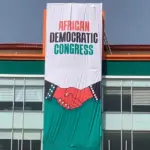
To drive this much required paradigm shift from identity based politics to a truly liberal democratic process that serves broad legitimate interest of the Nigerian people, a Coalition of the Willing citizens of Nigeria that subscribe to this ideology must be evolved into a political platform that will actively participate in the leadership recruitment process going forward. And until Nigeria evolves into a nation of citizens where a Nigerian can be Igbo and Kano, Hausa and Anambra, Yoruba and Sokoto, Kanuri and Bayelsa, Ijaw and Borno, and where the principles of fairness, justice, equity and democratic citizenship reigns supreme, the giant of Africa will remain perpetually trapped at the bottom of the pyramid of human societal development, where life is nasty, brutish and short.