Follow Us on Google
There appears a bit of economic breathing room for Nigerians this month, as the National Bureau of Statistics (NBS) has reported a drop in the country’s overall inflation rate.
According to the NBS, Nigeria’s headline inflation, which measures the total rise in prices across goods and services, fell to 22.22 percent in June 2025, compared to 22.97 percent in May.
“On a year-on-year basis, the headline inflation rate was 11.97 percent lower than the rate recorded in June 2024 (34.19 percent),” the NBS said in its latest report released on Wednesday.
However, looking at inflation month-by-month, prices still increased, just at a slightly faster pace than before.
“On a month-on-month basis, the Headline inflation rate in June 2025 was 1.68 percent, which was 0.15 percent higher than the rate recorded in May 2025 (1.53 percent),” the agency explained.
“This means that in June 2025, the rate of increase in the average price level was higher than the rate of increase in the average price level in May 2025.”
So, while inflation overall has cooled compared to last year, prices are still rising, just not as quickly as before.
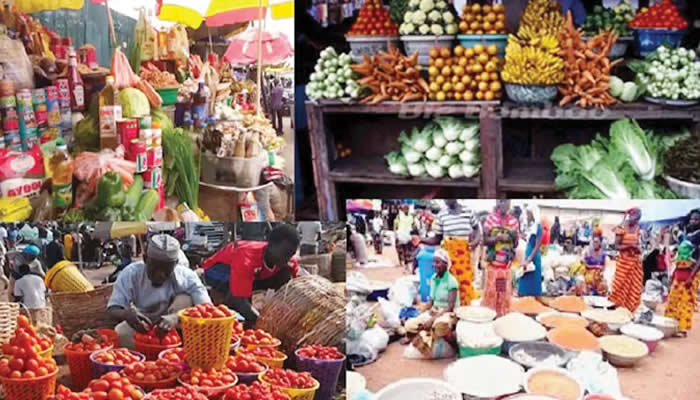
The NBS report also spotlighted food inflation, which remains a major burden on households. It stood at 21.97 per cent year-on-year in June, a big drop from 40.87 per cent in June 2024.
“The significant decline in the annual food inflation figure is technically due to the change in the base year,” the agency clarified, suggesting the fall is more about how inflation is measured than a true drop in prices.
Other News
In fact, month-on-month food inflation rose to 3.25 percent in June, up from 2.19 percent in May, which means Nigerians paid more for food in June than they did the month before.
According to NBS, the hike in food costs is “attributed to the rate of increase in the average prices of Green Peas (Dried), Pepper (Fresh), Shrimps (white dried), Crayfish, Meat (Fresh), Tomatoes (Fresh), Plantain Flour, Ground Pepper, etc.”
In terms of averages over the past year, the report shows food inflation at 28.28 percent, down from 35.3 percent in June 2024.
Not all parts of the country are feeling the same level of price pressure.
Borno (47.40 percent), Ebonyi (30.62 percent), and Bayelsa (28.64 percent) recorded the highest food inflation on a year-on-year basis.
In contrast, the slowest increases were seen in Katsina (6.21 percent), Adamawa (10.90 percent), and Sokoto (15.25 percent).
Looking at month-to-month changes, Enugu (11.90 percent), Kwara (9.97 percent), and Rivers (9.88 percent) saw the biggest spikes in food prices. Meanwhile, prices actually fell in Borno (-7.63 percent), Sokoto (-6.43 percent), and Bayelsa (-6.34 percent).
Despite the drop in overall inflation, many Nigerians are still grappling with high costs, especially for everyday essentials like food. The mixed signals in the report suggest that while some progress has been made, more work is needed to bring down prices in a way that people can truly feel.