Follow Us on Google
From Romanus Ugwu, Abuja
Independent National Electoral Commission (INEC) may have finally woken up from reverie last week since March 1 it pronounced Bola Ahmed Tinubu as the winner of the February 25 presidential election.
The electoral umpire had announced plans to commence comprehensive review of its activities for the 2023 general elections, which will involve stakeholders engagements this week in what many observers have interpreted as renewed effort to seek relevance.
The commission had gone into doldrums after incurring the wrath of a good number of Nigerians that furiously condemned its failure to match words with actions in fulfilling its promises to technologically drive the conduct of the poll, particularly in real-time uploading of the presidential election results.
On documented records, INEC Chairman, Mahmood Yakubu, had, during the build-up to the general election, assured of tested reliability on the Bimodal Voter Accreditation System (BVAS) and INEC Results Viewing Portal (IReV), promising over hundred times that the real-time upload and viewing of the election results will differentiate and standout the 2023 election as never before.
Although the commission initially blamed its failure when it mattered most on technological glitches from its ICT department, it later brazenly invoked certain legal provisions in the amended Electoral Act 2022 to rationalize not fulfilling its promises.
The commission had admitted, in a statement it issued while the collation of the results for the presidential election was ongoing and signed by National Commissioner and Chairman, Information and Voter Education Committee, Festus Okoye, encountering challenges with its results viewing portal.
“The commission is aware of challenges with the IReV. Unlike in off-season elections where the portal was used, it has been relatively slow and unsteady. The commission regrets this setback, especially because of the importance of IReV in our results management process.
“The problem is totally due to technical hitches related to scaling up the IReV from a platform for managing off-season, state elections, to one for managing nationwide general elections. It is indeed not unusual for glitches to occur and be corrected in such situations.
“Consequently, the commission wishes to assure Nigerians that the challenges are not due to any intrusion or sabotage of our systems, and that the IReV remains well-secured.
“We also wish to assure Nigerians that results from the Polling Units, copies of which were issued to political parties, are safe on both the BVAS and the IReV portal. These results cannot be tampered with and any discrepancy between them and the physical results used in collation will be thoroughly investigated and remediated, in line with Section 65 of the Electoral Act 2022.
“We take full responsibility for the problems and regret the distress that they have caused the candidates, political parties and the electorate,” the commission pleaded.
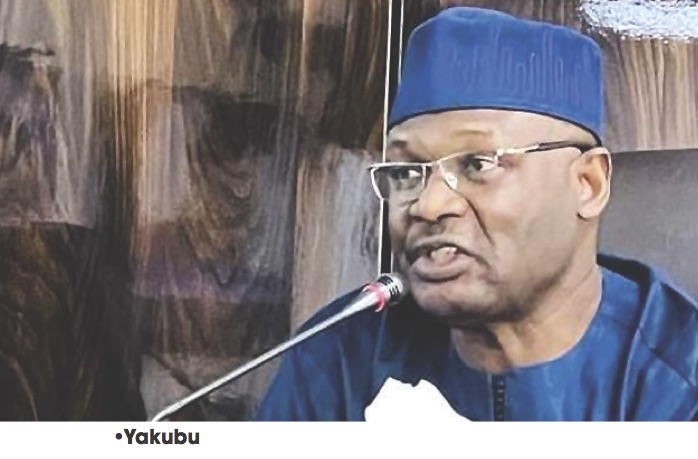
Again, confirming its abysmal performance in the conduct of presidential election, INEC boss, Yakubu, during a meeting held with the Resident Electoral Commissioners (RECs) to review the conduct of the poll, equally admitted and lamented that myriads of challenges bedevilled the poll.
According to him; “no doubt, the national elections raised a number of issues that require immediate, medium, and long-term solutions. The planning for the election was painstakingly done. However, its implementation came with challenges, some of them unforeseen.
“The issues of logistics, election technology, behaviour of some election personnel at different leveåls, attitude of some party agents and supporters added to the extremely challenging environment in which elections are usually held in Nigeria.
“We appreciate the sacrifice and doggedness of Nigerians and the dignity and maturity displayed by political leaders even in the context of divergent views about the election. A lot of lessons have been learnt.
“Of immediate concern to the commission is how the identified challenges can be addressed. The deployment of BVAS has gone a long way to sanitise voter accreditation as can be seen from the result of recent elections.
“The commission has intensified the review of the technology to ensure that the glitches experienced, particularly with the upload of results are rectified. We are confident that going forward, the system will run optimally,” Yakubu promised.
However, rather than painstakingly embarking on the promised review of the obvious glitches, the commission had complicated its credibility doubt when it started rationalising the abandonment of IReV for manual polling unit collation of results as legal provision.
The electoral umpire didn’t stop there, it also accepted the apparent mutilated presidential election results from several polling units across the country as evidences from the Presidential Election Petition Tribunal confirmed.
And in what looked like adding salt to injury, there were reported cases of landmines and difficult obstacles the commission mounted in accessing primary evidences of the results from the polling units in many states in addition to the huge financial requirements to access the materials.
Reports from the election tribunal have shown proven cases of outright difficulties and or deliberate refusal by the commission’s staff to upload particularly the presidential election results real-time in what looked like orchestrated denials to give the relevant electoral officers the password to access IReV at several locations across the country.
From the hostilities that trailed the announcement of the winner of the presidential election, to the rationalisation of its failure to upload the results real-time, the reconfiguration of the BVAS with the assurances that the data will not be tampered with to the recent alarm by the opposition political parties of INEC deleting the data on the BVAS, the commission had continued to struggle to convince many Nigerians of its relevance and credibility as an unbiased electoral umpire.
Several hostile anti-protests were repeatedly held to ground activities in front of the commission’s headquarters in Abuja by disenchanted Nigerians, but the hitherto vociferous electoral umpire boss had maintained sealed lip to what many political watchers tagged guilty conscience.
Apart from Nigerian Civil Society Situation Room, a coalition of 70 organizations working to ensure credible elections in Nigeria, demanding an unreserved apology from the commission’s boss while presenting their reports recently, political activist, Buba Galadima equally took a swipe at him, demanding his automatic sack.
The Situation Room had maintained that the electoral body failed to live up to expectations, despite several assurances from its Chairman.
“Contrary to expectations, the 2023 general election was marred by very poor organisation, severe logistical and operational failure, lack of essential electoral transparency, substantial disruption of voting, and several incidents of violence.
“As a result, the process cannot be considered to have been credible. Given the lack of transparency, particularly in the result collation process, there can be no confidence in the results of the election. In addition, there was very poor communication from INEC on challenges with its processes on election day.
“In the light of these shortcomings, the Situation Room believes that additional reforms and improvements are required to ensure that the quality of future elections in Nigeria does not further decline, and that public confidence in the capacity of INEC to conduct elections is restored. As a body, the Situation Room demands that the INEC Chairman should apologise to Nigerians for his failure,” he submitted.
On his part, Galadima, a chieftain of New Nigeria Peoples Party (NNPP), had bluntly noted: “the NNPP is strong, we did not do well because the registration of the party came late, if not for INEC targeting us and our candidates names and logo was omitted in some states we could have performed better.
“The INEC chairman must go, what he did is worse than what Godwin Emefiele did. He colluded with some people to subvert the will of Nigerians. He committed the greatest crime anybody will commit.”
Perhaps, in what looked like recovering from the shocks of the attacks and in determination to reclaim its lost glory, the commission, last week rolled out activities targetted at boosting its image and relevance.
But shortly after the announcement of the planned stakeholders engagements, the European Union Election Observation Mission (EUEOM) complicated the commission’s credibility with its dawning report on the 2023 election.
The EUEOM in its final report on the election, identified six thematic areas for improvement in the Nigeria’s electoral process moving forward.
The Chief Observer of the Mission, Mr Barry Andrews, bluntly disclosed during the presentation of its priority recommendations, some key areas of improvement.
The areas include ambiguities in the law, establishment of a publicly accountable process for the selection of INEC staff, ensuring real-time publication of results as well as access to election results.
It equally highlighted the need for protection of media practitioners while decrying the discrimination against women in elective and appointed positions as well as impunity regarding electoral offences.
Andrews also said that the election exposed enduring systemic weaknesses and therefore signalled the need for further legal and operational reforms to enhance transparency, inclusiveness and accountability.
He noted that there was need for political will to achieve improved democratic practices in Nigeria and called for inclusive dialogue between all stakeholders on electoral reform.
However, apparently miffed by the unfavourable report, INEC described as unfair and uncharitable the EU observers’ views on its overall performance during the 2023 general elections.
The commission’s spokesperson, Okoye, while reacting formally to the report, noted that; “it is not fair to judge the entire performance of the commission on the basis of a glitch in the result upload for the presidential election,”
Okoye, also passionately maintained that the “glitch in downloading the presidential election result” was not a solid reason to condemn the electoral body’s performance during the polls.
“Almost all the political parties nominated and got accredited at least over 170,000 polling agents. What that means is that they had primary evidence of the results from the polling units.
“It is those results from the polling units, together with the BVAS as a machine itself, that goes to the collation centre. So, it is not true for a political party to rely only on results uploaded in order to get the evidence with which it wants to prosecute its case in court,” Okoye argued.
Defending further, he promised that; “we are going to harmonise all the reports by international bodies that have been presented and we are going to look at the reports holistically.
“From the report presented, the EU made mention of the fact that there have been significant improvements in our electoral process and there have been so many positives to this particular election.
“One of the positives is that we registered over 93 million Nigerians during this election. Not only that. If you look at the reports submitted by international observers, in terms of voter accreditation, the BVAS performed optimally,” On the challenges encountered, Okoye argued that the context and environment of the election must be factored in, declaring that; “insecurity was in some parts of the country, which we cannot dispute. Secondly, violence was targeted towards our staff members and some other Nigerians.
“Fuel scarcity and naira re-design also were challenges. Recommendations have been made on administrative and legal issues and we are going to harvest and implement them.”
As review of activities takes centre stage this week, attention will be focused on how the commission will fight the battle to redeem its battered image and lost glory and win back the confidence many Nigerians reposed in it ahead of the three off season governorship elections in Kogi, Bayelsa and Imo states.
“The review will involve the commission’s officials at national and state levels as well as stakeholders with a view to learning lessons and charting the way forward. It will commence with a meeting of the RECs and end with the commission’s retreat on August 2023.
“At state level, the internal review will involve the commission’s regular and ad hoc staff, including RECs, the 774 Electoral Officers, Heads of Departments, Administrative Secretaries as well as some Presiding Officers and Collation/Returning Officers.
“The external engagement will involve critical stakeholders such as political parties, security agencies, election observers, the media and service providers such as transporters that facilitated the movement of personnel and materials for the election.”
It further explained that; “the review will focus on all aspects of the electoral activities before, during and after the elections. Specifically, the commission welcomes actionable recommendations from stakeholders towards strengthening institutional capacity for the discharge of its responsibilities and the enhancement of processes and procedures.”