Follow Us on Google

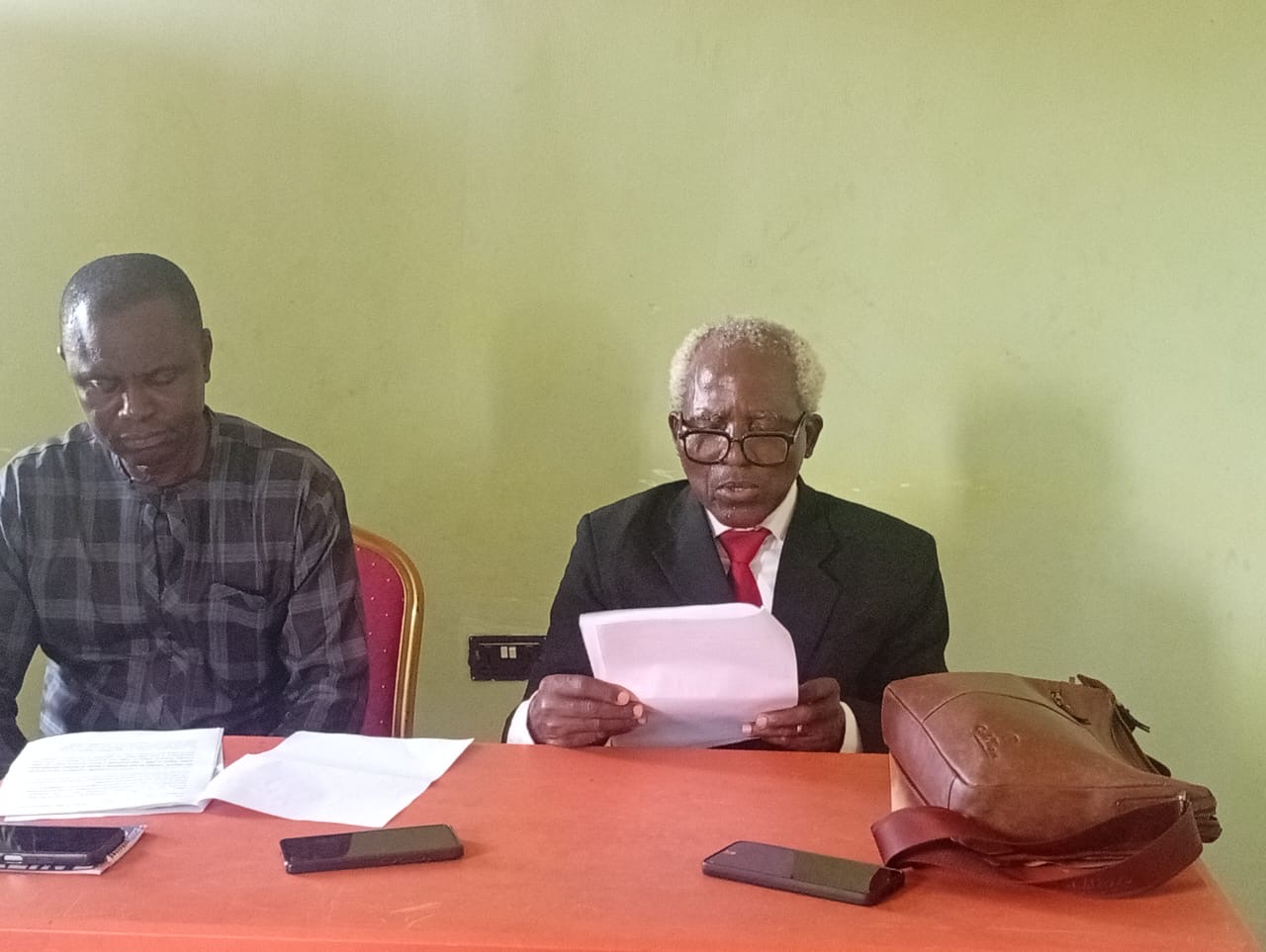
From Enweliku Kent, Asaba
Renowned Professor of Technology Management, Francis Eniterai Ogbimi, has declared that Nigeria’s poverty, mass unemployment and insecurity will persist unless the nation commences deliberate and accelerated industrialization in 2027.
Ogbimi, who addressed journalists in Asaba Delta State Capital, said his 40-year research has proven that industrialization remains the only scientific pathway to national growth and wealth creation.
The briefing, titled “Let Us Commence the Nation-Building Project of Mobilising All Nigerians for Integrated Learning and Accelerated Industrialization in 2027: Solution to Stagnation, Mass Unemployment, Low Productivity, Poverty and High Insecurity in Nigeria,” was based on research spanning more than 40 years.
He said the research sought to establish the scientific basis for national growth and development and explain the global distribution of wealth and power.
He argued that industrialization should be Nigeria’s highest priority, noting that the absence of a strong industrial base had contributed to poverty and underdevelopment across Africa.
According to him, while about 60 to 70 countries worldwide have achieved industrialization, none of Africa’s 54 countries has attained the level of industrial development required to drive widespread prosperity.
He maintained that every nation began as an agricultural and artisan society before progressing through the acquisition of scientific knowledge, skills and technological capabilities.
The professor said African countries could achieve industrialization by equipping their citizens with the knowledge and competencies required to manufacture science- and technology-based products.
He identified education, training, employment and research as the major components of integrated learning, stressing that education alone was insufficient to accelerate industrial development.
“Employment is the blood of the economy, but employment enables the distribution of knowledge, skills and competencies across different sectors of the economy,” he said.
He warned that persistent mass unemployment would undermine national productivity and economic growth, noting that Nigeria’s prolonged experience of unemployment had contributed to economic stagnation.
On measuring national progress, Ogbimi said industrial development should not be assessed solely by gross domestic product (GDP), but also through learning-related indicators.
He identified five variables for measuring progress in a learning system: the number of people learning; their levels of education and training; the linkages among their knowledge and skills; learning rates; and accumulated learning experience.
He further noted that Nigeria and other African countries had not pursued industrialization systematically since independence, adding that excessive emphasis on capital investment and infrastructure development had failed to deliver the desired economic transformation.
According to him, infrastructure, including electricity, should be developed as part of a broader industrialization process rather than treated as an end in itself.
Citing Japan, China and Singapore as examples, Ogbimi said the countries had achieved industrial progress by mobilising their populations for learning and skills development.
He urged Nigeria to adopt a similar approach, proposing May 24, 2027, as the commencement date for a nationwide mobilisation of citizens for integrated learning and accelerated industrialization.
He expressed optimism that Nigeria could achieve industrialization within 20 years if the proposed strategy were implemented effectively.
Ogbimi also urged President Bola Tinubu and other stakeholders to prioritise the initiative, arguing that the country needed a fundamental shift in its development strategy to address poverty, unemployment and insecurity.
The professor further called for the suspension of the general elections reportedly scheduled for January 16, 2027, to enable the country to focus on the proposed national mobilisation programme.
He said the initiative, which he attributed to recommendations by the School of Labour and Economic Policy (SOLEP), was necessary to prevent further economic stagnation and put Nigeria on the path to sustainable industrial development.