Follow Us on Google

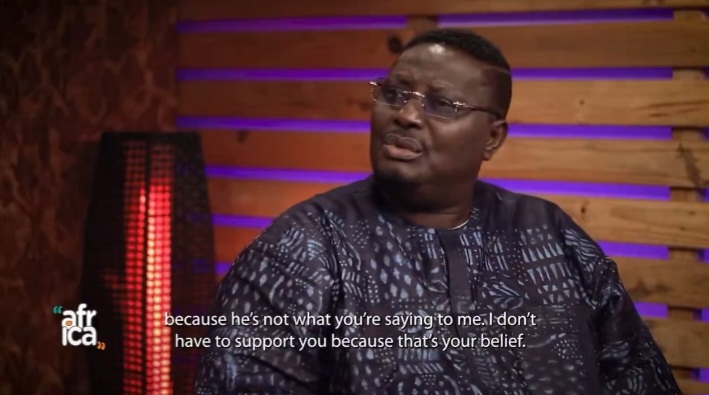
For over two decades, Kunle Afod has remained a familiar face in Nollywood, successfully navigating the changing landscape of the Nigerian film industry as an actor, producer and mentor.
From his early days as a teenage actor to becoming one of the industry’s experienced hands, Afod has witnessed the transformation of indigenous filmmaking, the rise of streaming platforms and the emergence of new talents.
In this encounter with Sunday Sun, the actor speaks candidly about the growth of Yoruba cinema, industry ‘caucuses’, the controversial culture of ‘rub my back’ relationships, criticism, mentoring younger actors and the values that have kept him relevant for more than two decades.
Before now, Indigenous filmmakers were often scared to invest in the mainstream market. Do you think there is now a viable market for indigenous films, considering the work of some filmmakers?
Truth be told, filmmakers were previously afraid to invest in indigenous movies because they felt there was no market for them. But with the likes of Kunle Afolayan, Femi Adebayo and others who have made a significant difference, there is now a serious market for indigenous films.
Nobody wants to invest heavily in a movie only to go bankrupt because of poor returns. In the past, we had mostly marketers, and later, Africa Magic came into the picture. I can tell you wholeheartedly that Africa Magic pays relatively well, while what some other television stations offer is nothing to write home about. At one time, a television station could tell you it wanted to buy a movie project for N10,000. Would you then spend millions of naira producing a film only to sell it for N10,000?
Thankfully, we now have streaming platforms such as Netflix, Prime Video, Kava and Circuit, while cinema culture has also returned strongly. Back in the day, we mostly had the National Theatre, but today, there are cinemas across different states. This has created more opportunities for potential investors to support the creative industry.
The Yoruba film industry is known to have several caucuses. Don’t you think these movements have affected the industry negatively?
I don’t see it as a negative force. If you are a lawyer and you belong to a particular chamber, is that going to affect the entire association of lawyers? No. You have your own people, too. It is simply a way to feel comfortable with the people around you. For instance, someone may want to act and, having stayed in Ekiti, decide to join a particular group. That doesn’t mean that when an opportunity comes, the person will not work with others.
It is simply about enjoying the industry and learning one or two things from people around you. I have been training people for more than 24 years. When I tell them these things, they understand. I have trained so many people. Initially, I trained technical crew members before I decided to train actors such as Regina Chukwu, Gaji, Yinka Solomon, and others. When Femi Adebayo was making Jagun Jagun, I had about 10 of my students in the movie.
How have you been able to combine all the necessary factors to remain relevant in an industry like yours?
You have to be professional in everything you do and in every aspect of your career. Some people are introverts, yet they are in show business. It can get difficult when someone like that reaches a certain stage in the industry. When I was younger, I hated taking pictures, but when I got into this profession, I realised that you have to take pictures, engage with people and do certain things to remain relevant.
Other News
Having acted for so many years, what would you say is your driving force?
God has been my source of inspiration and driving force. However, I also love working with the younger generation because, sooner or later, they will be the ones taking over from us. I also played a teacher in a movie titled ‘Ija Omode’, which featured some younger actors. Today, some of those actors and I work together as friends and colleagues.
I believe that encouraging the younger generation by featuring them in our projects will help us have a longer run in the entertainment industry. We need to create opportunities for those coming behind us.
How do you navigate payments in an industry that is often believed to operate on the principle of ‘rub my back, and I’ll rub yours’? Isn’t it the same in politics?
It happens everywhere. There is what we call ‘the eyes know what they see.’ Sometimes, your success will make people unwilling to do certain things for you. Your focus should be on becoming successful. Will ‘rubbing backs’ make you successful? If it will help you succeed, then you can work with people and support one another. But the ultimate goal should be to get to the top.
Who wants to call Lateef and offer him a small amount of money to ‘rub his back’? His brand is already big. If he manages to create some space in his schedule for you, you have to pay for his time and value.
The same applies to the big artistes. They all started somewhere. They supported one another and worked hard to get to the top. Once you get there, it is no longer about ‘rubbing backs’. At that point, you can decide to help those coming behind you to become successful.
How do you respond to criticism?
If you don’t like criticism, you can’t grow. You need to know where you have flaws, where you make mistakes and where you need to improve. No one is perfect, so constructive criticism is good. However, trolling and harsh criticism are different because not everyone has the emotional capacity to handle hurtful comments.
You are one of the actors who do not flaunt wealth on social media. Is that deliberate?
Like Davido said, ‘We rise by helping others.’ The number of people you help and assist is your wealth; it is not necessarily the material things you possess. People who became successful through your support are your wealth. It is not just about how much money you have in your bank account.