Follow Us on Google
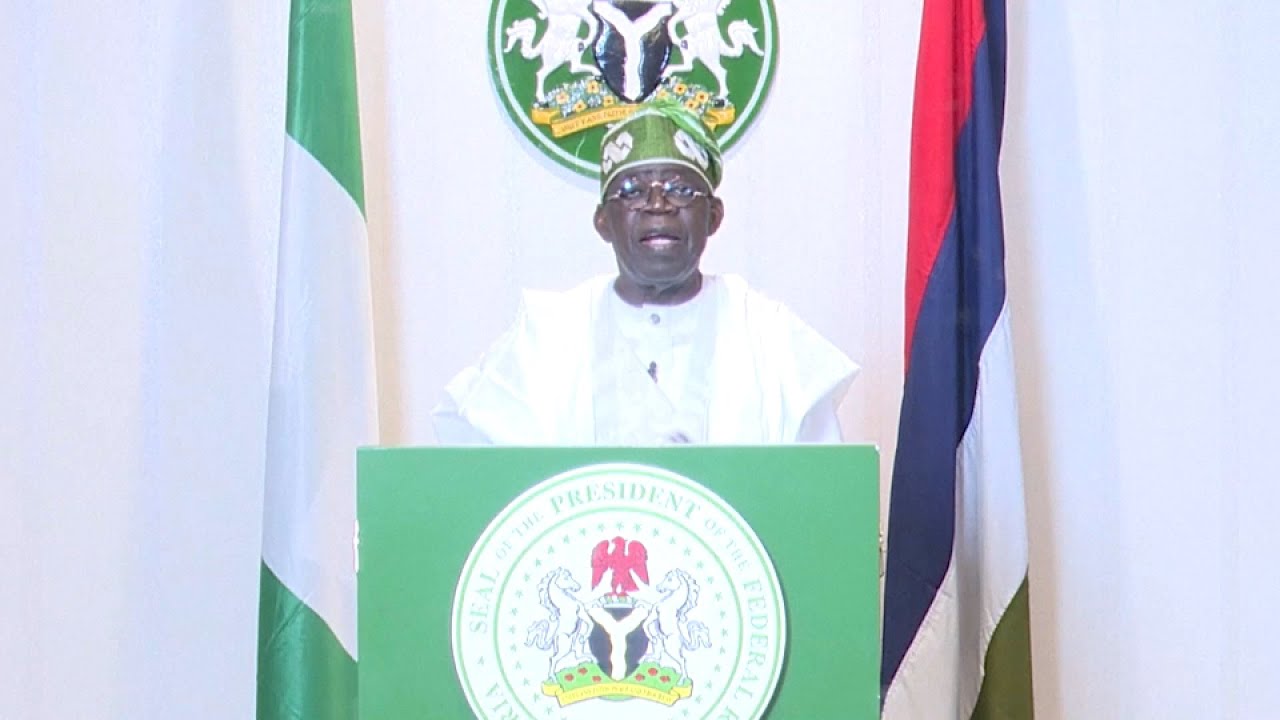
President Bola Tinubu has likened Nigeria’s longstanding economic problems to cancer, saying successive governments treated the symptoms instead of confronting the underlying weaknesses.
Tinubu made the comparison in his Independence Day address on Thursday, as Nigeria marked 66 years of independence.
Using a medical analogy, the President said Nigeria had reached a point where difficult treatment was unavoidable, arguing that previous administrations had relied on temporary measures instead of addressing structural problems.
“Nigeria was like a sick patient who receives the terrible news that he has cancer,” Tinubu said.
He explained that such a patient would have to choose between undergoing painful treatment with the prospect of recovery or taking medication that merely suppresses the symptoms while allowing the disease to worsen.
“For too long, Nigeria’s leaders chose morphine while praying for a miracle that never came,” he said.
According to Tinubu, governments had spent heavily to sustain inefficient economic arrangements while avoiding difficult decisions and passing the consequences from one generation to another.
He said his administration instead decided to tackle what he described as the “cancer” affecting the economy, despite the immediate hardship associated with the reforms.
“We chose to excise the cancer. The reforms that followed were difficult. The side effects were real. Yet, we must never confuse the medicine with the disease,” he said.
Tinubu argued that the reforms did not create Nigeria’s economic weaknesses but were introduced to confront them.
“Our reforms did not create the weaknesses in our economy. They confronted them,” he said.
He particularly defended the removal of fuel subsidies, warning against calls to reverse the policy and return to what he called “addictive subsidies.”
Other News
The President said the government had now moved beyond the initial phase of economic correction and was entering what he described as an “age of prosperity.”
“The emergency treatment is over. The foundation has been repaired. The central economic task before us has changed,” he said.
Tinubu said the next phase would focus on reducing the cost of living by lowering the cost of producing and transporting goods.
He listed agricultural mechanisation, irrigation, improved access to seeds and fertiliser, storage facilities and transportation infrastructure among measures aimed at reducing production costs.
He also identified industrialisation, job creation, digital connectivity and access to finance as priorities for the next phase of his administration.
While highlighting improvements in economic indicators, including growth of more than four per cent this year, falling inflation and improved foreign reserves, Tinubu acknowledged that millions of Nigerians remained under pressure.
He said many families were still struggling to afford food, education, healthcare and transportation.
The President said government would strengthen social interventions, including support for vulnerable households, the Nigerian Education Loan Fund and CREDICORP.
He maintained that the ultimate objective was to move Nigerians from dependence on assistance to productive economic opportunities.
“Our objective is not to manage poverty more efficiently. We will defeat it,” Tinubu said.
Tinubu said achieving that goal would require sustained economic growth, discipline and the creation of millions of productive opportunities across the country.