Follow Us on Google
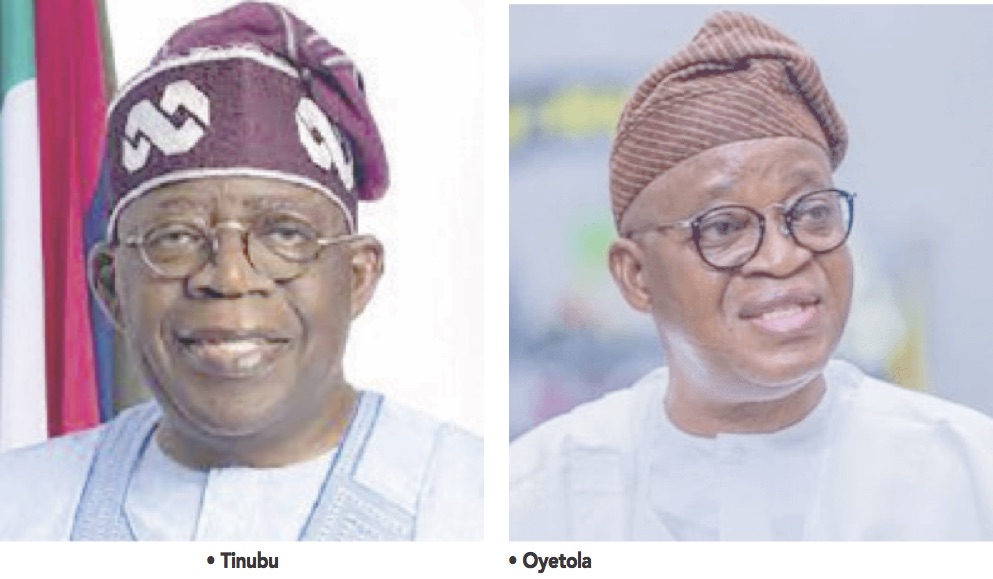
•Petition Tinubu
By Steve Agbota
Importers and freight agents have raised the alarm over cargo tariff increases by international shipping firms, threatening to shut down operations at Nigeria’s ports if urgent intervention is not provided.
The groups have petitioned President Bola Tinubu, warning that the surging costs are crippling trade, slowing supply chains and inflating prices for businesses and consumers alike. They say immediate action is needed to avert a full-scale port disruption.
Daily Sun learnt that the foreign shipping lines’ had already increased the cost of shipment more than once in the previous year. For instance, in March 10, 2025, one of the shipping lines, CMA CGM, increased its local charges on Nigeria-bound consignments. Then, the increment came at a time when the Nigerian Ports Authority (NPA) announced a 15-per cent hike in port charges in the same year.
These tariff hikes have already made Nigerian ports among the most expensive in the world and the costliest in West and Central Africa, prompting a significant portion of Nigerian-bound cargoes to be diverted to neighboring countries.
However, following the recent approval by the Nigerian Shippers Council, one of the foreign shipping lines operating at the nation’s ports, Mediterranean Shipping Company (MSC) released a revised schedule of charges, stating that with effect from January 1, Import Documentation Fee for 20-foot containers has been increased from N45,000 to N58,500, while the fee for 40-foot containers will now be N93,600 instead of the old rate of N72,000.
Conversely, MSC said that Port Additional Charges for 20-foot containers have been increased from N50,000 to N80,000, while charges for 40-foot containers jumped from N100,000 to N160,000. MSC indicated in the notice that the new tariffs would take effect from January 1, 2026.
Meanwhile, stakeholders who spoke with Daily Sun carpeted the Nigerian Shippers’ Council for giving such approval for the increment, amid the already tense Nigerian economic polity stirred by the new tax regime.
Although, the Council, being the Port economic regulator, in approving the review, asked the shipping companies to embark on sensitisation of shippers before the new charges are implemented.
At a stakeholders’ meeting in Apapa, the Executive Secretary/Chief Executive Officer of Shippers’ Council, Dr Pius Akutah, said the Council is aware of the planned increment and sanctioned it.
According to him, the shipping lines have been asking for this review since the beginning of the year 2025.
“We have been appealing to them to step it down because at the beginning of last year, there were so many issues of inflation in the economy, foreign exchange fluctuations, and they too are working in our environment.
“Towards the end of the year, we reviewed some, but not all the nomenclatures of charges, but those that have been impacted by the indices affecting you and I in our personal lives .So, for those ones, we approved a marginal increase, but they are to first of all carry their customers along and discuss it first. Two of them have carried out these discussions and said the customers now understand the need for that marginal increment,” he added.
Frantically speaking, importers and Customs agents have strongly criticised the planned increment of local charges by shipping companies, describing it as arbitrary, ill-timed and unjustifiable.
An importer at Arena Market, Oshodi, Mr Pius Chijioke, said that the new increment would impact negatively on the cost of doing business at the nation’s seaports and its competitiveness in the global market.
“Other charges here and there could have influenced the new hike fee. Our port is one of the most expensive in the world and the most expensive to do business in West and Central Africa. Our port is overcharged and the reason you see most of our cargoes are being diverted to neigbouring ports. The nation’s ports situation is alarming.
”We the importers called on the government to order these shipping lines’ to suspend the increment and embark on rigorous sensitization of stakeholders not just that they will issue a statement to announce any increment. The government should appreciate some of us who are still in this importation business because we are bleeding through our nose,” he said.
He warned that increment in charges of any kind at this period is ill-timed and ill-advised considering that Nigerians are grappling with so many challenges because the nation’s economy is already overstretched.
Also speaking, the Managing Director of Sula Marine Global Limited, Sulaiman Ayokunle, said the implication of the increment by the shipping companies is far and wide, and it will definitely get to final consumers because for every importer, they work on estimates.
“And if on arrival of a consignment, suddenly you have increments, this thing can lead importers to pay more through their nose, because some of these things are sponsored, some of these consignments are sponsored by banks, and being sponsored by banks through budgeting. Before going into that, we know that the Shippers’ Council is the port economic regulator. But there are procedures and processes of increments.
“You can’t put the cart before the horse. You definitely must go through stakeholders’ sensitization. The Shippers’ Council is not the one paying this money. They are just the port economic regulator. But the policy and the condition of service is that the stakeholders, that is the importer, and the freight forwarders, must be carried along with adequate sensitization before approval of increment. Now, the Shippers’ Council gave approval and said they should go for consultations.
“Which one should come first? Is it not a consultation that is supposed to come before approval? Something must lead to something. Even if the House of Assembly wants to enact any law, they will go for a public hearing. And the purpose of that is to carry everybody along. They can’t be Mr know all! The Shippers’ Council is not the same thing as an importer. However, they have been created to protect the interests of the shippers. But the reverse is the case. Remember that of Maritime Police.
“So, MSC called a meeting on December 28 and 29 last year. And after 72 hours, what we witnessed is the increment. Are they telling us that they have been able to give adequate sensitization or carry people along within those 72 hours? But all of us will bear the brunt,” he said.
However, an importer, Emmanuel Amaife said: “Well, some of this is sometimes we are short of words, you know, to explain what is actually happening. I don’t know the parameter with which they measure these things before they reach a conclusion to increase their tariff. Because the fact remains that every little increment from the port operation will be transferred down to the least citizen in the country.
“Let’s assume that we are doing a particular transaction for 20,000 and suddenly you increase it to 30,000. You know the 30,000 will add to the cost of production, it will add to the cost of operation. So just like that, the 10,000 will keep moving and the 10,000 could become 20,000, 30,000 as it gets down to the least person in the society.
He said if some stakeholders are threatening to shut down the port, well, they have their reasons, urging the relevant agencies of the government to do the needful to avert such a situation where the activities are shut down at the port.
“Shutting down the port will cost us more when we shut down the port, but it can cost us less if proper consultations are made and allow stakeholders to air their view. And what is their view? Their view is that the increment is not necessary now. You know this 2026, there are a whole lot of issues confronting Nigerians.
“The new tax reform system that is in operation right now, many people have not really understood how it’s going to work out and the N50 stamp duty among others. So I would have preferred that they suspend the tariff completely for now until such a time when the situation improves. Because the burden is just so much.
I don’t know. Yes, most times they only think about generating revenue for the government, which is okay.
”But why generate the revenue? Do you consider the impact it will have in the system? Who are the people that are raising this revenue? Is still the same Nigerians. Because when you increase the port services, the charges and the tariff. It is a common man in society, me and you that directly or indirectly pays this increment. So I don’t know. I’ve been looking at these things since then. I have not been able to find a better language to explain what exactly the government intends to achieve with this.
He said like every other importer will align stakeholders and ask the federal government to halt this increment for now and allow businesses and businessmen to stabilize.
Meanwhile, the Coordinator, Association of Nigerian Licensed Customs Agents (ANLCA), Western Zone, Alhaji Femi Anifowose, lamented that several shipping companies are to commence new wave of charges, singling out the Mediterranean Shipping Company (MSC) for its 30 percent increase on Import Documentation fees and a 60 percent hike on Port Additional Charges, with effect from January 1, 2026.
Anifowose said the association has formally called on President Bola Ahmed Tinubu to urgently direct the Minister of Marine and Blue Economy, Adegboyega Oyetola, alongside relevant regulatory agencies such as the Nigerian Shippers’ Council (NSC), to halt the planned increment.
According to him, the shipping lines have failed to give stakeholders sufficient notice or justification for the new charges, noting that key economic indices often cited by shipping companies such as diesel, Premium Motor Spirit (PMS) and foreign exchange have largely stabilised over the past 18 months.
“There is absolutely no reasonable basis for these increments at this time. Fuel prices and forex pressures have eased considerably, yet shipping lines continue to impose fresh charges on importers and agents without transparency,” he said.
He further revealed that MSC issued what he described as an impromptu invitation to a stakeholders’ meeting on December 23, 2025, scheduling the meeting for December 30, 2025, during which the new charges were announced to take effect within 48 hours (January 1st, 2026).
He criticised the timing of the meeting, arguing that it was deliberately fixed at a period when many importers, freight forwarders and relevant government agencies would be unavailable to attend or meaningfully engage.
“The so-called stakeholders’ meeting was neither inclusive nor consultative. Many critical stakeholders were absent, yet far-reaching decisions affecting the entire port system were announced,” he lamented.
ANLCA Western Zone is therefore demanding an immediate postponement of the new charges, insisting that any review of shipping costs must follow proper and holistic engagement involving freight forwarders, the Nigerian Shippers’ Council, shippers and other key industry players.
The association also issued a stern warning that continued imposition of what it termed “unilateral and exploitative charges” could provoke strong resistance from freight agents.
“If this trend continues unchecked, freight forwarders may be left with no option but to withdraw their services or embark on protests across the ports,” Anifowose warned.
He urged the federal government to act decisively to protect port users and ensure fairness, transparency and sustainability in Nigeria’s maritime and logistics sector.