Follow Us on Google

 Stories by Maduka Nweke, [email protected] 08034207864, 08118879331
Cost of buildings and other construction projects in Nigeria has continued to rise as government has not been able to take drastic measures to stop importation of building materials. This is happening as population of Nigeria continues to weigh heavily on available housing. Over these years Nigeria has become a dumping ground for imported raw and finished materials because government has refused to redirect mentality of its citizenry.
Blessed with every good thing, the people have refused to scratch it to see what is inherent in the mud covering the plate. There is a lot of clay across the length and breadth of the country that could be extracted to build the fancy buildings we envy in foreign lands. This cannot be explored because the leaders who stole from our common purse have deployed the money to work for them. They now sit down and enjoy luxury life while the money goes abroad and imports the way of life of foreigners with no stress.
For not being futuristic and ready to task our brains, ‘we’ look for the ready made materials. We employ negative brains to action while the positive ones that would help to manufacture things that could attract other countries into Nigeria are left untapped. Instead of Nigerians researching for things that would help them to develop, they prefer importing other people’s way of life and their attitudes. This also introduced wickedness, laziness, poverty and wholesale dependence on others for help.
Although Nigeria and many African countries are admired for being raw materials and commodity markets, a study of importation in the country shows that Nigeria has spent as much as N19.5 trillion on the importation of primary raw materials that include building materials into the country in the past seven years.
Statistics obtained from the Raw Materials Research and Development Council (RMRDC) showed that between 2010 and 2015, Nigeria spent N13.6 trillion on the importation of raw materials especially building materials that could have been sourced locally if some more rigorous work could be put into the country’s import substitution strategy. This is correct, yet government officials and those who read such things in the universities that are appointed leaders on account of their speciality abandoned them for easy and finished products.
By 2016, the country spent another N5.89 trillion on the importation of similar raw materials, thus bringing the total sum spent on the importation of primary raw materials into the country within the seven-year period to N19.5 trillion. The imports in 2016 included some finished products. This means that on the average, the country splashed N2.79 trillion every year in the past seven years to import building materials and other raw and finished materials.
Despite being a large country, one wonders whether any successive governments have considered how big the building and construction materials business in Africa really is? For one to venture into such things means looking for solutions on how to procure them locally. At this point, discerning minds begin to ask whether government is not aware that high building and construction activities are often signs of growing economies. This is because when the economy looks good, the demand for residential, commercial and all kinds of real estate usually goes through the roof.
Nigeria, and indeed Africa, is home to six of the world’s largest growing economies and also the world’s fastest growing population, which is expected to reach 2.3 billion in less than 40 years. The current crop of leaders do not consider how those that aided to make the things they enjoy now possible and going forward where will the surging population live in times to come. Thatched houses were formerly in use in local areas in Nigeria. But the taste of what is the cultural way of life of others made us to discard the thatched roofing methods and go after the foreign ones. The foreigners now researched into it and found it nice to become tourists sites in five star hotels all over the world.
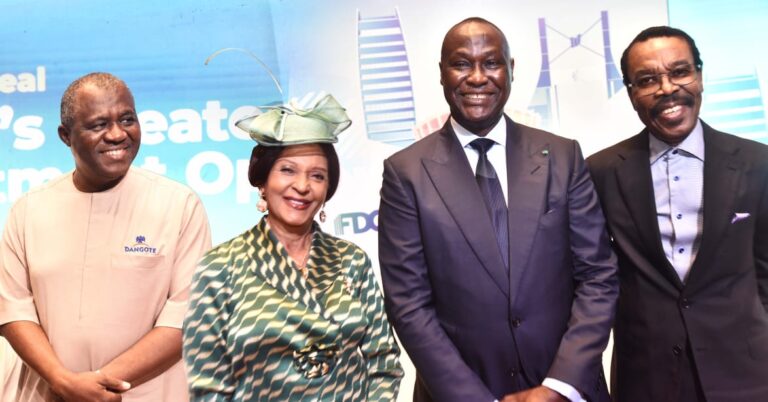
It’s no surprise then that Africa’s richest man, Nigeria’s Aliko Dangote, has built a multi-billion dollar fortune from cement, one of the most important and hot-selling building materials on the continent. Across Africa, entrepreneurs, investors and governments are spending billions of dollars on real estate projects in a bid to satisfy the huge and growing demand for residential and commercial accommodation.
It is important for other rich men and women in Nigeria to toe the same line by venturing into other building materials to make the country self-sufficient locally. This will stop the spending of Nigeria’s little hard earned foreign currency that could be used to bring technocrats that would teach Nigerians other techniques they don’t know.
If the Federal Government wants to help the country, it needs to stop importation of everything including going abroad for treatment. We have come of age. We have people in all the sectors who have the technological know-how to give Nigerians what they want here in Nigeria without the help of foreigners.
With that, we will also stop exporting the little resources we have so that we can attract foreign investors into the country. It is normal that at the initial stage it will be rough but after some time, it will stabilise.