Follow Us on Google
By Doris Obinna
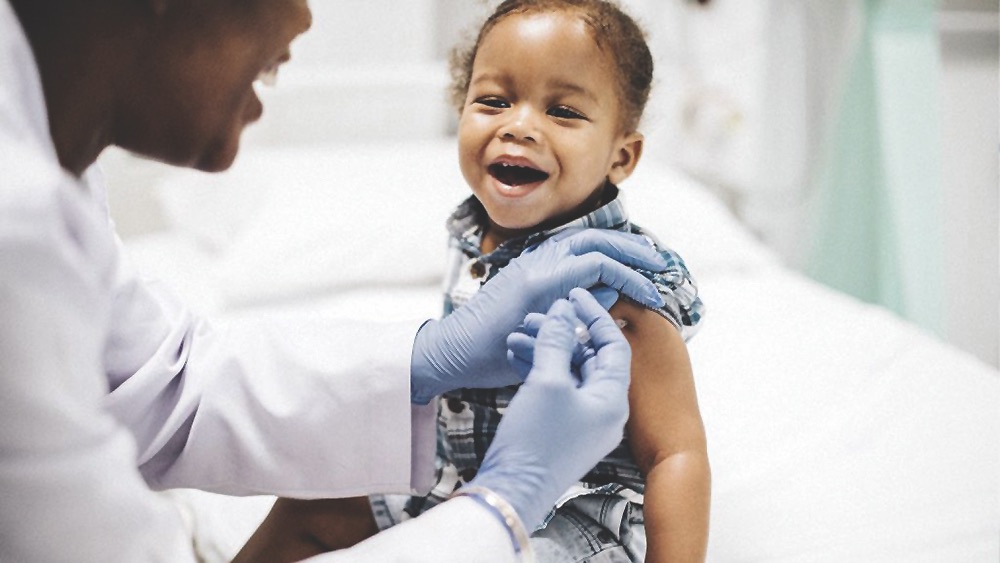
Immunisation for all is humanly possible. Over the last 50 years, essential vaccines have saved at least 154 million lives. That is; six lives a minutes, every day, for five decades. In these 50 years, vaccination accounts for 40 per cent of the improvement in infant survival and more children now live to see their first birthday and beyond that at any other time in human history. Measles vaccine alone accounts for 60 per cents of those lives saved.
According to World Health Organisation (WHO), there are more lives to be saved by building on these achievements; the future of immunization means not only reaching millions of children who have never received a single shot, but protecting grandparents from influenza, babies from malaria and respiratory syncytial virus (RSV), pregnant mothers from tetanus, and young girls from human papillomavirus (HPV).
Vaccines are proof that less disease, more life is possible when we put our minds to it. It is time to show the world that immunization for all is humanly possible.
Observed every year on November 10, World Immunisation Day serves as a reminder of how vaccines save lives and why equitable access remains essential.
The Lagos State Ministry of Health at a stakeholders’ dialogue renewed its commitment to strengthening immunisation systems and community engagement, calling on parents, partners, and frontline health workers to close the state’s growing vaccination gaps and achieve universal coverage by 2030.
At the meeting, organised by Save the Children International under the GSK-supported Better Opportunities for Optimised Targeted Intervention (BOOST) Project for zero-dose and unvaccinated children, the State Ministry recommitted its drive to ensure every Lagos child receives life-saving vaccines.
Speaking, Director, Nursing Services, Lagos State Ministry of Health, Mrs. Olusola Aketi, said the state is prioritising transparency, accountability, and community trust to improve vaccine uptake and health outcomes.
According to her, vaccination distribution in Nigeria faces significant challenges from data inconsistencies and worker attitudes to public hesitation and misinformation, but Lagos is taking deliberate steps to correct these gaps. “We are strengthening monitoring systems, improving community engagement, and ensuring every child has access to life-saving vaccines.”
Aketi acknowledged the roles of international partners such as U.S. Agency for International Development (USAID), United Nations Children’s Fund (UNICEF), and Save the Children, but stressed that local ownership and accountability must drive progress. “We must prove to the international community that we are serious about our health systems. When partners lift their hands, our transparency and commitment should be evident,” she added.
Reflecting on the lessons from the COVID-19 pandemic, Aketi acknowledged that the crisis exposed weaknesses in Nigeria’s health infrastructure but also built resilience within the system.
She highlighted that communication and attitude among health workers remain central to vaccine acceptance. “The way a service is delivered determines whether people will accept or reject it. Our nurses, midwives, and vaccinators must see themselves as ambassadors of care. For you to give me the service, I need to believe in your competence.”
She credited community-based organisations (CSOs) for bridging the gap between health systems and communities. “CSOs are the bridge between the health system and the people. They help us identify dark spots and reach the unreached. The ministry has also prioritised coaching and retraining of health personnel as part of its strategy to enhance service delivery and rebuild community confidence,” she noted.
Vaccine rollout
Aketi described the recent introduction of HPV for young girls in Lagos as a game-changer in safeguarding the future of women. “A young lady vaccinated today is a woman protected tomorrow. That is how we prevent needless complications like cervical cancer.”
She urged parents and school proprietors to make immunisation a non-negotiable responsibility, emphasizing that vaccination is both a right and a duty. “Through advocacy with school associations, we are encouraging parents to vaccinate their children. Immunisation is not optional, it is essential,” she stated.
Appealing for stronger collaboration with the media to counter misinformation and build public confidence, she said, the media is a powerful ally. “Help us tell stories of hope, of survival, and of the government’s genuine effort to protect every Lagos child.”
Immunisation coverage declines
However, despite these efforts, routine immunisation coverage in Lagos remains below target, with worrying gaps emerging across several local government areas (LGAs).
Presenting the Lagos State Quarter 3 Routine Immunisation Report for 2025, the State Immunisation Officer (SIO), Mrs. Kemi Oshodi, revealed that 63,597 children were unvaccinated between January and September 2025.
She said: “Lagos operates 874 primary health facilities, only 334 offer routine immunisation services, and four out of five tertiary hospitals currently administer vaccines. We have seen some improvements, but our overall coverage remains below expectation. For a megacity like Lagos, 78 per cent coverage is not where we should be. The state’s Penta 1 coverage stood at 78 per cent, below the expected 90 per cent target, while measles 2 coverage dropped as low as 21 per cent in some LGAs.”
Attributing the decline to vaccine stockouts, human resource shortages, and vaccine hesitancy in certain communities, she explained that many parents believe that once their child turns one, vaccination ends. Others simply don’t know they must return for the second measles dose.
The report further identified Surulere and Kosofe as high-risk LGAs requiring urgent intervention. Alimosho, which has the largest child population in the state, recorded over 14,000 unvaccinated children a figure projected to reach 20,000 by year’s end.
Oshodi lamented that Surulere has consistently underperformed despite full data entry. “In Kosofe’s Mile 12 area, turnout dropped drastically after a popular health worker was transferred. When trust breaks, coverage falls.
“Community distrust, particularly in areas like Itire, Coker, and Aguda (Surulere), has also been linked to political tensions and misinformation, further complicating immunisation campaigns. Other logistical barriers, including the lack of weekend vaccination options and limited community awareness in hard-to-reach areas like Ibeju-Lekki and Ikosi-Isheri, have also hindered progress.”
HPV campaign offers hope
She continued: “Despite these setbacks, Lagos recorded strong performance in the HPV vaccination campaign, particularly through school-based outreach targeting girls aged nine years. School-based strategies are the most effective approach.
“Consent is easier to obtain in schools than in communities, where misinformation still limits turnout. The state has begun categorising LGAs by performance and conducting monthly data reviews, with a comprehensive Quarter 4 assessment scheduled for January 2026.
Aketi and Oshodi agreed that achieving Lagos’s 2030 immunisation goals will require sustained advocacy, community participation, and transparent resource management.
“Financial sustainability and accountability are key. Every resource received must be well-utilised and reported transparently, Aketi said, reiterated the state’s readiness to lead by example. “Lagos is ready. We have done a lot, but there’s still more to do. With shared responsibility, trust, and sustained advocacy, we can secure a healthier future for our children.”