Follow Us on Google
By Uche Usim
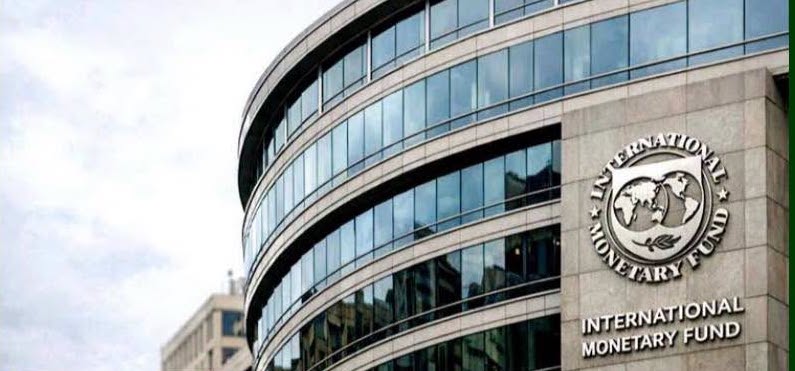
The International Monetary Fund (IMF) has assessed Nigeria’s economic situation and submitted that the country would channel more than half of its revenue into servicing debt in 2026.
The development reveals the persistent pressure of debt obligations on the country’s public finances despite signs of improving macroeconomic stability.
The IMF projected that the federal government’s interest payments will account for 53.7 per cent of total revenue in 2026, slightly higher than the 53.2 per cent estimated for 2025 and significantly above the 40.8 per cent recorded in 2024.
The Fund, however, expects a marginal improvement in 2027, when the interest-to-revenue ratio is projected to decline to 52.4 per cent.
The forecast was contained in the IMF’s latest country assessment, which also pointed to improvements in inflation, foreign reserves and overall economic stability following recent reforms.
According to the report, average inflation is expected to ease to 16 per cent in 2026, while Nigeria’s gross international reserves are projected to rise from $40.2 billion in 2024 to $58.1 billion in 2026 before increasing further to $62 billion in 2027.
The projections come amid ongoing efforts by the Federal Government to strengthen public finances, boost revenue generation and sustain economic reforms aimed at restoring investor confidence.
Speaking on ARISE Television on Tuesday, IMF Resident Representative for Nigeria, Christian Ebeke, said the country’s debt remained sustainable despite concerns over the rising cost of servicing it.
“Our latest assessment in the Article IV that we just published on June 9 basically concludes that Nigeria’s debt is sustainable. And second, the risk of sovereign stress is actually moderate. So we don’t see Nigeria as a high-risk debt-distressed country,” Ebeke said.
Other News
He noted that Nigeria’s debt-to-GDP ratio, which remains in the mid-30 per cent range, compares favourably with many peer economies and reflects a relatively manageable debt burden.
According to him, the structure of Nigeria’s debt portfolio also provides some comfort, as it consists of a balanced mix of domestic and external borrowings with relatively long repayment maturities.
However, Ebeke stressed that the major challenge facing the country is not the size of its debt stock but the proportion of government revenue being consumed by debt servicing.
“We actually estimate that in 2025 to 2028, the interest-to-revenue ratio, how much the federal government pays out of the tax it collects, is actually about 50 per cent,” he said.
“When you have more than 50 per cent of your tax collection devoted to repaying interest on your federal government debt, it leaves you very little room to actually pay for health, education, cash transfer, including security.”
The IMF official said the institution’s focus remains on supporting Nigeria’s efforts to improve domestic revenue mobilisation, describing it as the most effective way to reduce fiscal pressures and create room for critical public spending.
He emphasised that the successful implementation of recently enacted tax reforms would be crucial to boosting government revenues and strengthening fiscal sustainability.
Ebeke added that while Nigeria continues to grapple with high inflation, poverty and food insecurity, stronger tax administration and enforcement of the new tax laws could significantly improve the government’s revenue base and reduce vulnerabilities in the medium term.
Analysts say the IMF’s projections highlight the importance of accelerating revenue reforms, as growing debt-service costs continue to limit the government’s ability to invest adequately in infrastructure, healthcare, education and social welfare programmes.
Despite the fiscal challenges, the Fund’s forecasts of lower inflation and rising external reserves suggest that Nigeria’s broader economic outlook may improve over the next two years if current reforms are sustained.