Follow Us on Google
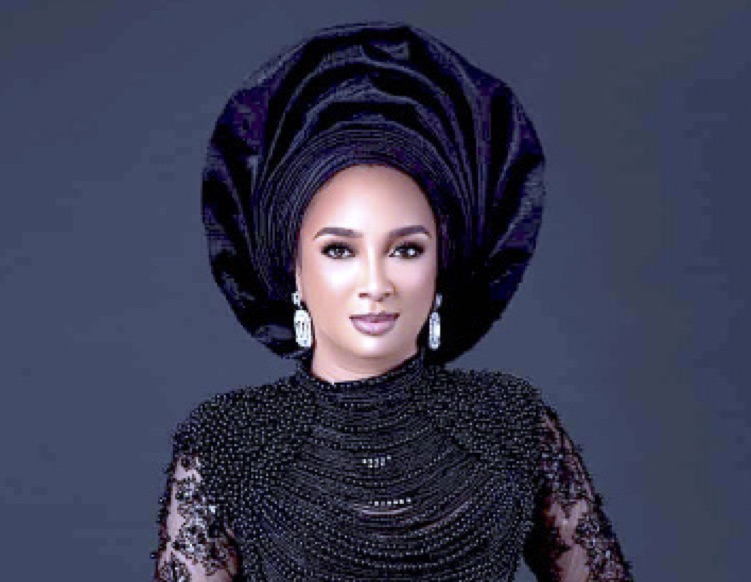
By Rita Okoye
Ibinabo Fiberesima is a renowned actress, beauty queen, filmmaker, and activist. She has deep passion for telling the stories of the Niger Delta. In this interview with Sunday Sun, she opens up about her journey in Nollywood, personal challenges and growing interest in politics. Enjoy!
You were the first and only female president of the Actors Guild of Nigeria (AGN). How did you navigate that role, and what do you think the Guild should truly represent?
It was tough, because when I contested, people kept asking, “How can a woman be that?” But that only strengthened my resolve. I’m glad I went ahead, because today more women are stepping forward. Women can lead and when we do, we bring care and compassion, like mothers. At AGN, I also tried to correct a common misconception: the Guild doesn’t give actors jobs. Our role is to protect actors in terms of their health, contracts and welfare. That is where our real power lies.
Did you face resistance within the Guild as a woman leader?
Definitely. There was skepticism, but that only pushed me to prove that women can excel in any leadership role. I always say: when women are entrusted with responsibility, we get the work done.
You’ve often said you don’t identify as a feminist, yet you’ve consistently empowered women through your work. How do you balance that?
I support women fully, but I also emphasize that when you are with a husband, you respect your husband. I believe in respecting traditional structures at home. If you’re married, your husband leads the house. That doesn’t stop a woman from leading in society or the workplace. For me, it’s about balancing tradition while still giving women space to shine. We are Africans, that’s how I was raised, and it’s what I pass on to my children. Amazingly, I am mixed – my mother is Irish. We must respect our men. When I cook for my sons, I serve them.
Do you believe women can lead publicly but should submit privately?
Exactly. At work, women can excel as leaders, but at home, peace comes from respect. I grew up serving my brothers food not because I was less, but because that was how love and respect were shown in my family.
Let’s talk about your new film, Amanyanabo, The Eagle King. Why did you decide to produce a historical story from the Niger Delta?
Amanyanabo is our king. You’ve heard of kings that fought the white man or went on exile. I was reading a book and I realised that King Ibanichuka did something significant… so why aren’t we telling our own stories? If we don’t tell our stories, no one else will. Growing up, we were fed European versions of history, but before colonisation, we had city-states, commerce, spirituality, and structure, things that worked for them. I want to start telling our stories, but from our point of view. My film highlights King Ibanichuka, an important but overlooked figure. My grandmother is Yoruba, Majekodunmi from Egba. When I look at the Yoruba, they celebrate their culture every second they have. I admire that. And then, their culture is being preserved. We don’t do that. We need to start telling our kids who we are and who we were before the white came.
Other News
How challenging was it to recreate that history on screen?
Very challenging. We shot in the creeks to capture the atmosphere of that era. We had to be careful with costumes, sets and even makeup. A viewer abroad criticised the makeup, not realising that traditional beauty practices existed centuries ago. It was hard work, but necessary.
How has the reception been so far?
When we screened in London, people asked if it was a Yoruba film because Yoruba cinema dominates our historical narratives. When I said it was Ijaw, they didn’t know what that was. That showed me how much ground we need to cover in telling Niger Delta stories. This film is just the beginning and it is showing nationwide.
What should audiences expect after this theatrical debut? Will we be seeing more of such films from you?
Absolutely. This is only the beginning. Everything I do will spotlight the Niger Delta, because our stories deserve to be told too. We can build our own industry where we are. We don’t all have to run to Lagos to succeed.
You’ve faced personal struggles, where does the resilience come from?
Only by God’s grace. I went through depression and had to shut down for a while. What hurt the most were the lies. Imagine being in hospital fighting for life and reading stories that you were out partying. That broke me. How evil can a person be? People don’t realise how powerful their words are. But I thank God I found my strength again. Today, I live with gratitude.
Do you have any interest in politics?
Yes, I am already in politics. You can’t change the system from outside it, you have to be part it. I support Governor Fubara, for once, I saw a leader with empathy. That day I cried, some people thought I was acting. It wasn’t just about roads, bridges, and structures, but it was about someone that could reach the common man. He wanted to build people. I keep comparing Lagos to Rivers, and people in Port Harcourt don’t want to hear it. But that is the truth… we must have a yardstick by which we measure. Lagos and Rivers are the same age, they were created at the same time, so I do not know why things are the way they are. So, when I saw a man that has the people in mind, I supported him. I am an ardent Fubara supporter, and I will not stop. Funny, he actually loves President Tinubu.
Do you see more women like yourself stepping into politics?
They must. Politics cannot remain a man’s game. Women bring compassion, balance, and vision. If Nigeria wants real change, women must be part of the process.