Follow Us on Google
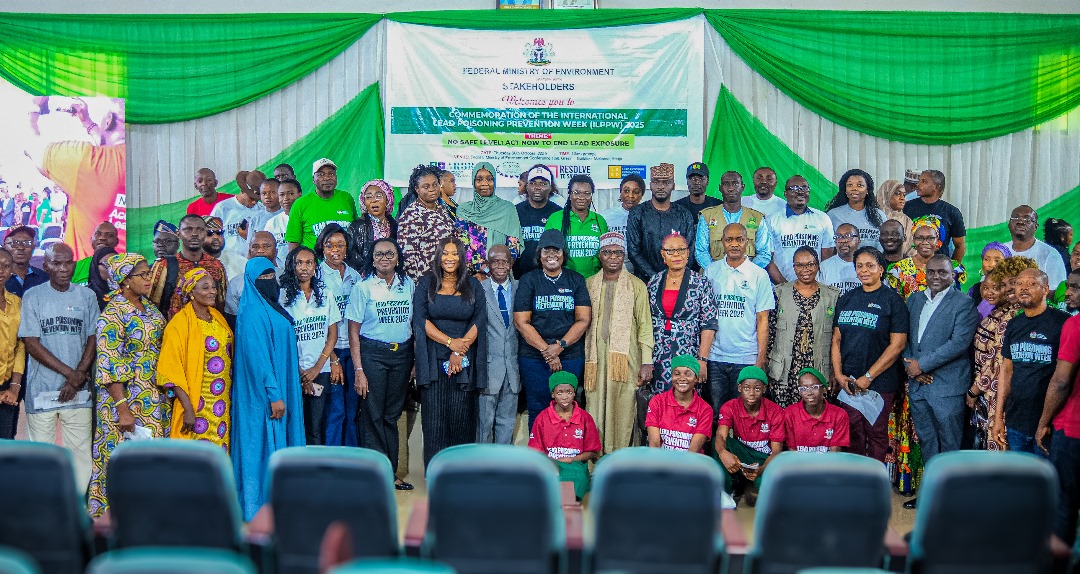
Health and environmental experts have warned that lead poisoning continues to threaten millions of Nigerians, especially children and pregnant women, despite ongoing efforts to eliminate exposure to the toxic metal.
Speaking at the commemoration of the 13th International Lead Poisoning Prevention Week (ILPPW) held at the Federal Ministry of Environment in Abuja on Thursday, stakeholders noted that lead poisoning remains one of the most preventable environmental health challenges in Nigeria.
The event, themed “No Safe Level: Act Now to End Lead Exposure,” brought together representatives from the World Health Organization (WHO), United Nations Environment Programme (UNEP), UNICEF and other development partners to renew commitments toward a lead-free Nigeria.
Delivering the keynote address, the Minister of Environment, Balarabe Abbas Lawal, reaffirmed the government’s determination to eliminate lead exposure from paints, batteries and consumer products through stronger regulation, enforcement and public awareness.
“Even minute exposure can cause lasting harm, especially to children whose developing brains and nervous systems are most vulnerable,” the Minister said, adding that Nigeria’s National Lead-Free Initiative aims to phase out lead-based paints by 2030.
“Lead poisoning remains one of the world’s most preventable environmental health problems, yet it continues to affect millions, especially children under the age of five. Lead exposure, even at the lowest detectable level, has been scientifically proven to cause irreversible neurological damage, learning disabilities, behavioral disorders, anemia, and reduced IQ in children.
“Adults exposed to lead may experience hypertension, kidney damage, reproductive problems, and in severe cases, death. Pregnant women exposed to lead face heightened risks of miscarriage, premature birth, and developmental delays in their babies.
“Unfortunately, many Nigerians, particularly in rural and mining communities, continue to face these dangers from contaminated soils, unsafe mining and recycling activities, lead-based paints, cosmetics, and other consumer products,” he added.
“Prevention remains our strongest tool. By eliminating lead at its source, in paints, batteries, ceramics, and consumer goods, we can protect our children and secure a healthier environment for all.
The Director of Pollution Control and Environmental Health, Engr. Dr (Mrs.) Bahijjahtu Hadiza Abubakar, described lead poisoning as a “silent threat” that undermines national productivity and human development.
She said, “Around 1 in 3 children – up to 800 million globally – has blood lead levels at or above 5 micrograms per decilitre (µg/dL), a level that the World Health Organization and the United States Centers for Disease Control and Prevention have stated it requires global and regional interventions. Lead exposure causes a significant burden of disease.
“Despite these positive developments, lead poisoning through various means still persists in Nigeria and evidence shows that many paints in the Nigerian market still contain lead levels exceeding 600 µg/g. This is largely due to limited public awareness and weak enforcement of these regulations. Hence, the need for continuous education, advocacy, and collaboration cannot be overemphasized.”
In a goodwill message, Nanlop Ogbureke, Executive Director of Resolve to Save Lives (Nigeria), commended the ministry’s leadership and called for sustained collaboration across sectors.
“No child should lose their future because of avoidable exposure to a toxic substance,” Ogbureke said.
“Lead poisoning is entirely preventable, yet it continues to affect children and families across Nigeria.
“The Federal Ministry of Environment has shown strong leadership in drawing national attention to the dangers of lead exposure. Resolve to Save Lives remains committed to working with government ministries and agencies, regulatory institutions, and partners to reduce lead exposure in consumer products, improve laboratory detection capacity, and support evidence-based policies. Together, we can ensure safer environments, healthier children and stronger national productivity.”
Global data from the Institute for Health Metrics and Evaluation (IHME) shows that more than 1.5 million deaths were attributed to lead exposure in 2021, primarily from cardiovascular causes. In Nigeria, the legacy of past lead poisoning incidents, such as those in Zamfara and Niger States, continues to underscore the urgency of prevention.
Experts at the event urged the Federal Government to intensify public education campaigns, strengthen enforcement mechanisms, and support cleaner production methods in the paint, battery, and mining sectors.