Follow Us on Google
By Bimbola Oyesola
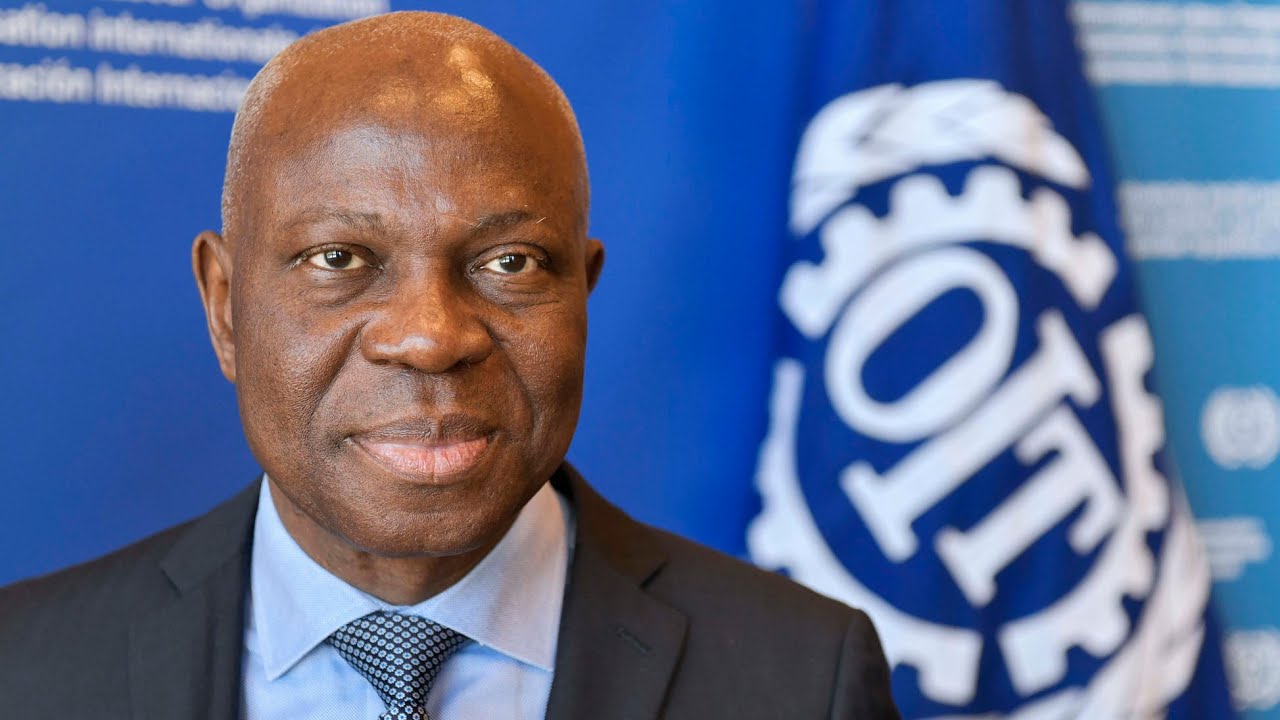
Director-general of the International Labour Organization (ILO), Gilbert F. Houngbo, has urged world leaders, employers and workers to make bold investments in the global care economy, calling it “the backbone of well-being, social justice and sustainable development.”
Speaking in commemoration of the International Day of Care and Support, Houngbo stressed that care and support systems are not optional luxuries but essential pillars of human and economic progress.
“We all need care and support throughout our lives,” he said. “Whether as persons with disabilities, older persons, children or caregivers, our shared humanity depends on a culture of care.”
The ILO chief warned that despite its immense social and economic value, care work remains undervalued, unseen, and underpaid, particularly for women who still shoulder the majority of unpaid care responsibilities. “Women continue to bear the heaviest load of unpaid care work,” Houngbo said, adding that “too many paid care workers, domestic, community health, and migrant workers, labour without the social and labour protections they deserve.”
According to the ILO, the neglect of the care sector perpetuates gender inequality and limits economic participation, costing economies billions in lost productivity and potential growth.
“When care workers are supported, societies thrive,” Houngbo noted. “But when they are ignored, everyone pays the price.”
Other News
He emphasized that care and support services are especially crucial for persons with disabilities and those caring for dependents with disabilities. “Without inclusive care systems, equality, fairness, and dignity at work will remain out of reach,” he said.
Houngbo also highlighted the mutual benefits of strong care policies for employers. “Businesses gain when care and support systems are in place,” he explained. “They help retain and attract skilled workers, reduce burnout, and create inclusive, innovative workplaces where everyone can contribute.”
Central to the ILO’s vision is the Resolution concerning decent work and the care economy, adopted to promote coherent national care policies. Houngbo described it as “a roadmap for governments to design, fund, and implement care systems that are strong, sustainable, and centred on human dignity.”
At the heart of this roadmap lies the ‘5-R Framework for Decent Care Work’, which calls on all stakeholders to Recognize, Reduce, and Redistribute unpaid care work, Reward care workers fairly, and Represent them in decision-making. “This framework provides a compass for a just and inclusive care future,” Houngbo said. “When applied to disability inclusion, it ensures that no one is left behind.”
Concluding his remarks, Houngbo issued a global appeal for action. “On this International Day of Care and Support, let us commit to turning vision into action,” he urged. “Let us build societies where care is valued, supported, and accessible to all. Together, we can make care the foundation of equality and prosperity.”
The International Day of Care and Support, first recognized by the United Nations in 2023, underscores the growing global movement to formalize, fund, and professionalize care work—a sector long considered invisible but now increasingly seen as indispensable to a fair and resilient world.