Follow Us on Google
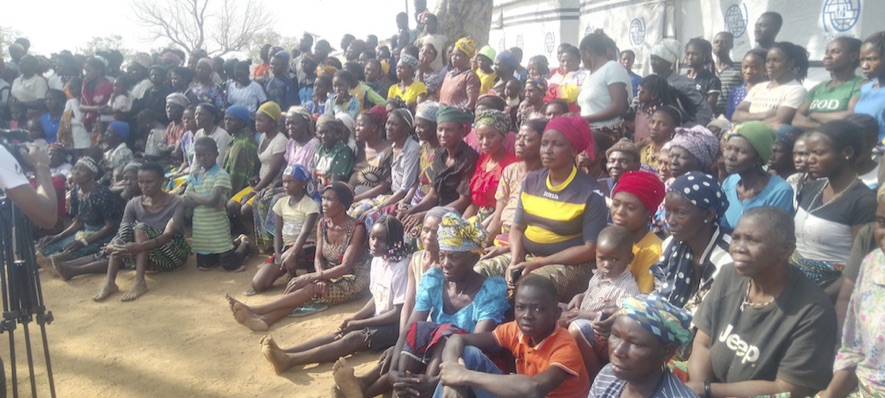
Internally Displaced Persons (IDPs) at Mega Camp and other places in Benue State have appealed to the state government and humanitarian organizations to increase support for their welfare, lamenting acute shortages of food, essential medicines, adequate shelter and livelihood opportunities.
A camp leader, who described the challenges facing displaced residents as severe and multifaceted, said irregular food distribution had left many families struggling to meet their daily needs, particularly as displacement had deprived them of access to their farms and regular sources of income.
He lamented that food distribution by the Benue State Emergency Management Agency (SEMA) had been inconsistent, with camp occupants sometimes going for months without receiving relief supplies, contrary to their expectations of monthly assistance.
According to him, camp leaders were eventually compelled to approach SEMA over the prolonged absence of food assistance, amid concerns that displaced persons in Makurdi and Guma were considering a protest.
According to camp leader, following the engagement, the agency embarked on another supplies which he said were inadequate for the camp’s population.
The camp leader expressed their desire to return to their ancestral homes saying that many remained in the camp because their homes and communities were still considered unsafe.
He urged the government to support the rebuilding of homes and restoration of livelihoods in areas where security conditions permit, to allow residents to return safely.
He also called for sustainable empowerment programmes, explaining that although some non-governmental organizations had organized skills-acquisition training, beneficiaries often lacked the equipment and capital required to establish businesses.
He said providing start-up support after training would enable displaced persons to earn a living and gradually reduce their dependence on humanitarian assistance.
On accommodation, the camp leaders said many tents were in poor condition and leaked during rainfall, forcing residents to devise temporary ways of preventing rainwater from entering their sleeping areas.
He added that damaged toilet facilities had worsened sanitation problems, with some residents reportedly resorting to open defecation after heavy rainfall rendered certain toilets unusable.
The sources further expressed concern over what they described as inadequate attention to Mega Camp and Agagbe IDP camp compared with other displacement locations and appealed to the state government and humanitarian organisations to increase relief, protection, healthcare and other interventions to the camps, to enable the occupants live better.
They leaders said healthcare has remained a major challenge despite the support from UN agencies saying they require essential medicines and other health supplies.
The camp leaders however raised concerns over rising Gender Based Violence (GBV), noting that some incidents might have remained unreported because victims feared stigma, shame or discrimination and called on SEMA authorities, including the police, to investigate reported cases and take necessary action to deter.
Responding to the concerns, the Executive Secretary of SEMA, Sir James Iorpuu, said the agency had continued to provide food and other forms of assistance to displaced persons despite financial and logistical constraints.
He acknowledged that the available supplies were insufficient to meet the growing needs of affected population but maintained that the agency remained committed to supporting vulnerable residents.
Iorpuu said food distribution was only one component of SEMA’s responsibilities, which also included healthcare, education, protection, resettlement and livelihood support.
He explained that dwindling resources had affected the quantity of food available for distribution, adding that the agency understood the frustrations of displaced persons whose needs were not being adequately met.
The SEMA boss said the agency had made arrangements for displaced persons requiring medical attention to receive treatment at the Benue State University Teaching Hospital, Makurdi, (BSUTH), particularly where adequate support from humanitarian partners was unavailable.
He said the State government will continue to do its best to cater for the vulnerable populations in the state.