Follow Us on Google

•Carriers lament revenue drain, operational strain
By Chinelo Obogo
Despite investing $13 million in acquiring a Boeing 737 flight simulator six years ago to boost local pilot training capacity, Nigeria continues to lose millions of dollars annually as domestic airlines have been forced to explore foreign training centres for mandatory pilot certification and recurrent programmes.
Aviation stakeholders, who frowned at this anomaly, warned that the prolonged underutilisation of the NCAT facility is fueling capital flight, raising operating costs for airlines and denying the country a key source of aviation revenue.
The disturbing development comes at a time Nigeria’s aviation sector is undergoing a gradual transformation.
From policy interventions such as the signing of the Practice Direction, which paved the way for airlines to acquire aircraft through dry-lease arrangements, to the federal government’s commitment to establishing a national aircraft leasing company, the foundations for fleet expansion are gradually being strengthened.
Domestic carriers, including United Nigeria Airlines and Air Peace, have responded by adding aircraft, expanding their route networks and investing in modern Boeing 737 jets, the aircraft type on which a significant proportion of Nigeria’s licensed pilots are rated.
Yet, NCAT simulator, for six years, has not been commercially utilised nor has it generated a dime in revenue.
Ordinarily, as Nigerian carriers add more Boeing 737s to their fleets, NCAT is the organisation that should benefit from this. But unfortunately, its simulator lies idle in Zaria.
One of Nigeria’s leading airlines, United Nigeria Airlines, currently has two Boeing 737-800NG aircraft which are fully owned by the company and will arrive next week.
The acquisition forms part of the airline’s expansion strategy and signals a long-term commitment to growth, choosing ownership over aspiration and investing directly in its future.
Next Tuesday, Boeing representatives will be in Lagos to begin training engineers. A first batch will complete their training between June and July. A second batch will follow in August.
Within months, the 737-800NG will be a regular sight bearing the United Nigeria Airlines livery on regional and international routes.
Air Peace, Nigeria’s largest carrier and the dominant force in West Africa is actively modernising its fleet.
The airline has been retiring its ageing Boeing 737 Classic variants and replacing them with the newer 737-800NG.
The airline currently operates a mixed 737 fleet; it is moving towards the newer generation, and particularly the 737-800. Max Air, which has relied on the 737 for its domestic and Hajj charter operations and it also maintains Boeing 737s in its fleet, though the carrier has faced regulatory challenges over the type in recent years.
FG’s intervention
Other News
In 2024, the federal government, through the Chief Judge of the Federal High Court, Justice John Tsoho, signed the Cape Town Convention (CTC) Practice Direction. The framework provides a legally enforceable pathway for aircraft lessors to repossess their assets in the event of a breach by Nigerian operators, something that had long been a barrier to assess aircraft on dry lease.
Before the CTC Practice Direction, international lessors largely refused to lease modern aircraft to Nigerian carriers.
This sprang from a long history of contract breaches, but the signing of the CTC changed that.
The federal government has since gone further to improve the sector.
In April 2026, the Federal Executive Council approved the establishment of the Nigerian Aircraft Leasing Company (NALC), a privately funded entity that will act as a central vehicle to acquire or lease aircraft globally on behalf of Nigerian operators. The government will provide sovereign guarantees to international lessors to reduce investor risk, while the company itself will be funded by private capital with no direct federal investment required. The goal is to give domestic airlines, many of which are too small to attract financing on their own, a credible institutional intermediary through which to access modern fleets at competitive rates.
With these developments, the question is whether NCAT is positioning itself to take advantage of this expansion.
NCAT’s simulator lies idle
Six years ago, the federal government paid approximately $13 million to procure a Boeing 737NG full-flight simulator and installed it at NCAT in Zaria. The plan was to generate revenue for the government through the airlines within and outside the country who operated the Boeing 737 aircraft.
Today, many domestic airlines currently send their pilots abroad for simulator training and spend huge sums in foreign exchange, when a world-class simulator at NCAT should have changed that. The equipment was meant to generate revenue for the institution, attract foreign airlines and cut the country’s training import bill.
The simulator was originally scheduled for delivery in December 2016 but late payments by the federal government delayed its arrival, and it was not delivered until 2020. By the time it was installed, the US certification on it had expired.
NCAT then approached the Nigerian Civil Aviation Authority (NCAA) for fresh certification and the management at the time said it lacked the capacity to certify the equipment.
However, the Authority has been able to train manpower that can certify the equipment.
But six years after delivery, the simulator has still not been certified.
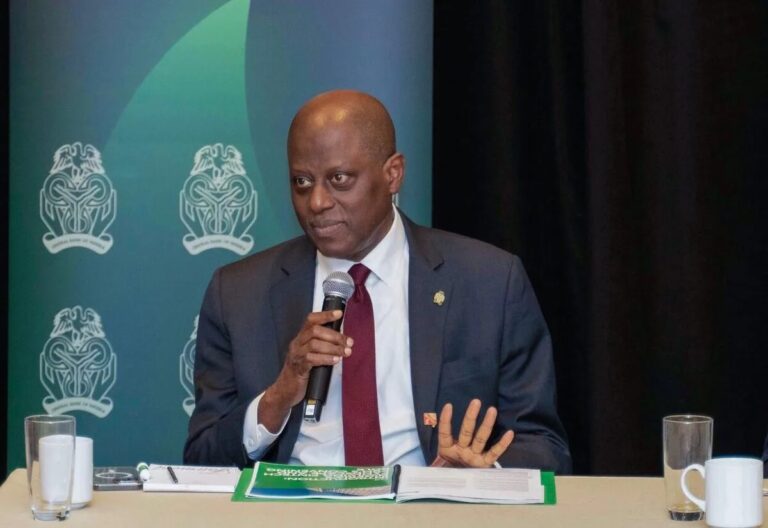
In March this year, Daily Sun spoke with NCAT’s Rector, Dr. Danjuma Ismaila, who explained what the challenge is.
He said: “On our 737-NG simulator, it has been on the ground for years, but we are making progress. We have been working with the Original Equipment Manufacturer, and our engineers, in collaboration with the OEM via virtual maintenance sessions, have resolved about 80 percent of the technical issues. The remaining 20 per cent requires physical on-site attention, but the OEM’s engineers have expressed security concerns about travelling to Nigeria, based on advisories from their embassy. We are working to address their requirements.
“This is frustrating, particularly because we have had engineers from the UK visit and service our fire simulator without any issue. Their OEM comes twice a year and has done so without problems. But the Canadian manufacturer is more hesitant. We have explored alternatives, including engaging a licensed engineer in Lagos who previously worked for the same company in Canada, but the OEM has not authorised that arrangement. “We are also considering reaching out to Ethiopia’s Aviation University, which has a similar machine. But the challenge is that the OEM controls the simulator remotely and can block its operation if their protocols are not followed, so we have to proceed carefully.”
Analysts estimate that when operational, the simulator could save Nigeria up to $4 million annually in pilot training costs which include savings on simulator fees, airfares, accommodation and the foreign exchange spent every overseas training trip.
As mentioned earlier, United Nigeria Airlines has purchased Boeing aircraft as it expands. The pilots who will fly these planes need simulator hours but because NCAT’s equipment is not operational, every one of those hours will be logged on a simulator somewhere outside Nigeria and NCAT, the country’s premiere aviation school will not get any revenue from that training. Air Peace, which is actively growing its 737-800 fleet, faces an ongoing need for type rating courses, training and proficiency checks for its Boeing pilots. That training, too, will be done abroad and the NCAT will lose out. Every airline, pilot and training requirement is potential revenue for NCAT but that revenue is currently flowing out of the country because the equipment meant to generate it has been gathering dust since 2020.
The industry is moving fast. The Cape Town Practice Direction has eased aircraft leasing, NALC is set to deepen financing options, and airlines such as United Nigeria Airlines, Air Peace and Ibom Air are expanding fleets and opening new routes. But while the aviation sector accelerates, NCAT’s $13 million simulator sits idle, and the school is missing out on one of the biggest growth opportunities in years.