Follow Us on Google

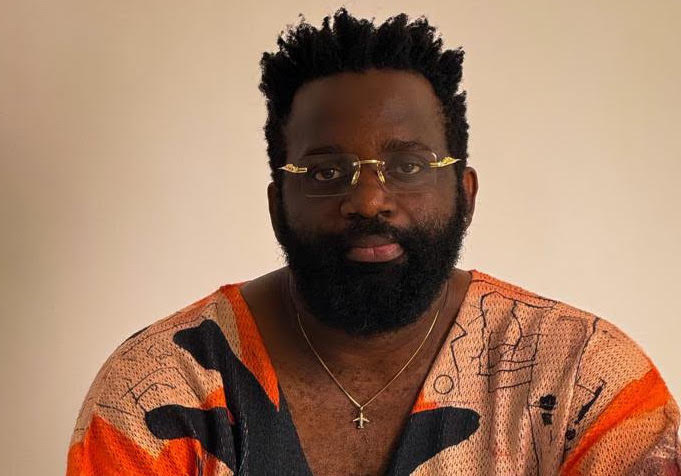
By Rita Okoye
Ibrahim Kareem took up photography as a career in January 2022. Two solo exhibitions later, the sequence already reads like a single argument: What Remains Unsaid (Art Place Lagos, April 2023) and Before the Light Disappears (Art Place Lagos, June 2024). Two more are in development: Echoes of Light, planned for Oluwole Omofemi Art Gallery in Ibadan in December 2025, and The Shape of Absence, planned for Afrahouse Gallery in London in September 2026.
The Nigerian fine art photographer and visual artist works with identity, migration, memory, spirituality and the relationship between people and place. In this conversation we went through the shows he has made so far, asking what each was trying to say, what he did differently the next time, and what he learned. Along the way he talks about what he owes the people he photographs, why a photograph can be beautiful and still not belong in an exhibition, and why absence, in his experience, is rarely empty.
Enjoy!
January 2022 is the date you give for the start of your career. What changed then?
I remember the period around January 2022 as a time when I was trying to understand what I wanted to do with myself creatively. Mind you, I had always been interested in images, in the way people looked at things and the way certain moments stayed with you long after they had passed. But there is a difference between appreciating photography and deciding to take it seriously as a practice. What changed for me was the realisation that I didn’t want to make pictures simply because something looked beautiful. I actually wanted to understand why I was photographing something in the first place.
At the time, what were you initially drawn to photographing?
People. I became increasingly interested in people, particularly the things they carried that weren’t immediately visible like their histories, their fears, their memories, their relationships with the places they came from. I began to see photography as a way of asking questions rather than merely documenting answers.
Sounds brilliant. So, was there a particular picture that showed you that direction?
A portrait I made of a man standing beside an old building. I remember being interested in the contrast between his presence and the condition of the building. There was something about the way he occupied that space that made me think about time, belonging, and the relationship between people and the places that hold their memories. What stayed with me wasn’t necessarily the technical quality of the photograph. It was the conversation the image started in my own mind after I had taken it.
What had this place witnessed? What memories did the man associate with it?
If the building disappeared tomorrow, what would remain of the stories connected to it? All these and a couple more reflective eye opening questions.
Did you know then that this would be your life’s work?
I wouldn’t say I suddenly knew photography would become my life’s work. It was a gradual realisation. By the end of that year, I had begun to see my practice as something I could build a life around. Not because I had discovered all the answers, but because I had found questions I wasn’t tired of asking. And I think that’s still what sustains me today.
What Remains Unsaid opened at Art Place Lagos in April 2023. What were you trying to put in that room?
It was the first time I had brought a body of work together in a way that allowed people to encounter my ideas as a sustained visual conversation. An individual photograph can be powerful, but when you put several images together, they begin to develop relationships. One image can answer a question raised by another, or complicate something the viewer thought they understood. The subject was the distance between what we experience internally and what we are able, or willing, to communicate externally. We all have things we struggle to articulate.
Sometimes it’s grief. Sometimes it’s shame, regret, affection, or an experience we haven’t found the language to explain.
You photographed a woman seated with her hands folded close to her body. Why was that image important?
Other News
Her expression was restrained, if you observe, and I used the surrounding space to create a sense of quietness. I didn’t want the image to dictate a particular emotion. I wanted viewers to sit with the subject without feeling that they had to arrive at an immediate conclusion about her. The exhibition wasn’t about suggesting that silence is always a sign of suffering. Sometimes silence is protection. Sometimes it’s a form of dignity. Sometimes people remain silent because they have already explained themselves too many times to people who were unwilling to listen. I don’t know if you get it?
Oh yes! Absolutely. Do you remember how audiences responded?
I remember one visitor spent quite some time looking at a portrait before turning to me and saying something along the lines of, “I feel like I know this person, but I cannot tell you why.” That stayed with me because it described something I hoped the exhibition would achieve. The person didn’t need to know the subject’s biography to recognise something familiar in the image. What Remains Unsaid taught me that I didn’t need to explain every element of a photograph for the work to be understood. It was also a lesson for me to trust the audience.
“Before the Light Disappears” followed in June 2024. How did the idea grow out of the first show? Did it even grow out of the first?
The first exhibition was concerned with the things we struggle to express. The second became more interested in the things we risk losing before we fully understand their significance. There is a particular kind of loss that happens slowly. You don’t always recognise it while it is taking place. A familiar building is demolished. A family elder passes away, taking stories nobody thought to record. I didn’t want an exercise in nostalgia, though. Cultures evolve. People change. Cities develop. Some things must disappear for other things to emerge. The more important question for me was what we choose to remember, what we allow to disappear, and whether we understand the consequences of those choices.
What did you do differently as a maker?
With the first show I was comfortable allowing the photographs to remain relatively self-contained. With “Before the Light Disappears”, I became more deliberate about how the images worked together as a sequence. Starting from the transitions, the negative space, the relationship between illuminated and shadowed areas. I also had to accept that a photograph could be beautiful and still not serve the larger body of work. An exhibition is not simply a collection of your best photographs. It is supposed to be an argument, or at best an atmosphere, and sometimes a question that unfolds across several images.
Last May you were part of a group show at Oluwole Omofemi Art Gallery in Ibadan,
“Conversations in Form and Light.” Was there any difference between that and your solo exhibitions?
That experience allowed me to contribute to a collective conversation. A solo exhibition requires me to construct and sustain the conversation myself. With a solo show, the audience is spending an extended period with your ideas. There is nowhere to hide an unresolved visual argument behind the strength of another artist’s work.
You are careful about cultural symbols in your pictures. Why?
I don’t want to introduce cultural symbols simply because they make a photograph look more recognisably African. An object should have a reason for being there. And I try not to treat people as props for an idea I have already decided to communicate. The person must retain their own dignity and agency.
What advice do you have for younger photographers?
I would encourage an emerging photographer to make a sustained body of work rather than focus exclusively on producing individual images for social media. A strong photograph can attract attention, but a coherent body of work reveals how an artist thinks. I see mentorship as a process of helping people develop their own judgement rather than encouraging them to reproduce my approach.
Ibrahim, what are you making next?
Two exhibitions are taking shape. The first is Echoes of Light, planned for Oluwole Omofemi Art Gallery in Ibadan in December 2025. The title comes from my interest in the afterlife of experiences: the past is not always behind us, and sometimes it continues to speak through the present. After that comes The Shape of Absence, planned for Afrahouse Gallery in London in September 2026. Absence is difficult to photograph directly, but you can photograph its consequences: an empty chair that once belonged to someone, a room that has been left untouched, a building whose occupants have moved away. I don’t think absence is always empty. Sometimes it is crowded with memory, expectation, regret, or things left unresolved. Taking it to London matters to me because movement also involves emotional negotiations that are less visible. Our stories do not have to lose their cultural specificity to speak across cultures.
Finally, in a sentence or two: what are you trying to do with photography?
I use photography to explore the stories people carry within themselves, particularly the relationships between identity, memory, culture, and belonging. I want to make images that invite people to look beyond what is immediately visible and recognise something of their own experiences in the lives and histories of others.