Follow Us on Google

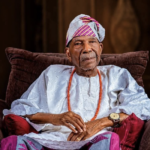
By Ojo Ademola
The misguided question: Can AI replace teachers?
The question that has recently gained traction across social media and mainstream platforms—whether artificial intelligence can replace teachers—reveals a profound misunderstanding of both technology and humanity. The CBS Morning video that reignited this debate may showcase AI performing impressive tasks, but it does not demonstrate the replacement of the teacher’s vocation. It demonstrates automation, not education.
Artificial intelligence can process data, generate text, and simulate dialogue. Yet teaching is not a mechanical transaction; it is a moral, intellectual, and spiritual covenant. A teacher does not merely transfer knowledge; a teacher transforms lives. That sacred transformation cannot be coded, quantified, or replicated by algorithms.
The fascination with AI’s capabilities often blinds society to the deeper truth that education is not about efficiency—it is about essence. The teacher’s role is not reducible to information delivery. It is the embodiment of wisdom, empathy, and moral guidance. To imagine that a machine could replace such a calling is to misunderstand the very nature of human formation.
The divine design of humanity and technology
At the Nigerian Schools Foundation (UK) seminar on 17 October 2026, I reaffirmed a truth that transcends technological fascination and speaks to the heart of divine purpose:
“God does not create humanity to be replaced by technology, nor is humanity willing to replace humans with technology.”
This statement is not poetic idealism—it is theological realism. Humanity is created in the image of God, endowed with conscience, compassion, and creativity. Technology, by contrast, is created in the image of human ingenuity—useful, powerful, but limited. The divine breath that animates humanity cannot be replicated by algorithms or artificial constructs.
AI is a tool of human extension, not substitution. It is meant to serve, not to supplant. The Creator designed humanity to be co‑creators, not competitors with creation. Every technological advancement is a reflection of human stewardship, not a replacement of human identity.
The danger lies not in AI itself but in the philosophical error of imagining that intelligence equals consciousness, or that computation equals compassion. Machines can mimic reasoning, but they cannot experience revelation. They can simulate conversation, but they cannot embody conviction. The divine design ensures that humanity remains the moral and spiritual centre of creation, even in an age of digital sophistication.
Teachers: The irreplaceable architects of human formation
Teachers do far more than deliver information. They cultivate discernment, empathy, and moral judgment. They read the unspoken emotions of learners, nurture curiosity, and model integrity. They are the custodians of wisdom, not merely conveyors of facts.
A teacher’s presence in the classroom is not just physical—it is spiritual. It is the presence that inspires, corrects, and uplifts. It is the presence that turns confusion into clarity and despair into determination. AI can assist teachers by personalising learning, automating grading, and expanding access to resources. But it cannot perceive destiny, inspire courage, or impart virtue. It cannot pray with a student, comfort a struggling learner, or discern the spark of genius hidden beneath uncertainty.
Education is not about data—it is about destiny. The teacher stands as the interpreter of that destiny, guiding learners toward purpose and meaning. In every generation, teachers have been the moral compass of society, shaping citizens who can think critically, act ethically, and serve faithfully. No machine can inherit that mantle.
The vocation of teaching is a sacred trust. It is a calling that demands patience, empathy, and sacrifice. It is the art of shaping souls, not just sharpening minds. The teacher’s influence extends beyond the classroom—it echoes through generations. AI may enhance the tools of education, but it cannot replace the heart of education.
The Future of Education: Human Enhancement, Not Human Replacement
The future of learning lies in collaboration between human wisdom and machine intelligence, not competition between them. AI should amplify the teacher’s capacity, not diminish their relevance. It should free educators from administrative burdens so they can focus on mentorship, creativity, and moral formation.
To build a sustainable future through AI and technical education, we must design systems that honour human agency. The teacher remains the moral compass of the learning process—the interpreter of truth in an age of information abundance. The integration of AI into education should be guided by ethical frameworks that prioritise human dignity and spiritual purpose.
AI can revolutionise access to education, but it must never redefine the essence of education. The goal is not to create classrooms without teachers but to create teachers empowered by technology. The synergy between human insight and machine efficiency can produce remarkable outcomes, but only when humanity remains at the helm.
The sustainable future envisioned at the NSF seminar is one where technology serves humanity’s higher calling. It is a future where AI supports teachers in reaching more students, adapting to diverse learning needs, and fostering innovation. Yet even in that future, the teacher remains the heartbeat of education—the living testimony that knowledge without wisdom is hollow.
A prophetic call to educational leadership
History reminds us that every technological revolution—from the printing press to the internet—has provoked fear and fascination. Yet progress has always depended on leaders who understood that tools exist to serve humanity, not to replace it. Artificial intelligence is no different. It is a servant of human purpose, not a successor to human identity.
The challenge before educators, policymakers, and technologists is to ensure that AI remains a partner in progress, not a pretender to personhood. Educational leadership in this era must be prophetic—it must discern the spiritual implications of technological change. Leaders must ask not only what AI can do but what it should do. They must ensure that innovation aligns with moral integrity and divine intention.
The prophetic voice in education must remind society that wisdom is not manufactured—it is cultivated. Knowledge can be digitised, but understanding must be humanised. The teacher’s role is to humanise learning, to infuse knowledge with compassion, and to transform information into inspiration.
As we stand at the intersection of faith and technology, we must reaffirm that the purpose of education is not merely to produce skilled workers but to nurture wise citizens. AI can assist in skill development, but only teachers can cultivate wisdom. The prophetic educator must therefore embrace technology without surrendering humanity.
Conclusion: The Teacher’s Eternal Relevance
The teacher stands as the bridge between knowledge and wisdom, between information and transformation. No machine can cross that bridge alone. As we embrace AI in education, we must remember that technology can illuminate the path, but only humanity can walk it.
AI may teach facts, but only humans can teach truth. The distinction between data and destiny is the essence of education. The teacher’s eternal relevance lies in their ability to connect the mind and the soul, the intellect and the conscience.
In the unfolding narrative of human progress, technology will continue to evolve, but the teacher will remain indispensable. The classroom may become digital, but the calling of the teacher will remain divine. The future of education will not be written by algorithms—it will be shaped by the compassion, wisdom, and faith of those who teach.
As I declared at the NSF (UK) Education Seminar 2026, the sustainable future we seek is one where technology serves humanity’s purpose, not replaces it. God did not create humanity to be replaced by technology, and humanity will never consent to such displacement. The teacher’s voice will continue to echo through time, reminding every generation that learning is not a mechanical act—it is a sacred encounter between truth and transformation.
• Professor Ademola, is First African Professor of Cybersecurity and Information Technology Management; Global Education Advocate; Chartered Manager; UK Digital Journalist; Strategic Advisor & Prophetic Mobiliser for National Transformation; Public Intellectual; African Governance Thinker; General Evangelist, CAC Nigeria and Overseas; Keynote Speaker, NSF (UK) Education Seminar 2026
Theme: Building a Sustainable Future Through AI & Technical Education