Follow Us on Google

From Isaac Anumihe, Abuja
Against the backdrop of misconceptions regarding the $5.6 billion borrowing by the Federal Government, Minister of State for Budget and National Planning, Prince Clem Ikanade Agba, has clarified that the fund was used to augment the 2020 budget stimulate the economy.
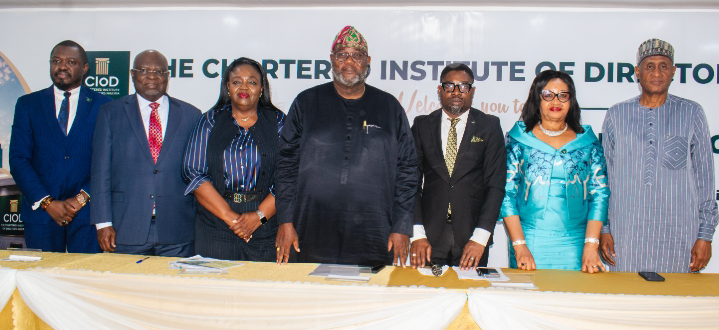
Fielding questions from newsmen, at the 11th Open Government Partnership (OGP) National Steering Committee meeting in Abuja, the minister said that Nigeria did not receive a donation of $5.6 billion to take care of COVID-19, but thatit was money borrowed to shore up the revenue in the wake of COVID-19 pandemic.
“What indeed happened was that as a result of shortfall in revenue due to COVID-19 where there were supply disruptions and the demand for oil fell, we took the money. The pandemic led to a reduction in the price of crude oil the world over and because of this issue, OPEC had to reduce production of the various member countries and Nigeria was not left out. We have a capacity of producing about 2.5 million barrels a day, but we were restricted to 1.4 million a day. You know what that means? It seriously affected our revenue and price came as low as $12 in April last year. So, we needed to look for funds to ensure that we augment the budget to ensure that we meet up with stimulating the economy. So, it is not correct that Nigeria had a donation of $5.6 billion” he said.
Agba also noted that out of the fund, the government introduced a stimulus of $2.3 billion to contain the COVID-19 pandemic impact and bailout of some states from serious indebtedness.
“What indeed we did was to introduce a stimulus of N2.3 trillion into the economy because we knew with COVID-19 the country was going to be shut down just like the entire world was shut down. If activities were shut down, then the GDP was going to be negative. And once you have two consecutive quarters of GDP you are effectively in a recession. And so we had to look at measures to put in place to ensure first and foremost we contain the COVID-19 which was a health pandemic. And so we needed to ensure that people survived and there was food available. We knew that there would be job losses. So, what do we do to prevent job losses? How do we incentivise the economy, create activities that will generate more income and ensure that even though we go into a recession that isn’t going to be ‘U’ shaped. It will be ‘V’ shaped with a quick recovery. That was why we had that stimulus of N2.3 trillion. And there are basically two sources of funding for that N2.3 trillion. The first $500 billion had to come from special account which we embedded in the revised budget and the other $1.8 billion were programmes set up through the financial institutions.
“We had negotiated five per cent interest rate with a one year moratorium and we are able to grow agriculture, look after the SMEs, support the aviation sector. We also made provisions for the states for their survival. Like you know, the states had some bailout funds. We had to stop the repayment, both for the principal and the interest for the year,” he said.
On the OGP, the minister noted that it is a collaboration of the government and the civil society organisations.