Follow Us on Google
• Nigeria must insulate universities from politics to rebuild education
From Scholastica Hir, Makurdi
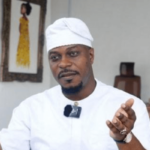
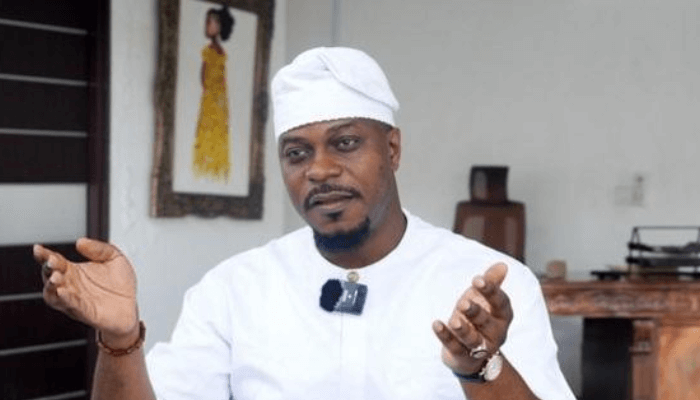
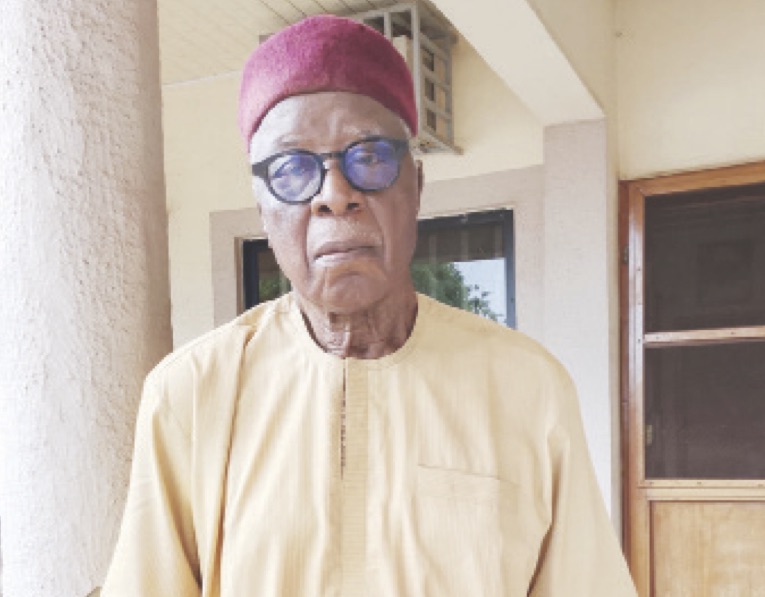
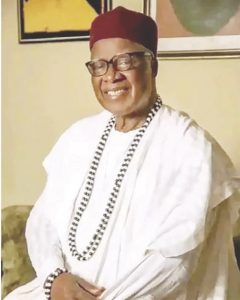
Renowned scholar and former Vice Chancellor of Ahmadu Bello University (ABU), Zaria, Prof. Daniel Saror, is one of Nigeria’s distinguished academics who also had an illustrious political career. He served two terms in the Senate and was among the key figures who resisted former President Olusegun Obasanjo’s third-term bid. In this engaging conversation, Prof Saror reflected on his journey through academia and politics, shares personal memories, and speaks candidly about the state of education and insecurity in Nigeria.
You’ve had illustrious careers in academics and in politics. Tell us a bit about them.
After I studied at Kansas State University where I graduated in June 1970, I returned to Nigeria to begin a career at Ahmadu Bello University (ABU) as a lecturer. I spent my entire academic life in Zaria, engaged in teaching and research. I rose through the ranks and became a Professor in 1981.
In 1992, I was appointed Vice Chancellor of ABU, a position I held until 1996. Afterwards, I went on sabbatical to Benue State University, where I served for nearly two years before resigning in 1997. I retired from ABU and joined politics in 1998, when democratic governance returned after long years of military rule.
I was among those who helped form the People’s Democratic Party (PDP) in August 1998 at the International Conference Centre (ICC), Abuja. I later contested and served as Senator representing Benue North-East from 1999 to 2007. Eventually, I rose to become Deputy Minority Leader and later Minority Leader before the end of my tenure. It was an eventful period in which I deeply appreciated the opportunity to serve both my people and the country.
One of the major issues during your time in the Senate was President Olusegun Obasanjo’s third-term bid…
It was a very challenging period. The late Chief Tony Anenih, then Minister of Works, was President Obasanjo’s point man on the project. I met him privately and made it clear that the idea was unpopular. Even though enormous resources were deployed to push it through, most senators did not support it.
Senator Ken Nnamani was Senate President at the time. On the day the motion for constitutional amendment was listed for debate, it was moved by Dr Sarki Tafida, who was the Majority Leader. I was expected to second it, but I refused – three times. Without a seconder, the motion could not be debated under parliamentary procedure. That was how the third-term agenda died on the floor of the Senate that afternoon.
You said it was unpopular, yet you were pivotal to stopping it. Why did you personally oppose it?
Because it was not what Nigerians wanted. I did my consultations widely. I spoke with the late Tor Tiv, Chief Alfred Akawe Torkula, who advised against it. I also consulted then-Governor George Akume and the Vice President, Atiku Abubakar, both of whom were opposed to the idea.
Among the principal officers of the Senate, there was no support for the project. One or two might have quietly favoured it, but there was no consensus. That’s why it failed.
You recently marked your birthday. How do you feel looking back at your life and achievements?
I have a lot to thank God for. Coming from a humble background in a remote village and getting the opportunity to attend Gindiri Boys High School was a huge privilege. We were only six from Benue who got admitted then. I later served as head boy for two terms.
Through the vision of the late Sardauna of Sokoto, some of us with science backgrounds were sent abroad for studies under a Northern scholarship. That was how I went to the United States. After graduating, I returned home as required. The civil war had just ended in 1970.
While I was still a student, the late Prof. Ishaya Audu, then Vice Chancellor of ABU, visited the U.S. in 1968 to recruit young academics. He offered me a position even before I graduated. That is how I began my academic career at ABU.
I owe much of my progress to God’s grace and to mentors like Prof Audu. I worked tirelessly in research and teaching and continued lecturing even as Vice Chancellor. After my years in politics, I returned to lecture at the Federal University of Agriculture (FUAM), now Joseph Sarwuan Tarka University, Makurdi (JOSTUM) from 2011 to 2023. My contract ended last January, and I have since retired home.
God has been gracious to me with good health and the opportunity to impact lives and raise a family. Most of my children were raised in Zaria, that’s where they were born. Even in Zaria, I was very happy to enjoy the protection and support of the Emir of Zaria, the late Alhaji Shehu Idris. He was very kind and friendly to me. He knew my children by name at that time. He really stood by me and I still cherish the relationship.
What legacies would you say you left behind?
Academically, I believe that I dedicated myself to my work sufficiently and even my students appreciated me. Even today, the present Dean of the Faculty of Health Medicine in Zaria, Prof. Adamu, sent me a congratulatory message on my birthday. I have not met him for a long time. Also, Prof. Sambo who is the Head of Department. My earlier student, Prof. K. A. A. Esievo sent me a congratulatory message. Politically, I believe I won two elections free and fair. There was no rigging. I didn’t have financial resources but I was helped along the line. The late Patrick Tyohee is one man from Benue who supported me 100 per cent. In fact, he sponsored my campaign. He spoke in our language. He said that he was ready to commit all his resources to make me succeed. That is how committed he was and he cherished me. He is late now but I can’t forget him. Prof. Olu Aina from Osun, who is now NUC chairman — I appointed him my Dean of Students. We remained good friends even after I left the university. We still communicate today.
You mentioned Prof. Ishaya Audu as one of your great mentors. Are there other relationships or memories from your academic career that stand out?
Prof Audu was decisive, compassionate, and genuinely invested in people. He even knew my children by name. I still cherish that relationship.
As a former Vice Chancellor of ABU Zaria, when did the recurring problems between the Federal Government and ASUU begin?
In the early days of ASUU, they were not interested in improving the quality of education. The real trouble started after the introduction of the Structural Adjustment Programmes (SAP) in the late 1980s, when fortunes in the universities began to go down. There was not enough money to run the system. ASUU wanted to be part of how the university was managed and they were overbearing on the universities. At a time, Attahiru Jega was the president of ASUU. He did his best, but I don’t think ASUU has lived to fulfil its primary objectives because they seem to pick a quarrel with every vice chancellor and that has made it very difficult to have development in the university the way you see other services like the military. They take very good care of their people, not like every vice chancellor having quarrels with ASUU. But I don’t want to condemn ASUU. I’m a vocal member of ASUU.
Funding became the problem, and universities began to struggle. You might have heard the problem I had in Zaria: those so-called Northern elements colluding. They wanted me out by all means and even when I committed that I was not going to seek a second term, they were still hell-bent on getting government to dismiss me. So, a commission of enquiry was established by Abacha with the late Mamman Kontagora as chairman. He came and I was vigorously probed. Fortunately for me, I did not soak my hand anywhere and they did not find anything to incriminate me. But they just wanted me out. Abacha was more sensible than them. He didn’t dismiss me. He allowed me to finish my tenure and go, and I thanked him for that.
So, there was increasing political interference that weakened merit-based systems. Appointments started reflecting political and quota interests instead of academic merit. When I became Vice Chancellor, the university was already facing financial crises and internal political pressures.
ASUU has been making series of demands lately, and they also had negotiations with the Federal Government over payment of arrears, earned allowances, and others. Do you think they are justified in their demands?
I don’t know the details of their demands right now but I know that ASUU used to go into agreements with government. I know that something was wrong with it because government would sign an agreement with ASUU that involved a lot of money and ASUU had no means of compelling government to bring that money. Government has a duty to go to the National Assembly to get that money appropriated but they are not doing it. The money is not being appropriated sufficiently.
One of the problems VCs and many others have is managing poverty within the universities because there was just not enough money for everything, even electricity. I remember there was a time ABU was owing NEPA N41 million. We didn’t have the money. Fortunately, I went to NUC when Prof. Idris Abdulkarim was secretary and they offered to pay that money to NEPA, which they did, and deducted from ABU over time. Up till today, some universities are owing NEPA money.
As a retired VC, when I was teaching at the University of Agriculture in Makurdi in a veterinary teaching hospital, allowances that were due up to my retirement age were not paid. Even this week, my colleague, Dr Lawani, went to see the VC. We were seven of us. We have been owed money and the VC told us there was no money because government had refused to pay. They said they should use IGR to pay us but the IGR is not enough.
How much are they owing you?
It is not me alone. But it is several millions of naira and if that happens to me as a former vice chancellor, you can imagine what happens to others.
Proliferation of universities is another major concern of ASUU. But considering the population of Nigeria, do you think they are fighting a good cause?
Nigeria is not producing enough qualified academic people to man universities and the training programs we used to have overseas are no longer forthcoming. So, it is all within Nigeria. It’s just recycling. That’s what ASUU is against. Nobody will question the extension of universities. But just take Benue State here, for instance — we have four to five universities. We have polytechnics producing HNDs. Where are the areas of employment? Nothing! From year 2000 till date, Benue State has not created anything for graduates to go and seek employment.
So you have graduates of more than ten years that have never worked. You have graduates of Benue State University in this state, in Abuja, working as Okada drivers. There is no avenue for employment. So, what’s the essence of a parent spending his time and money to sponsor his child in school and he comes out fighting with his mother for soap? It’s a problem, and especially the girl child. Nowadays we have many girls in school. They finish, and there is nothing to do. So, you find many of them in Abuja doing all manner of things. So, it is not balanced. The output from the universities, there are not enough opportunities for them to be absorbed into gainful employment. That’s the problem.
What solutions would you suggest?
I don’t have a ready solution since the economy is bad. In the 70s, when you graduate, you had a job waiting for you. Now, those who have jobs have to pay huge amounts of money for them. They ask you to pay a lot of money to get a job. There is no longer advertisement for jobs and it is no longer based on merit. You can’t get it.
Some VCs have also been accused of maladministration. What is your view on this?
I’m not saying there is no mismanagement along the way. But look at it this way: when I was a vice chancellor between 1992 and 1995, my salary was N54,000 a year. That was the highest amount of money, more than a federal permanent secretary at the time. It was not until Obasanjo came to office that the salary changed. But given the high level of inflation, in 1992–1995 when I was collecting N54,000 a year, what was the value of naira to the dollar? Today, the naira is almost N1,600 to a dollar, while it was N1 to $1 at that time. So, you can see the difference.
Now, a professor is not earning $500, nobody. And that is criminal. A professor in the universities in other countries is collecting tens of thousands of dollars. But the value of the naira here has been rubbished. What you are getting cannot buy you $500. There are no incentives. As I’m talking to you, I have been in the business since 1970 and at the time I retired, we were not given more than N500,000 a month, and that cannot buy you $300 today. That’s how bad it is. So, the quality of life is seriously down.
How would you compare the standard of education in our universities during your time and now?
The education that we had, in my opinion, was better than what we have now because then, you had textbooks that you could go and buy from shops and study. Today, you cannot see a good bookshop anywhere. The university can hardly subscribe to journals.
For you to attend a conference outside Nigeria, you can’t do it from your own resources because your salary is limited. That’s why TETFund was created but I don’t know how they are managing it now.
For me here in Benue, from what I see, regrettably, I have seen the emergence of so-called miracle schools, which is an abomination. People come out with good grades with nothing in their heads. Cultism has come in, miracle teachers have come in, miracle centres, ghost staff. So, all manner of rubbish has come into the system that has muddled it up.
In the past, you would see a first class student and you would recognise that he is a first class. But today it’s not like that because people have had to compromise themselves. So, there is every need to upgrade the quality of education in Nigeria. I don’t know who has the courage to do it. Proprietors of schools are complicit. And if you don’t have a good beginning in primary and secondary schools, the rest is rubbish. So, that’s the problem.
How can we remedy it?
I can’t proffer a solution because it has become an endemic problem. You have lecturers who have gotten jobs because the governor says they should get a job. They are not qualified by normal standards but somebody higher employed them, and those are the people who are very vocal or they have political connections. So, it’s a dangerous thing to do now.
You also spoke about prolonged university strikes and other issues. So, having identified all these problems in the university system, what advice would you give government today?
Government must invest adequately in education. Strikes waste valuable time and destroy the academic calendar. Students who should graduate in four years now spend seven or eight years in school. The issue here is that education is what was required to climb up the economic system. It is not like that anymore. Now, we have graduates without jobs, and the system that produced them is barely functional. That is tragic for a nation that once prided itself on academic excellence.
The nation has been grappling with insecurity for a long time. In your view, how did we get here? You have been here for 84 years. How did it happen?
Insecurity in Nigeria is multisectoral. Let’s take Northern Nigeria for example. For many years, the leadership focused more on religion and ethnicity than national unity. This created groups that see Nigeria as their exclusive inheritance. Now, what we didn’t know at Independence, when we didn’t see ourselves as first class, second class and third class citizens, now, a group gets up and claims that they own Nigeria. Nigeria is their property that was given to them by their forefathers.
There is so much inequity. You have people coming into Nigeria from all over Africa, calling themselves bandits, extorting money from people and government, and the government seems to be helpless in tackling that problem. So, insecurity has become endemic in Nigeria.
Here in Benue State, we didn’t know anything like insecurity up to the 1980s. I could drive from here to Zaria alone in my car in the night. Nobody would stop me anywhere. The issue of domination by people who feel that it is their God-given right to dominate Nigeria has made Nigeria almost a failed state because there’s no sense of belonging.
I remember here in Benue State around 2011, we saw a sudden increase in the activities of Fulani herdsmen and religious jihadists. I call them jihadists because the herdsmen crisis in Benue is a typical example. Entire communities have been displaced. Children born in IDP camps have never known their ancestral homes.
I served on a state committee set up by Governor Gabriel Suswam and headed by General Atom Kpera in 2014 when there was this massive invasion of Benue State by these herdsmen. I was a member of that committee. The late JKN Waku was a member. Ambrose Feese was a member. We discovered organised settlements with Islamic flags hoisted in Anyebe. If you go to Anyebe today, you will not see a single Tiv person there. The place has been taken over by Fulani.
In Guma here, the country home of the late Tor Tiv, His Royal Majesty Alfred Akawe Torkula, was invaded. I was there with Atom Kpera. Till today, his country home is occupied by Fulani. So, the state of insecurity in Benue State is disheartening.
Sometimes I begin to wonder: what are we doing about it? In my interactions with people, I have discovered that there are so many layers of complicity of local actors, including traditional rulers and security operatives.
I recall a disturbing story where a family was asked to pay ₦600,000 to go and bury a Chief who died in Jato-Aka. They raised ₦450,000 but they still refused. The children decided to go on their own and on their way back, they were attacked by the same military people who were supposed to protect them. Such stories are common. These things are happening on a weekly basis.
Even in Makurdi, it is happening. We could not bury Bai in his village. When we wanted to bury Chief Waku, we had to get soldiers to just go and bury him and leave, in Guma here. No part of Benue State is safe. The situation reflects the failure of governance and the collapse of security institutions. The government is complicit. The soldiers will tell you they are not allowed to kill herdsmen while the herdsmen will be killing people.
Why do you think Benue is targeted?
It is the issue of Islamization. It’s too late to hide because the jihadists feel they should Islamize Nigeria. In the early days, they fought up to Benue here. They reached Keana, now in Nasarawa State. Our people didn’t allow them to reach here. So, it’s a matter of “we want to take over and you are not allowing us.”
Recently, the United States government claimed that the genocide in Nigeria is targeted against Christians. Do you also agree with this?
The whole idea of Boko Haram was to capture and Islamise. Why are we fighting Boko Haram for almost two decades? What do they want? They want power, control, dominance. They want to take your life, to create fear. That’s the idea.
Look at the situation where the governor of Nasarawa State will take Prof. Zachary’s Gundu to court because he said that the attackers are coming from there. Who doesn’t know that they are coming from there? Where else could they be coming from? When they cross the river, do havoc to some states, and go back.
Fulani used to come during dry season and go back. Today, they are eating guinea corn that has not matured. Why should they uproot yams and feed them to cows? Cows don’t normally eat yam. Why would they destroy your maize and allow cows to go there and eat them? These are things that are happening on a daily basis. No! The situation is not good.
• To be continued on thesun.ng