Follow Us on Google
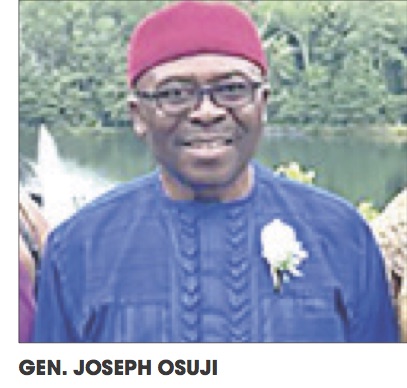
Brigadier-General Joseph Osuji, was one-time Commandant of the Nigerian Army School of Artillery; Commander of 302 Artillery Regiment, Onitsha, Anambra State and Brigade Commander of 35 Artillery Brigade, Abeokuta, Ogun State, among other military postings before he was retired. During those years, he not only participated in many internal security operations, in and outside Nigeria, he also led many of them. In this interview with CHIKA ABANOBI, he offered suggestions on what could be done to ensure adequate security during the general elections which commence today.
What were the internal security operations that you participated in during your days as a military officer?
During my time in the army, there were operations that went by different code names. The last one in which I led troops was “Operation MESSA” in Anambra State. In the foreign fields, there was “Operation Liberty” in Liberia, under the ECOMOG (Economic Community of West African States Monitoring Group) operations. I was also in the Democratic Republic of Congo, as a United Nations (UN) military observer. Before my retirement, I had commanded various levels of the military in the artillery. When I served in Onitsha (2008-2010), I was a member of the Anambra State Security Council (2008-2010). I have served in Shendam, Bida, Bauchi and Kontagora. I have also undergone military study tours to countries like Jordan, India and Germany.
What can you say about security arrangements with regards to the 2023 general elections?
With the efforts that INEC and security agencies are making, I believe that the elections will be successful. Nigerians are not supposed to be suppressed, intimidated or harassed. They should be given the opportunity to participate in a free and fair election. It will be successful; I am optimistic. With what I am hearing, of arrangements made by INEC to set up a body whereby all the security agencies are factored in to help them monitor the election, I believe that they must have been collecting intelligence information so that the moment the situation escalates they will nip it in the bud. But sometimes, things can and do slip out of hand. The only thing is that they should be to be on their toes. You have military divisions; Police Commands and Commissioners of Police in various states. They usually work hand-in-hand. They set up joint patrols. It depends on the nature of the security challenges in various areas. You have the community vigilance groups to assist them. This is why I am optimistic that security agencies are equal to the task. We have done it before; this is not the first election that will be held in Nigeria. So, they can only go back to the drawing board. Of course, the police are in charge of keeping peace, law and order. But when they are overwhelmed, the military is usually called upon to help.
In spite of such security arrangements, there had been pockets of violence in the past. What can we do differently this time?
I am sure that the security agencies must have learnt their lessons from such incidents. Whatever happened in the past, they can always draw some lessons from it to prevent a repeat of such security lapses. INEC is working hard to make sure that nobody hacks its portals. What should happen is that security agencies should be on their toes to make sure that commanders are not compromised. They should watch out against militant groups across the country. They will attempt to disrupt the election in any way they can. And some individuals may want to use them to foment trouble. They should be on the lookout to nip whatever they have in the bud so that they will not be overwhelmed. Given good intelligence gathering, they can engage in pre-emptive raids. With good training, things can work out.
In the South East, a faction of the IPOB has called for a sit-at-home before the election and even after the election. How can security agencies help to ensure that the group does not disrupt elections in the South East?
They should now intensify their patrols. This is the period to be on patrol throughout the trouble spots. If the police, the army and other security agencies are on patrol without disrupting the voting going on at the polling booths, there will be no problem. I want to suggest that there should be a massive military presence. That way, they will be able to deter the miscreants who are planning to disrupt the election in any part of the country.
These groups sometimes do strike at soft targets in order to create widespread panic among the populace. What can the security agencies do to reassure the electorate who are eager to vote, of their safety?
The various security agencies in every state should join hands together and do their work diligently. They should gather intelligence because they are familiar with their localities. There is no part of their locality or area of responsibility they cannot penetrate. With the aid of young men who are into vigilance duties in every community, they can comb areas likely to serve as hideouts for the miscreants. I am sure they will be able to make some arrests. Apart from that, there should be some roadblocks or checkpoints at strategic places. With proper policing by the military and other security agencies, we should be able to have a free and fair election. They should make sure that our borders are properly secured because sometimes some foreigners are used to disrupt our elections. They infiltrate through our porous borders. This is the time to be up and doing.
How can the people help to ensure security during this election?
Everybody should be vigilant. When you see something abnormal or suspicious, report it to the appropriate authorities. If you are in the village, report to your traditional ruler or village head who will in turn report to the vigilance people and then to the security agencies. Once the information gets to them they know what to do. They should also make use of other sources of intelligence in the community. Once someone sees something abnormal and reports on time, I am sure it will be taken care of. There should be public enlightenment on this. Telephone numbers to reach security agencies should be made available and people who give information should be protected. There should be confidence between the security agencies and the public. But they should beware of false alarms or false information that can expose them to danger.
There have been instances in the past where people were traced to their homes and killed for allegedly reporting criminals to law enforcement authorities. How can we avoid a repeat of such during the elections?
I believe that if we don’t allow cases to drag on for a long time and release the criminals in the process to come back to society and kill those they suspect reported them, there will be no ground for that. So, if criminals are arrested, they should be prosecuted and it will be a deterrent to others. Oftentimes, the fear is that criminals may come back to the society to hunt the good citizens who may not even be the ones that reported them to the security agencies. But if they are arrested and punished even after the election, others will take a cue from that. Reprisals will not occur once there is punishment for criminals. Sometimes, it is a function of a good judicial system not being in place. We should avoid that during this election.
Don’t you think that having some dedicated lines for that purpose will go a long way in helping?
You are correct. There should be something like that. I think such lines are usually given out to the public. They are published either in newspapers like yours or on social media or on electronic media. Both the police and state governments usually release numbers to call in case there is any problem. We should be able to get such numbers distributed to Nigerians during this election. Right now, such information should be released and repeated every hour on the radio and TV news.
In the past, there had been complaints about people in distress calling security agencies on the so-called dedicated lines, yet without anybody responding. What can the security agencies do this time to regain the lost confidence of some Nigerians?
I learnt that the government has made available some logistics to enable security agencies to respond to distress calls on time. There is what we call security votes. Each state has its allocations and if they use them properly, they should be able to provide some level of mobility. It is left for the state government to fund and equip its security apparatus. At the federal level too, they have their allocations. My advice is, they should make use of what is allotted for such operations judiciously. If the vehicles and equipment are provided, the rank and file of security agencies are happy doing their job. From my experience, whenever operatives on internal security operations are properly equipped, their morale is usually high. Nigeria is a rich country and we have the resources or funds to run a top-of-the-level internal operations outfit. The only thing is that we should make sure the funds are properly utilised for what they are meant for. Communities do support in the movement and mobility of their local vigilance groups. There is Amotekun in the South West. Such outfits could come in to help. There should be interface and joint-patrol operations between them and other security agencies.
There have been allegations of some of the security agents aiding some miscreants to perpetrate crimes such as rigging. How should we handle that this time?
If there are bad eggs in any unit, you deal with them. They must be fished out and punished. Sometimes, it starts when you have faulty recruitment systems. There are situations where unqualified personnel are recruited into the system. These are the people who come in to cause problems. Secondly, the alleged cases that involved indiscipline among the security agencies might be those of impostors or fake persons in security uniforms. But the moment someone is found wanting in his duties, you remove the person. It starts with the deployment. The commanders and officers in various areas should know who they are sending out for these internal security operations. Not everybody should be sent; only trusted members of the security agencies. But sometimes some of these allegations are untrue. When it comes to election matters, parties are fond of raising false security alarms against one another. So, security agencies should learn to separate the chaff from the wheat.
What other advice can you offer the security agencies?
They should think about how to interface with the media in their activities and operations. There is what we call civil-military cooperation. In fact, in the army we have a whole department for that. And, among other things, they are in charge of interfacing with the media. It can go a long way in helping to smoothen their operations during this election. I am sure by now they must have familiarised journalists on the beat with how they can interface with them to ensure adequate security of lives and property during the election period. It should be duplicated around the country. It is not as if everybody should be allowed to post whatever they like either on WhatsApp, Instagram or Twitter. Only credible sources like newspaper houses or TV houses or civil society groups should be allowed to do that, to draw the attention of security agencies to any crisis brewing anywhere.
Credible citizens too like popular actors, actresses, musicians or other highly placed persons in society can also raise the alarm whenever they see something going wrong somewhere during the election. But before they do they should make sure they are not helping others to raise false alarms. They should be sure of their sources or should be eyewitnesses to what they are talking about. Security agencies should be discrete in consuming or using the information posted on social media. Sometimes, such information is misleading. There is a lot of photo-shopping and misinformation. As I said earlier, political parties are guilty of this in their efforts to outdo one another. Overzealous Nigerians sometimes also distort facts. So security agencies should take every piece of information on social media with a pinch of salt.