Follow Us on Google

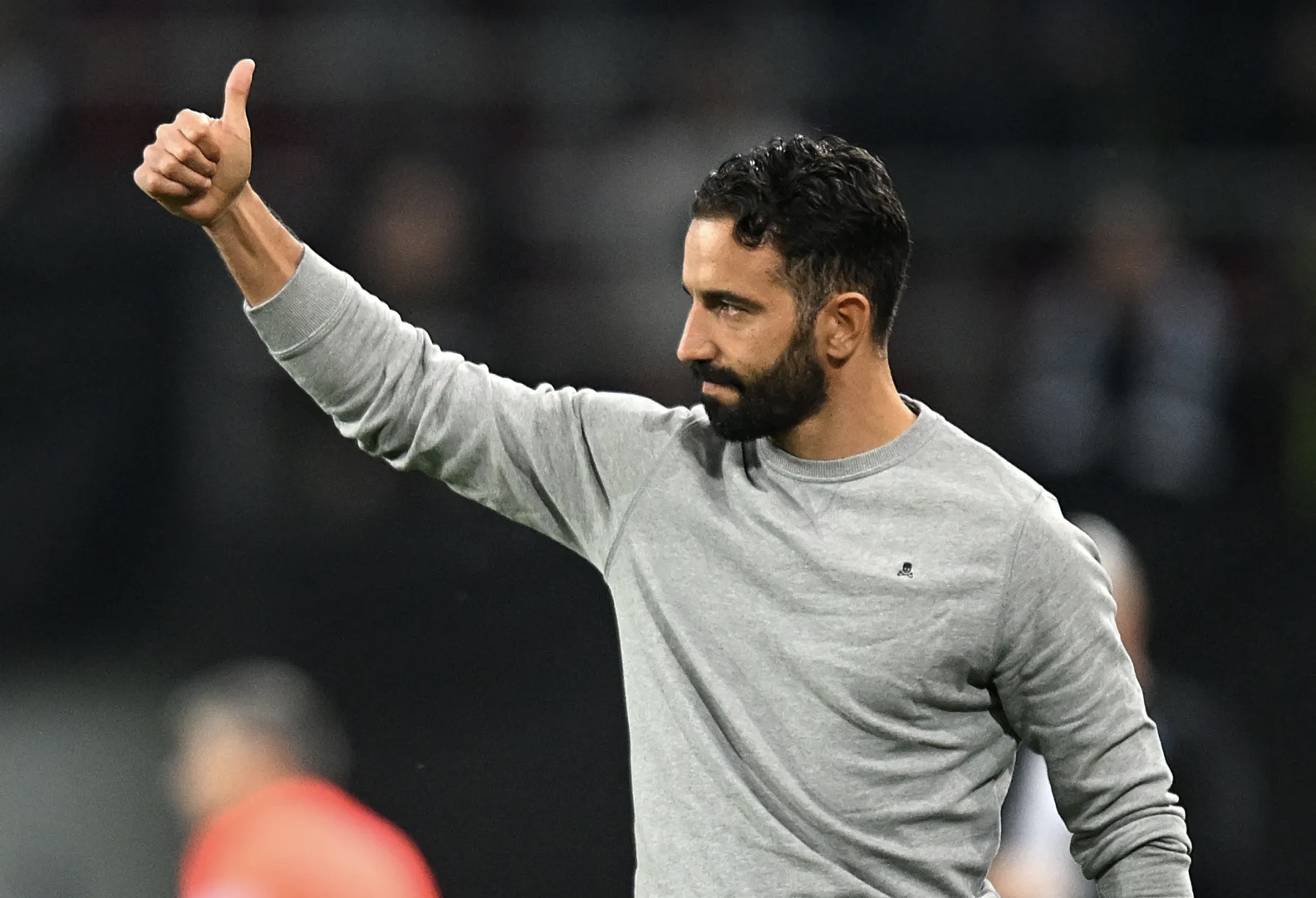
It was meant to be a dream job for Ruben Amorim when he took over at Manchester United in November 2024. His successor Michael Carrick has also now departed, at the same time Amorim has built his reputation once again.
The Portuguese came from Sporting highly recommended following their dominance an exceptional run under his stewardship. Five major trophies across just four years in charge was a very impressive return, while a winning percentage of 71.43% in 231 games with 165 wins tells its own story.
With Manchester United still searching for solidity and success following the removal of a fifth permanent manager along with four caretaker or interim managers since Sir Alex Ferguson in 2013, Amorim looked like the perfect tonic for United’s woes.
However, after a total of just 63 games, he was sacked. Just 24 wins, 18 draws and 21 defeats saw him oversee wins in just 38.1% of his matches. For a side like United, a win in just over one in three games is not good enough.
January 2026 saw Amorim leave his position as manager, with his dream turning into a nightmare that was beamed across the world.
However, away from the intense scrutiny of the Premier League, Amorim has been able to slowly but steadily rebuild his reputation and leading sports analysts Bets.co.za have looked at how it happened.
AC Milan, a side that like United had been hugely successful but have departed Europe’s elite level, came calling. Installed as manager in June of 2026, Amorim’s nearly half a year out of football management was brought to an end by the Serie A club.
This announcement came with some serious scrutiny. While the Premier League is one of the most intensely competitive leagues in the game, thus seeing managers critiqued for every result, performance, substitution and statement, signing with AC Milan would not provide much leeway.
Indeed, over the last 10 years since 2016, Amorim comes in as the 10th manager. Clearly, Milan are looking for the right way forward, but have they found it?
For Amorim, this switch is both a major challenge and a chance at a shared rebirth.
Milan were once one of the great Italian sides, feared in their own league and across Europe. To give some perspective, they currently play in Europe’s secondary competition (the Europa League) and have won one of their four outings.
With the likes of Barcelona, Real Madrid and Bayern Munich still dominating the competition, AC Milan have slipped someway short of the summit of the European game.
For Amorim, two league titles, two league cups and a Portuguese Super Cup during his time with Sporting was a hugely impressive return, and he will be desperate to get back to guiding his side to big trophies.
The one overriding concern for Amorim was his over-reliance on his system. Indeed, it was not only an over-reliance, but it was also Amorim being unwilling or unable to change, and this cost him at United.
With the English side, Amorim stuck rigidly to his formation, which generally featured three defenders. With the ball, he wanted his team to be structured in their play as they utilised wingbacks to keep the width of the pitch. Without the ball, the wingbacks would drop into a five-man defence.
Playing in the Premier League brought real issues for Amorim as flaws in his formation were exposed and he failed to solve these problems.
A two-man midfield saw United continually overrun by opponents choosing to play with three in that area. If Bruno Fernandes was then to drop deep to try to even up this mismatch, it deprived United of their most creative player further up the field.
His refusal to allow players to float around the pitch also saw United become incredibly predictable. While many of the most creative players look to pop up in space across the pitch, designated zones for players meant that it was easy for the opposition to mark United’s players and take them out of the game.
The wrong personnel also hurt Amorim as he tried to make do with a squad that he had not created and therefore did not suit his style of play. This was particularly obvious in their wingbacks struggling to deal with the demands of proving an attacking threat when going forward along with dropping in to make up a back five. They were either missing when United were going forward or leaving huge holes at the back which were exploited.
For the fans, his refusal to change became a reason to want him sacked. Ultimately, he would not change his style regardless of the teams he played against, while he would not tweak his formation or plans even if United were losing and needed a spark to get back into a match, with like-for-like substitutions and uninspiring changes bringing the ire of the fans.
At AC Milan, Amorim seems to have learnt his lesson.
Flexibility with his formation has been a particular feature of this new Amorim. Indeed, he has employed a back four when needed, with this switching into a back three when in possession and a back five when defending.
There is still the reliance on overloading forward areas of the field with wide men, but if the wingbacks can stretch the pitch and provide more shape in the middle, then this leads to Milan’s creative players having more time and freedom to pick passes.
Of course, having a player like Luka Modric is also key. Modric does not have the legs he once had, but he is still a maestro in possession. His ability to control the tempo of the game or receive the ball under pressure and move it on intelligently is something he did not have at United.
Amorim has also shown an aptitude for change in the middle. As the game evolves, Amorim often brings on players that will look to press and hustle the opposition, which is particularly effective later in the game as players tire.
This feels like a far cry from the coach that was so married to his system that it cost him his role with Manchester United. Gone is the manager that only made like-for-like substitutions and refused to make decisions based on the game situation.
Sat in fourth in Serie A with 24 points from 11 games, Milan are showing signs that Amorim’s system is working. However, as they are currently sat in 28th in the Europa League, it is not all perfect for Amorim.
While he seems to be cracking the code in Serie A as his side look to compete once again, sides from other European leagues have proved that they can still bypass his tactics and take the points.
Of course, the project is still in its early stages. Time and patience are needed to turn a club around, which is something he did not get at Old Trafford. While he will likely get more leeway with AC Milan, 10 managers in 10 years allude to the fact that while the clock is ticking down slower, it is still ticking nonetheless.