Follow Us on Google
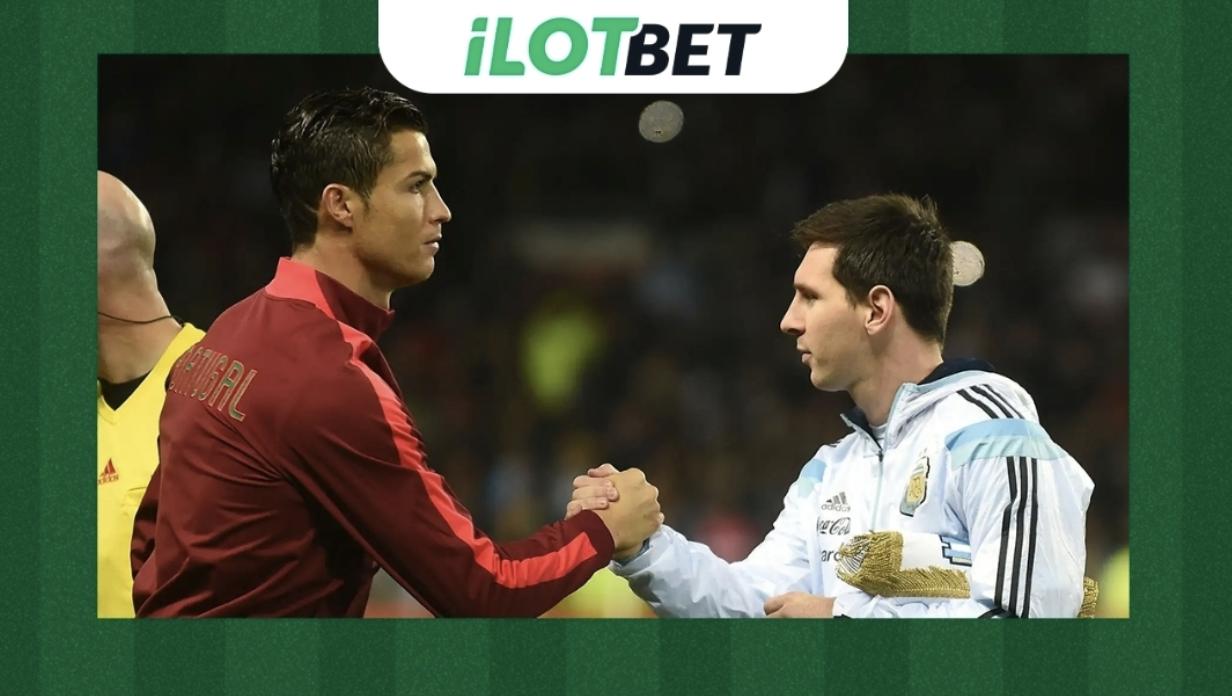
There was a time when a great season in football looked very different.
A forward could score 25 goals, win the league, produce moments of brilliance in Europe and comfortably walk away with the Ballon d’Or. Midfielders could dominate games through elegance and control rather than overwhelming statistics. Numbers mattered, but they did not define football in the suffocating way they do now.
Then Cristiano Ronaldo and Lionel Messi arrived and quietly distorted reality for an entire generation.
Not intentionally. Not maliciously. But permanently.
Before their era fully exploded, winning football’s biggest individual prize often required excellence rather than statistical absurdity. Pavel Nedvěd won the 2003 Ballon d’Or with14 goals in all competitions for Juventus. Fabio Cannavaro won it in 2006 primarily on the back of Italy’s World Cup triumph as a defender. Ronaldinho claimed the award in 2005 with 16 league goals. Even Kaká, whose 2007 campaign felt extraordinary at the time, scored 18 Serie A goals that season.
Those numbers were considered elite because context mattered as much as raw output. Style mattered. Influence mattered. Aura mattered.
Then football encountered two statistical anomalies at the same time.
Messi scored 73 goals in all competitions during the 2011-12 season. Ronaldo responded by turning 50-goal campaigns into an annual expectation rather than a historic outlier. Between 2008 and 2023, the pair combined to win 13 Ballons d’Or and repeatedly shattered standards that once seemed unreachable.
What had previously been considered a legendary season suddenly looked ordinary.
A winger scoring 22 goals? Good, but not Ballon d’Or level. A striker scoring 30? Excellent, but compared against men producing 55. The benchmark had moved so dramatically that football supporters began evaluating players against numbers that were never normal to begin with.
That shift changed how footballers are judged today.
Modern stars are often criticised not because they are underperforming historically, but because they are being measured against the impossible standards created by Ronaldo and Messi. A player can score 35 goals, lead his club to major trophies and still face questions about whether his season was truly “elite”.
The clearest evidence of football’s gradual return to reality arrived with Ousmane Dembélé. The Frenchman won the 2025 Ballon d’Or after helping Paris Saint-Germain secure a historic campaign, finishing the 2024-25 season with 37 goals and 15 assists across all competitions.
Those are outstanding numbers by almost any historical standard. Yet in the shadow of Ronaldo and Messi, they somehow felt modest for a Ballon d’Or winner.
That says everything about the psychological damage those two inflicted on football’s understanding of greatness.
The current 2025-26 Ballon d’Or race further highlights this reset. With the season approaching its conclusion, there is no overwhelming favourite dominating the conversation in the way Messi or Ronaldo once did almost automatically. Kylian Mbappé has numbers but not complete dominance. Erling Haaland remains prolific yet is scrutinised for his all-round play. Lamine Yamal has brilliance and influence but not yet the overwhelming statistical superiority once demanded from Ballon d’Or winners.
And perhaps that is healthy.
Football is slowly rediscovering nuance. The sport is remembering that greatness is not always about scoring 60 goals. Sometimes it is about control, creativity, leadership, tactical intelligence or defining moments in major matches.
Ironically, Ronaldo and Messi may have elevated football while simultaneously damaging our ability to appreciate normal excellence.
Because the truth is simple: what they did was not normal. It was never normal. Football simply spent 15 years pretending that it was.