Follow Us on Google
By Uche Usim
Non-oil revenue and trade became the unlikely heroes of Nigeria’s economic narrative in 2025 as they were the fulcrum to achieve the decisive break from decades of oil dependency.
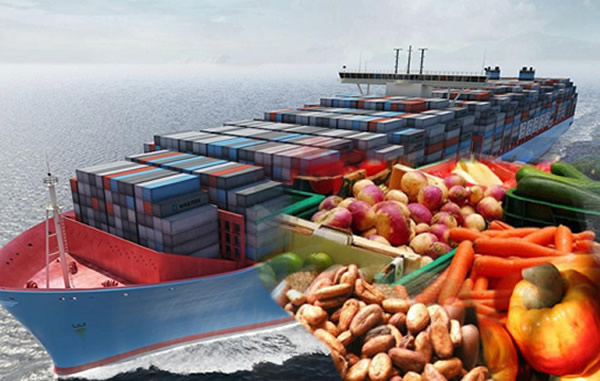
By the close of the year, non-oil exports had surged by 21 per cent, hitting $12.8 billion in the first half alone and helping to deliver a N12 trillion trade surplus.
What once sounded like policy rhetoric finally became reality, as agricultural produce, manufactured goods and services flowed steadily across borders, redefining Nigeria’s place in global commerce.
Across export corridors, the transformation was visible. Cocoa, cashew, sesame seeds, ginger and processed foods moved with greater speed and efficiency through modernised logistics chains. For thousands of exporters, this was not just about higher volumes but about access—access to training, certification and markets that had long felt out of reach. Working with the Nigerian Export Promotion Council, the Federal Ministry of Industry, Trade and Investment equipped over 27,000 exporters with the tools to compete globally, while 200 MSMEs earned certification to meet international standards. The result was a wider, more inclusive export base that stretched far beyond oil wells and pipelines.
Women were firmly embedded in this new trade story. Through the Women Export Fund, more than 67,000 applications poured in from across the country.
From these, 146 women-led enterprises received grants and technical support, enabling them to move from local production to global participation. In markets from West Africa to Europe, Nigerian women-owned businesses began to gain ground, turning inclusion into a measurable economic outcome rather than a slogan.
Trade growth fed directly into renewed investor confidence. For years, Nigeria had been known for signing ambitious Memoranda of Understanding that rarely translated into action. In 2025, that pattern changed sharply.
Of the $50.8 billion in MoUs signed, $13.7 billion was converted into four priority projects, representing a conversion rate above 25 percent. This shift from paper promises to live projects sent a clear signal that Nigeria was serious about execution.
Other News
Crucial to this credibility were bold macroeconomic reforms that reshaped investor perception. The liberalisation of the foreign exchange market and the removal of fuel subsidies were difficult, politically sensitive decisions, but they restored confidence in policy direction. By the third quarter of 2025, foreign portfolio and direct investment combined had climbed to nearly US$14 billion. Foreign Direct Investment alone recorded a dramatic 700 percent quarter-on-quarter increase in Q3, underscoring how quickly sentiment changed once reforms met consistency.
Yet the administration understood that sustainable growth could not rely solely on foreign capital. Domestic investors needed reassurance that the government was not just listening, but acting.
That understanding gave birth to the first-ever Domestic Investors Summit, a forum that broke with tradition by focusing on immediate problem-solving rather than prolonged speeches.
Investor complaints were addressed in real time, with 75 percent resolved on the spot and all outstanding issues closed within five working days. For many participants, it was the first time engagement with the government felt efficient and consequential.
Driving this hands-on approach was the Minister of Industry, Trade and Investment, Dr. Jumoke Oduwole, who took policy beyond Abuja offices to factory floors and industrial clusters. Her engagement with manufacturers and exporters reinforced the message that the government was prepared to work alongside businesses, not above them. This philosophy extended to the Platinum Business Champions, 23 Nigerian companies each generating over $1 billion annually, offered targeted support to expand capacity and reinvest locally. It was a clear signal that domestic success stories were central to national economic strategy.
Nigeria’s renewed confidence also played out beyond its borders. In 2025, the country reasserted its leadership within the African Continental Free Trade Area, emerging as a Co-Champion of the AfCFTA Protocol on Digital Trade. More importantly, Nigeria gazetted tariff concessions that enabled its businesses to trade duty-free on 90 percent of goods across the continent. This was not symbolic integration; it was a practical opening of markets that positioned Nigerian firms to scale across Africa.
At home, the innovation ecosystem received a major boost with the launch of the National Intellectual Property Policy and Strategy. For the first time, Nigeria had a unified framework to protect, commercialise and monetise intellectual property. From music and film to software and industrial design, creativity became a bankable asset, reinforcing Nigeria’s ambition to lead Africa’s digital and creative economy.
As 2025 drew to a close, attention turned to the future. The foundations laid during the Year of Impact set the stage for deeper transformation in 2026, with a focus on solid minerals, digital trade, climate-smart industrialisation and the creative sector. What distinguished 2025 was not ambition alone, but delivery. Nigeria moved from potential to performance, from aspiration to action.
The great pivot of 2025 proved that Nigeria’s economic engine had never been broken, only underutilised. With the right fuel of reform and the discipline of execution, the gears finally aligned.