Follow Us on Google

By Chinelo Obogo [email protected] 07064781119
Ground handling companies in Nigeria are groaning under what they say is a repressive low handling rate regime which, according to them, is crippling the sector and preventing them from functioning effectively.
One of the Acts that set up the Nigerian Civil Aviation Authority (NCAA) is to ensure that safety and security are not compromised in the system but ground handlers say that is if the agency does not immediately set a safety handling rate threshold, it will be difficult for handling companies to survive.
Industry reports reveal that an estimated $28.35 million is being lost annually to inappropriate handling rates in the country. Appropriate handling rates should earn both the Federal Government and the handling companies about $56.7million annually, yet, handling companies still charge between $300 to $1000 to handle a narrow body aircraft, rather than $1,400 to $1600 charged in other African countries and about $3,000 instead of $5,000 in sub-Saharan African countries for wide body aircraft.
Not less than 45 narrow body aircraft on regional and international routes, which include Boeing B737, Airbus A320, ER 135 and ATR aircraft are handled daily at the nation’s international airports by the ground handling companies. About 20 wide body aircraft like B767, A330, B777 and B747 are also handled daily by the ground handling companies.
Aviation Ground Handling Association of Nigeria (AGHAN) says the current rates are not sustainable because of the drop in naira value against major currencies and the Ground Support Equipment (GSE) and the facilities used in servicing these GSE are also procured abroad. For domestic operations, some pay as low as N12, 000 to N20, 000 for aircraft turnaround.
The association said some of the airports in the country are not competitive in terms of passenger and cargo services, yet the handlers deploy their equipment to these airports and pay FAAN the required charges, rentals, electricity and others and whatever the handlers are collecting at the moment can’t sustain them.
Safety threshhold
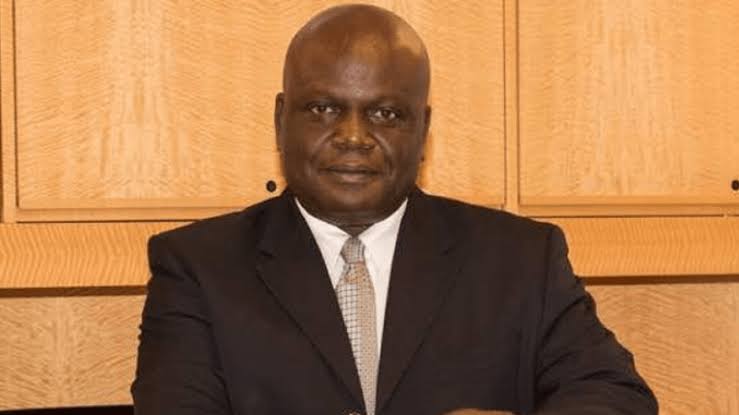
The pioneer Chief Executive Officer of Accident Investigation Bureau (AIB), Dr. Sam Oduselu, weighed in on the issue, saying “I have had the privilege to see the current ground handling rates in Nigeria and in any other parts of the world. I think ours is backward and should be reviewed. If you noticed, before the outbreak of the Covid-19 pandemic, the industry had a funding problem and one of the ways to solve it is by increasing the handling rates. If we compare the rates here with any other part of the world, you will see that the rates here are the cheapest and with such a ridiculous rate regime, it will be difficult for handling companies to survive if we continue to operate under this regime.
“While I was a Director of Airworthiness at the Nigerian Civil Aviation Authority (NCAA), the directorate is called economic regulation which ensures that whatever you are charging for air ticket will be good enough to maintain your equipment, pay your staff appropriately and other expenses.
“But, under a low regime handling rate, the ground handling company will find it difficult to function optimally and effectively. Also, government, as it is, is not deriving the economic benefit they should derive especially from the foreign carriers. Those airlines know the handling rates they are paying in those countries they fly into, but when you compare that with what we charge, you will find out that they will prefer the rates in Nigeria to those countries.
“I think the major challenge we are having is that these ground handling companies were set up by airlines, but now that the handling companies are in the private hands, they found out that the charges are too low and they affect their profit margin. As a result of this, the activities of the ground handlers can jeopardise safety if staff are not adequately remunerated, you will find out that the staff will not put in their best on the job and it would be easy for the staff to be compromised.
Other News
“Apart from safety, there is also the criminality aspect of it. For instance, if you are paying your staff peanuts and the syndicates are able to get hold of them, they could put drugs and any other dangerous items in the aircraft because they are not happy with what they are doing. These will jeopardis4e safety. I think it has become extremely important for the NCAA to intervene and ensure the commencement of a new handling rates.
“The operators too should try to go through the aviation committees of the Senate and the House of Representatives so that whatever it is that they are getting will be backed up by the law and will be part of the regulation in the industry. Just as you know, there is no Nigeria aviation, but global aviation industry. The ground handling companies have to ensure that they have a very useful regulation that will back up their agitation especially from the NCAA. They should at least get a good safety margin, we are not even talking of profit here. For you to talk of profit, you must, first of all, have the machineries that you need to do the job and with what they are charging now, they won’t be able to have all that.”
Ground handlers can’t survive with current regime
Critics ask why NCAA should intervene in the handling rate regime since that is already deregulated but the Group Managing Director, Nigerian Aviation Handling Company (NAHCO), Mrs. Olatokunbo Fagbemi, says the rate they are proposing is the benchmark below which you cannot offer these services safely.
On how the Federal Goverment can assist, Fagbemi said handlers need low interest rate on loans, grants and waivers and to access dollars at the same rate the airlines are buying.
“The rate we are talking about is the benchmark below which you cannot offer these services safely. Even, in deregulated economies around the world, we have benchmarks that are given; some may not be announced while the others are announced. What we are saying is that you can charge whatever you want, but you must not go below a framework that will harm the industry, harm the business and cause safety issues.
“The challenge that NAHCO has is that over the last few years, our rates have been static and some have even gone down, meanwhile foreign exchange and cost of living index have risen astronomically. We have been doing our best, showing that safety and security of our customer is not compromised and we want to continue to be able to do that to any airline that we serve.
“In moving forward, we have to invest in our GSEs, facilities and our people; we have done this and we will continue to do this. But within these astronomical changes that have not been matched with the recent changes, we need to review our rates. Can we continue to do that and survive as an organisation? The answer is no. Can we continue to offer the same level of services that we have been offering? The answer is no. We have done a five-year plan of where we need to invest; we will continue to do this. We know where the challenges are.
“We expect a lot from the government. First, low rate of interest to support our business so that we can support the airlines. Also, we will like to have some of the grants and waivers given the airlines. We want a waiver in our business and equipment and we will like to access dollars at the same rate the airlines are buying. We need this to further enhance our business so that we can reduce the pressure on our operations,” Fagbemi said.
The Managing Director of Skyway Aviation Handling Company (SAHCO), Mr. Basil Agboarumi, says poor handling rates has affected its operations negatively.
“It is certainly unfortunate that this has been on and allowed to linger for this long. Let’s go back to the memory lane on why things are the way they are till date. For instance, SAHCO is one company that grew from the ashes of the defunct national carrier, Nigeria Airways. SAHCOL, as at that time, was the ground handling arm of Nigeria Airways. Then, the company was also the one doing handling for other foreign airlines operating into Nigeria. Nigeria Airways was also the one managing the Bilateral Air Services Agreement (BASA) arrangements with other countries, but as time went by, the government wanted to follow the best practices around the world, separated SAHCOL from Nigeria Airways to entrench professionalism…”