Follow Us on Google
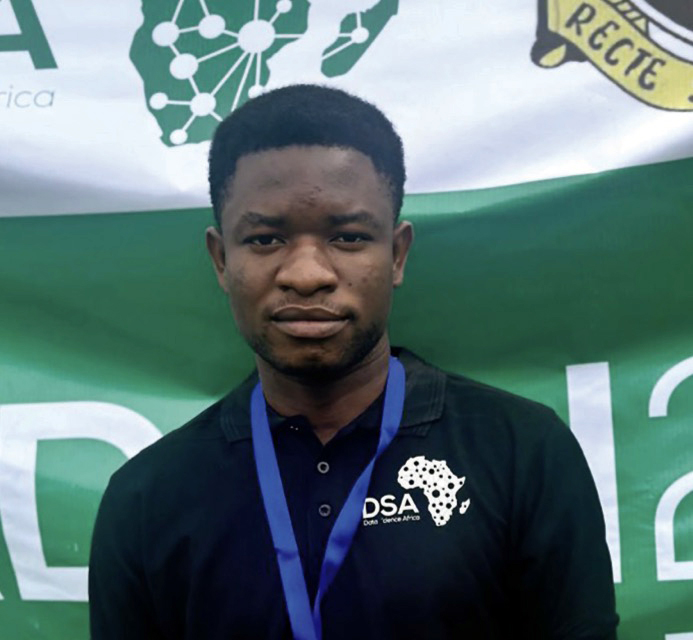
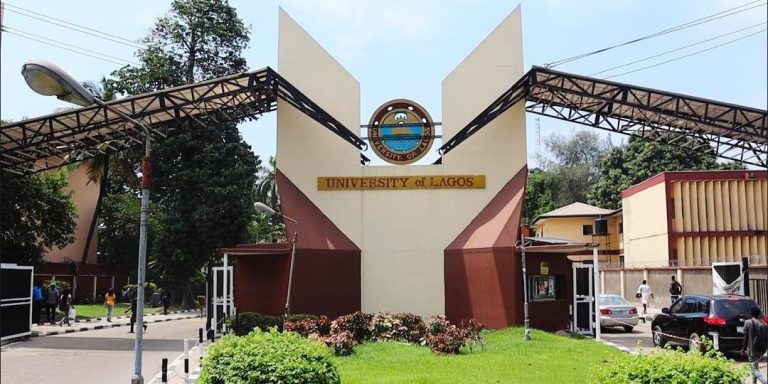
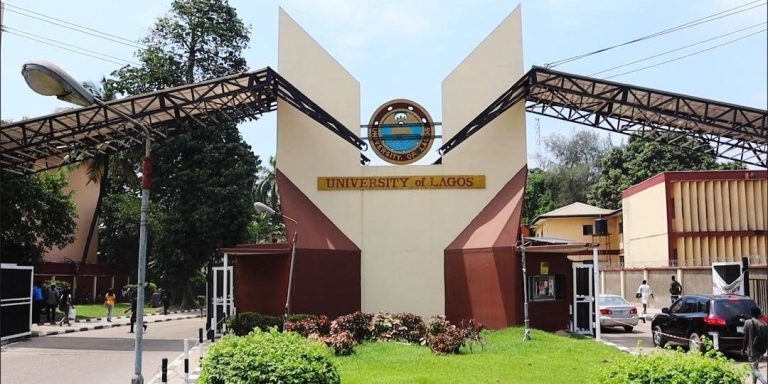
Rafiu Badekale, 2024 overall best graduating student, Department of Petroleum and Gas Engineering and Faculty of Engineering, University of Lagos (UNILAG) with CGPA of 4.94 has secured the Knight-Hennessy Scholarship at Stanford University, US, for a direct PhD admission with his First Class degree.
He spoke with Daily Sun:
How was your undergraduate journey?
It was one of the most formative phases of my life. I would describe it in one word as character-building. The values I carried into university, discipline, intentionality, and focus, had been instilled in me by my parents and siblings. But it was during my undergraduate years that I truly understood their worth. There were real lows in the beginning.
Coming from Idowa-Ijebu (Ogun State), to Lagos for the first time, I struggled to secure accommodation and could not start on time as a result. I eventually stayed with a family friend off-campus. By the second semester, I managed to secure a spot in the school hostel. Then came the COVID-19 pandemic, followed by the ASUU strike and multiple other disruptions. There were moments I genuinely asked myself when it would all settle. But it did.
Looking back now, I am so grateful for that journey. I achieved academic excellence, gained professional experience through internships with multinational energy companies, represented Africa at the 2023 SPE Annual Technical Conference and Exhibition, and was ultimately confirmed as the best graduating student of the Faculty of Engineering. Everything I am building today has its roots in that phase.
For my social life, I kept things pretty balanced. I had a childhood friend, Lateef Lawal, who attended Yaba College of Technology and was based in Magodo. Most Fridays, I would head to his office in Ikeja at Computer Village, spend the weekend there, and return to campus by Sunday or Monday. I made time to hang out with my course mates after class as well. It was a good mix and it kept me grounded.
Why Petroleum and Gas Engineering?
I chose that field because I wanted to deeply understand energy systems and what it takes to make them cleaner and more sustainable. That curiosity has only grown since then. It now drives everything I do professionally and academically.
On the professional side, I currently work remotely with the Hamoye Foundation in the United States, developing AI-driven climate mitigation tools for Sub-Saharan Africa. That work has already produced multiple research publications.
Was Petroleum and Gas engineering your dream course?
Yes. My interest in energy goes all the way back to childhood. I was the typical mathematics enthusiast who always knew he wanted to be an engineer. In primary school, I consistently ranked first in my class throughout.
When I got to secondary school, I admittedly started spending a lot of time on games, but I managed to maintain strong academic performance, particularly by leaning on my strengths in mathematics and doing just enough in other subjects. I consistently ranked first in my class throughout junior secondary school. It was an easy decision to choose the science department in senior secondary school.
Part of my early fascination with energy came from my parents, who were involved in Dual Purpose Kerosene sales using surface tanks. Watching how central energy was to everyday life and to Nigeria’s economy made me curious about the processes behind it. I wanted to understand how crude oil gets transformed into valuable products like the kerosene my parents sold, and I wanted to explore how those processes could be made more efficient and environmentally responsible.
With that in mind, I knew I needed to study Petroleum or Chemical Engineering. I initially considered Petrochemical Engineering, but then discovered UNILAG did not offer that programme. On the day I registered for JAMB, I settled for Petroleum and Gas Engineering. I embraced every opportunity to deepen my knowledge in the field and the journey has been both rewarding and fulfilling.
How did you approach studying for exams?
My approach to exams actually started well before any exam season began. Before each semester, my mentor, Wajud Kareem, a Chemical Engineering scholar one year ahead of me, would walk me through what to expect. He would send voice notes on WhatsApp breaking down the courses we had in common, what to focus on, how to approach the workload, and what the semester typically demanded. It was like knowing the destination before you start the journey.
Because of his mentorship, I also took several Chemical Engineering electives and performed excellently in all of them. During the semester itself, I focused primarily on individual study and I found studying at home or private space far more effective because there were fewer distractions. I made a point of consulting textbooks extensively for every course, because I like to develop a thorough understanding of topics.
That meant exam season was mostly revision, though it was still hectic given how much material I had covered. Some of my course mates preferred group reading or tutorials, and they were brilliant at it. We worked through problems together as well. The dynamic was always collaborative rather than competitive, which I think says a lot about the kind of people they are.
What kind of support did you receive from your lecturers?
I received tremendous support. My lecturers at UNILAG were genuinely open and approachable throughout my undergraduate years. They doubled as mentors, and I say without hesitation that reaching where I am today would not have been possible without their guidance and investment in my growth.
When I was preparing my graduate school applications, they served as my recommenders. During my final year, one of my lecturers, Professor Ehimowo, even invited me to join his research group in addition to my own, which I gladly did. That experience was invaluable.
To my recommenders, HOD Adeyanju, Professor Ehinmowo, Prof. Olamigoke, and Prof. Owolabi, I say thank you, again. Your belief in me meant more than words can express.
How did you secure the Knight-Hennessy scholarship at Stanford University for a direct PhD straight from BSc?
First, I want to clarify that the direct Bachelor’s to PhD pathway is actually a standardised structure at many top US institutions. It is not unusual. I had mentors who walked that exact road before me. Solomon Oyakhire went through this route for Chemical Engineering at Stanford and is now a Professor in the United States.
Other News
Korede Saliu is currently in the BSc-to-PhD programme at Georgia Institute of Technology. And Damola Agboola is currently in the US for his Master’s. So, it was really a matter of understanding what options exist and making a deliberate choice. As for how I secured the Knight-Hennessy Scholarship specifically, I would say it came down to God, clarity of purpose and staying true to who I am.
I was not trying to craft a story that would impress anyone. I simply spoke honestly about my domestic experience, what I had done at home in Nigeria, what I was currently doing and what I planned to do going forward. I understood that one of the core principles behind the Knight-Hennessy programme is multiculturalism, and I leaned into that fully.
I genuinely believe that my specific life experience, growing up in Idowa-Ijebu, building initiatives in my community, doing research on energy systems in Sub-Saharan Africa, is not something anyone else could replicate. That authenticity, I think, was what set me apart.
I also had strong motivations driving me. I wanted to make my family, my friends, and my hometown proud. People I deeply respect believed in me wholeheartedly, and I wanted to live up to that belief. Being the best graduating student of engineering opened many doors, and I kept this opportunity as my primary focus.
The journey itself was also shared. Friends who had known me since childhood and university days went through parts of the process with me: GRE preparation, reviewing application materials, navigating the different stages. Eventually, being selected as one of the scholars felt like a collective victory.
What are the financial implications of the scholarship?
The Knight-Hennessy Scholarship is genuinely comprehensive. Scholars receive up to three years of funding for their degree programme, which covers tuition directly, a living stipend for room and board, books, academic supplies, and reasonable personal expenses, as well as a travel stipend for one annual economy-class return trip between the scholar’s home country and Stanford. It is a full package designed to allow scholars to focus entirely on their research and academic development without financial distraction.
Why did you skip a master’s degree?
I did not skip anything, really. At Stanford, the curriculum integrates the coursework that a stand alone master’s would cover, so you are not missing those foundations. What you gain is a more continuous, focused runway into advanced research from the outset.
For the PhD programme, what specific area are you focusing on?
My research will focus on subsurface computational characterisation for energy utilisation and storage. Let me break that down simply. To maximise what we can extract from the subsurface, whether for oil and gas, geothermal energy, or carbon capture and storage, we first need to understand exactly what is down there, its physical properties, how fluids move through it, how the geology is structured. That process is called characterisation.
The challenge is that most methods for doing this accurately are expensive and slow. Computational characterisation offers a faster and more cost-effective alternative, but existing approaches often struggle to preserve the complexity of geological structures while also remaining computationally efficient. Those two goals tend to work against each other.
My work will focus on developing and improving the brain behind this (mathematical algorithms), that make large-scale subsurface simulations more accurate and more efficient at the same time. The goal is to improve the predictive capabilities of these simulations in ways that support better decisions around energy storage, field performance, and long-term storage safety. It sits right at the intersection of mathematics, computational science and energy engineering, which is exactly where I want to be.
Would you accept a lecturing role if offered after completing your PhD?
Absolutely, and it is actually central to my long-term vision. I aim to become an academic researcher and advisor, someone who teaches, mentors the next generation of engineers, and remains at the frontier of energy research simultaneously. My goal is to eventually lead an academic research group focused on advancing subsurface energy technologies and integrating them into broader global energy systems.
The chance to eventually lead a research institute that advances sustainable energy in Sub-Saharan Africa, one that is also deeply connected to communities and people on the ground, that is the goal I am working towards every day.
Can you recall any specific incident that shaped your undergraduate experience?
There are a few that stand out. Receiving scholarships like the PTDF, the Chevron Agbami award, the SNEPCO scholarship, and the Shonibare scholarship, which is specifically for Ijebu indigenes, were all incredibly affirming. But what I treasure most from those years are the people I met and the doors that opened through genuine engagement and hard work.
The experience that probably shaped me the most was getting deeply involved with the Society of Petroleum Engineers. In my fourth year, I led a team of five to represent UNILAG in the nationwide Petroquiz competition in Warri. We finished in the top three, which earned us the right to compete in the international Petrobowl competition in the United States, representing the Africa continent.
Standing there, competing at that level, made something click for me. It showed me in a very tangible way that the knowledge and skills we were building at home could take us anywhere in the world. I always tell younger students: get involved with SPE or whatever professional body is relevant to your field.
It is not just about competitions. It is about networking, learning from industry professionals, and developing a sense of the industry that no classroom alone can give you. Those experiences were formative for me and I believe they will be for them too.
Who is Rafiu Badekale?
I was born and raised in Idowa-Ijebu, Odogbolu Local Government, Ogun State. I am the youngest of seven siblings. I completed my primary education at Al-Azeem Nursery and Primary School in Idowa, and my secondary education at Ijebu Muslim College in Ijebu Ode. From there, I studied Petroleum and Gas Engineering at UNILAG and graduated in 2024 as the Faculty of Engineering valedictorian.
What do you want to be remembered for?
My long-term dream is to lead a research institute that bridges world-class energy research with grassroots community impact. I want to show that innovation and equity can coexist in the energy security space. More than anything, I want to be remembered as someone who made education, energy, and sustainability accessible to everyone, not just the elite, not just people in major cities, but truly everyone.