Follow Us on Google
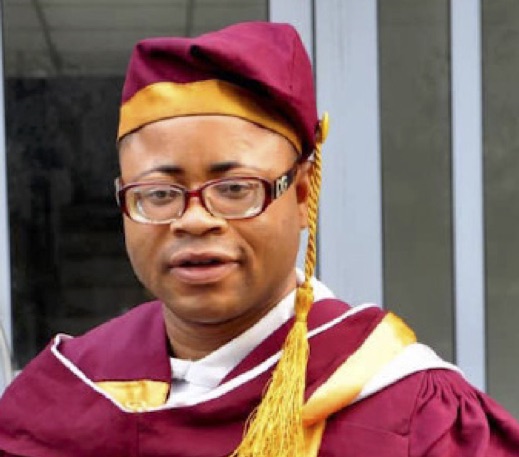
• Says Orji, MSc Philosophy PG graduate with 5.00 CGPA
By Gabriel Dike
At the 2024 convocation ceremony of University of Lagos (UNILAG), Akoka, Yaba, Lagos, Paul Okpara Orji, an MSc postgraduate student, Department of Philosophy, was one of a star attraction. In this interview, he revealed how he broke a 58-year-academic record in the department as postgraduate student.
How was your university education?
My university education has been an interesting, yet challenging one. From the beginning, l said UNILAG or no university. I wanted to interact with the best minds in tertiary institution even though I knew no one in Lagos. The rest of how l survived accommodation problem is a sermon for another Sunday.
l enrolled in the Philosophy Department. My greatest challenge was accommodation. I never got hostel accommodation until my 400-level. I squatted in Biobaku, Jaja and Mariere halls. This turned out to be a blessing in disguise. It enabled me to realise the survival instinct in human beings.
The St Thomas Moore Catholic Chaplaincy, UNILAG, cannot be forgotten. It provided for me like a home. NFCS (UNILAG Chapter was, and is still, a big umbrella that accommodated different personalities with similar vision: to serve God through humanity.
While still in school, l worked at the UNILAG library in her Work-study programme, a one-time Department Secretary and Faculty Parliamentarian. All of these positions and work experiences were the conduits through which the fluid academic rigours passed through me.
l graduated from UNILAG in 2018, with Second Class Upper Division, with my final semester (400 level second semester) GPA 4.88 and CGPA of 4.2. l was the Department of Philosophy’s Best Essayist, Best Debater, Most Diligent Student in 2018, and the Most Outstanding Catholic Student, UNILAG Chapter in the same year, 2018.
The MSc programme l just finished in UNILAG was a miracle, an episode and of divine grace. I enrolled in the programme in January 2023. Our set was asked to join the incumbent set due to graduate before us, but had remained because of incessant strike. They had tarried for two years.
I joined them in January 2023 and finished with them same in2023 by September. I used nine months to finish a programme that others had run for two full years. That’s why l said it was a harvest of divine grace. Mother nature and nurture from the best university scholars all over Nigeria had tutored me and brought this academic excellence, which we celebrate today.
In Philosophy, it is difficult to graduate with distinction. I did not just graduate with distinction but with perfect CGPA of 5.0/5.0, for the three academic sessions totalling over MSc 6000 students, thereby breaking a record in the Department of Philosophy, UNILAG. I remain eternally grateful to the brilliant galaxy of stars in our department working as lecturers. Their mentorship is top-notch.
To emphasise this academic achievement a bit further, since the inception of the Department of Philosophy, UNILAG in 1966; and for record purposes, l am the very first its postgraduate programme is producing with a perfect CGPA of 5.0/5.0. Although others had graduated with Distinction recording a CGPA of 4.7 none has made it to 5.00. So I am the first to break this record. Much thanks to the kind-hearted but critical-minded lecturers in the UNILAG Department of Philosophy.
Which is easier, the BSc or MSc programme?
In Philosophy, it is difficult to determine which is easier: BSc or MSc programme. It all depends on the student and what motivates him. In the postgraduate level, expectations and demands made of the students are higher as “Obi is no longer a boy.”
However, I make bold to state that undergraduate level is much more difficult than MSc programme. At that level, the student is more influenced by peer pressure and the razzmatazz of the campus life, which no longer attracts the postgraduate student.
What is the relevance of the title of your thesis to the society?
The title of my thesis is “Joseph Agbakogba’s Internalist Perspective on the Africa’s Development Crisis.” Its relevance is immediately felt on how it x-rayed the Africa’s cultural and economic woes, having alienated herself from her ontological existence, thereby dancing the music of the West with devastating consequences.
It calls on Africa to uphold her indigenous language, technology, culture, history, education so as to relate with the West with comparative advantages.
What is next after your MSc programme?
Having finished my MSc programme, l hope to go for my doctoral degree programme immediately. I would like to study abroad if sponsored. If not, I would still settle for UNILAG. I wish to study Solid State Philosophy, with a peck on Artificial Intelligence/and /or Africa’s Development, trying to unravel how Africa’s intelligent system could yield a fascinating Artificial Intelligence as we have it in the West.
How did you combine work and study?
I cook. I cater for people. I sing at the local choir. I research avidly. In doing all of these things, some mundane, some spiritual, l know and l live the Solomon’s saying: “There is time for everything.” This is what young people must learn and imbibe. When it is time for study, study; for play, play; for prayers, pray. Nature abhors vacuum. And don’t use any particular activity’s time for another. This is what I did and succeeded in my academics.
Would you accept lecturing job?
I would accept a lecturing job. I would accept it so I can transit this knowledge acquired from others to posterity’s intellect.
Who is your mentor and how did he or she impact on your studies?
The learned figure Archimedes once said: “Give me a fulcrum and a lever and l will lift the world.” His statement not only acknowledges received wisdom but also recognises the importance of mentorship.
Firstly, my mentors have always been great authors: those whose writings leave a mark on the sand of time. In this category remain Augustine of Hippo, Apostle Paul, Plato, G.K Chesterton, Aquinas, Omoregbe and Jim Unah. Their writings are a river of gold.
Secondly, my mother is my greatest inspirer. She thought me how to reason because she was a natural Philosopher. I cannot forget Anthony Okeregbe, C. B. Okoro Modestus Onyeghalaji, Asodun Fatai and Peter Osimiri.
Their lifestyles and pedagogical skills sharpened my intellect and endeared it to learning.
Currently, l have Pastor (Dr) Kelechi Oboti in this host of mentors. His mentorship is shown palpably in his identifying talents and sponsoring them for full realization. God bless them.