Follow Us on Google
From Abdulrazaq Mungadi, Gombe
About three years after the outbreak of the COVID-19 pandemic, Nigeria has again recorded an outbreak of diphtheria, an acute and highly contagious bacterial disease, which has been ravaging the country.
According to reports, the outbreak of the disease has resulted in over 12,000 suspected cases and about 8,000 confirmed cases as well as over 600 deaths across the country. A massive spike has been observed since July 2023.
With over 1,000 cases identified weekly in Kano State, it is the epicenter of the recent outbreak. And it has spread to over 19 states and 111 local government areas of the federation.
In October 2023, the disease hit Gombe State with an initial identification of six suspected cases. Instead of being overwhelmed by the outbreak as experienced in several other states, the state government leveraged the established COVID-19 response mechanism in the state to contain the outbreak.
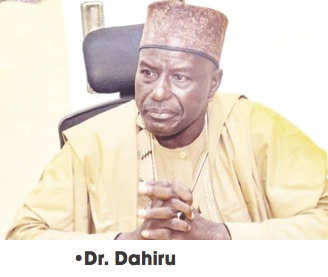
According to the Gombe State commissioner for health, Dr. Habu Dahiru, the state has so far recorded two confirmed cases from six suspected cases.
Speaking in an exclusive interview with Daily Sun in his office, the commissioner explained that, upon identifying the suspected cases in the, the state government, through the Ministry of Health, quickly swung into action, adopting the strategies used in responding to the COVID-19 pandemic to halt the spread of diphtheria.
He said: “As soon as we heard about the spread of the disease to our neighbouring Bauchi and Yobe states, we started going from house to house in our border communities in search of diphtheria symptoms, which include fever, sore throat, running nose and swelling of the neck. We also increased our immunization and embarked on contact tracing to follow up on suspected cases and to reduce spread.”
According to him, effective immunization and timely vaccination are the known and regular means of preventing diphtheria and several other infectious diseases. Dahiru disclosed that the already established COVID-19 response mechanism used to contain diphtheria in Gombe State includes the surveillance system, active case search and case management, which are essential tools in detecting and managing confirmed cases.
He explained that the capacity of the COVID-19 response structure that was sustained in the state had been boosted and expanded to accommodate other infectious diseases. He said: “With the help of the state governor, Alhaji Muhammadu Inuwa Yahaya, the system was enhanced for surveillance, case management, laboratory pillar and health education. And that was used in the case of diphtheria. We equally have an effective health education campaign, community, and mobilization system in place.
“These are some of the strategies we developed and launched to educate and sensitize residents about the preventive measures of infectious diseases, including diphtheria. This has helped us in early detection and prompt response to suspected cases.
“Our rapid response has been much more active and expanded to the 11 LGAs of the state. The rapid response teams were developed and deployed to detect and manage both suspected and confirmed cases of an outbreak as they occur. The teams were equipped with the necessary tools and materials to manage diseases and prevent spread.
“I would say that the already established COVID-19 response mechanism in Gombe State has helped us in containing the spread of diphtheria and other infectious diseases.”
He added that, with the strategies put in place, the state has made significant progress in managing outbreaks of infectious diseases.
The commissioner commended the Nigeria Centre for Disease Control (NCDC) and the World Health Organization (WHO), as well as other stakeholders, for swiftly acting and providing support to states of the federation to respond and manage the outbreak of diphtheria.
“States have been supported to activate accident management systems and provide laboratory support and embark on active case search to identify suspected cases,” he said.
Responding to the rumours about fake vaccines circulating across states in Nigeria, the commissioner said: “I don’t think we have any form of fake vaccines in circulation, because we have only one central vaccine procurement process. Vaccines are only procured by the National Primary Health Care Agency (NPHCDA) and distributed to all the states and sometimes they might not be fake and yet not effective, because a cold chain system must be maintained and followed from the transportation to storage of the vaccines to the point of administering. Any break in the cold chain system will automatically affect the vaccines.
“You must store the vaccines at an optimum temperature and in good condition to ensure their effectiveness. If you do not take good care of any vaccines, they tend to go stale and when the vaccine is stale and administered to a patient it will not be effective. Instead, it would require an immediate remediation to stop the stale vaccine from causing damage to the receiver of the vaccines.”