Follow Us on Google
From Abdurrazaq Mungadi, Gombe
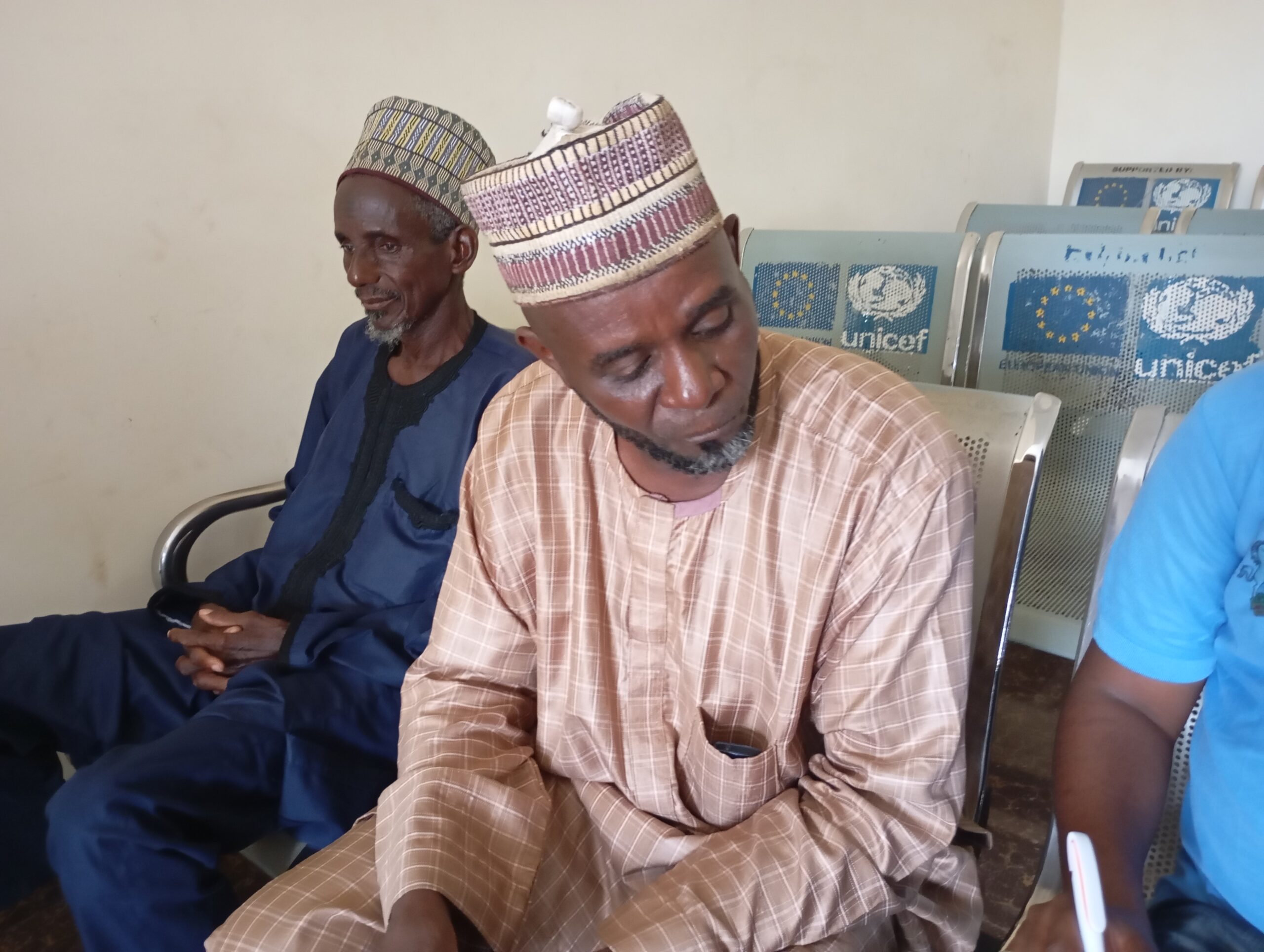
As the world celebrates the 2024 Breastfeeding Week to highlight the benefits of breastfeeding to both the health and welfare of babies, as well as good nutrition, poverty reduction and food security, Malam Ibrahim Ibrema, a father of 11 children in Yola, Adamawa state has shared his experience in helping his wife to adopt exclusive breastfeeding.
According to him, the firsthand benefits of exclusive breastfeeding go beyond the health of his children but also to his family’s financial well-being. The 48-year-old father disclosed this while speaking with newsmen during a media field visit to mark the 2024 World Breastfeeding Week in Yola.
He explained that despite adopting the world’s supported form of feeding for children at his 7th childbirth, exclusive breastfeeding has saved him a significant amount of money that would have otherwise been spent on formula or other feeding options as well as the health and well-being of the child. “From my 7th to 11th children are all exclusively breastfed and I have seen the benefits, unlike my 1st to 6th children who are almost always sick.
“My younger children are the healthiest and smartest children in the family and I believe it is due to the way they were exclusively breastfed. My personal experience with this practice has been very good, even my grandparents and mother-in-law who were very difficult to convince at the first stage can testify to the goodies that accompanied the exclusive breastfeeding,” Ibrema stated.
While calling other men to allow and support their waves to exclusively breastfeed their babies, Ibrema said, “I first heard about exclusive breastfeeding on the Radio and when I followed my wife to a hospital I overheard the workers sensitizing women on the need to adopt exclusive breastfeeding for their babies, I then ask further about it, that was how it all started for me”.
While exclusive breastfeeding serves as a cornerstone in the quest for optimal health outcomes for both infants and mothers, the United Nations Children’s Fund (UNICEF) Bauchi Field Office (BFO), has adopted a new focus to further push for improving exclusive breastfeeding in states lagging.
This was revealed by the UNICEF’s Nutritional Specialist, Philomena Irene, during a two-day Media Dialogue held in Yola, Adamawa State. While commending the media for the sustained partnership, Irene explained that the shift of focus was informed by the need to reverse the poor Breastfeeding rates in the five BFO states, adding that UNICEF had always engaged women.
She said this year’s theme, ‘Closing the Gap: Breastfeeding Support for All,’ underscores the fund’s “commitment to ensuring that every mother in BFO States had access to the support she needs, regardless of her circumstances”. Irene lamented that breastfeeding statistics for BFO states in the 2021 Multiple Indicator Cluster Survey (MICS) were poor, stating that the survey reveals that Adamawa had 53.3 %, Bauchi 26.4 %, Gombe 30.7 %, Plateau 38.6 %, and Taraba 37 % respectively.
Hence, she announced the need to shift focus from women to engaging more men to support their wives in exclusively breastfeeding. She urged participants at the Media Dialogue to think towards engaging men and grandmothers to make a difference. She noted that men and their mothers are key decision-makers when it comes to breastfeeding the child.
The Nutrition Specialist explained that field experiences showed that fathers and their mothers hold myths and misconceptions that can lead to poor Exclusive Breastfeeding outcomes. She recounted the story of how a mother-in-law once stormed a meeting at a health facility uninvited, explaining that she had to be there to listen to whatever they had to tell her daughter-in-law principally because of her son’s child.
The UNICEF Specialist therefore urged participants to embrace the new approach to dispel myths and misconceptions about exclusive breastfeeding while convincing fathers and grandmothers to support the practice.
She emphasised that the fluid and nutrients needed for optimal growth and development during the first six months of the child are contained in breast milk, which also acts as a baby’s first vaccine and affects Health outcomes, stimulating brain development and educational outcomes.
“We must engage all actors along the Warm Chain of Breastfeeding support: civil society organizations, governments, policymakers, health systems, workplaces, communities, and parents,” she said adding that “We call on all stakeholders to invest in breastfeeding support to alleviate social inequalities and promote sustainable development in the BFO States”.