Follow Us on Google
By Chinwendu Obienyi
Nigeria’s long and painful journey toward macroeconomic stability appears to be yielding tangible dividends as key reforms by the Central Bank of Nigeria and fiscal authorities push the country’s external sector into positive territory. Fresh data released by the apex bank show that Nigeria recorded a Balance of Payments surplus of $4.6 billion in the third quarter of 2025, a dramatic turnaround from the deficit position recorded just a quarter earlier and a strong signal that investor confidence is gradually returning.
The improved BOP position is being powered by stronger trade performance, resilient diaspora remittances, rising foreign capital inflows and steady accretion to external reserves. At the heart of this turnaround are far-reaching reforms in the foreign exchange market, monetary policy operations and the domestic energy sector, reforms that have reshaped how foreign capital enters the economy and how Nigeria engages with global markets.
According to the CBN, the $4.60 billion surplus reflects strengthening external sector fundamentals and improved market confidence following months of policy tightening, exchange rate reforms and structural adjustments. It also underscores the impact of difficult but deliberate choices made by the monetary and fiscal authorities to stabilise the economy after years of distortion, uncertainty and declining investor trust.
Data from the apex bank show that the current account remained firmly in surplus at $3.42 billion in the third quarter of 2025, supported by improved trade balances, steady remittance inflows and increased financial flows. The goods account stayed positive at $4.94 billion, reflecting higher export earnings, particularly from crude oil and refined petroleum products.
“Exports increased to US$15.24 billion in Q3 2025, from US$14.90 billion in Q2 2025, on account of increases in crude oil and refined petroleum products exports. The country is gradually switching from a net importer of refined petroleum products to a net exporter. Import of petroleum products decreased by 12.7 per cent to US$1.65 billion,” the CBN said.
The shift marks a critical structural change for Africa’s largest oil producer. For decades, Nigeria exported crude oil only to import refined petroleum products at huge cost to the economy. The growing contribution of domestic refining capacity is now easing pressure on foreign exchange demand while boosting export earnings and improving the trade balance.
However, not all components of the balance of payments moved in the same direction. The services account recorded higher net outflows, rising to $4.07 billion in Q3 2025 from $3.74 billion in the previous quarter. According to the CBN, the increase was driven by higher payments for transport, travel, insurance, computer and information services, other business services and government services not included elsewhere.
“The increase in net out-payments for services was due to increases in net import of transport, travel, insurance, computer and information, other business, and government services not included elsewhere,” the report stated.
The primary income account also recorded a wider deficit, rising sharply to $2.95 billion in Q3 2025 from $1.25 billion in Q2. The apex bank attributed this to the repatriation of reinvested earnings by domestic banks on their foreign investments abroad, particularly on direct investments.
On the other hand, the secondary income account remained a strong pillar of support for Nigeria’s external position. Although it dipped marginally to $5.50 billion from $5.51 billion in the previous quarter, diaspora remittances continued to flow in at robust levels. Personal transfers from Nigerians abroad stood at $5.24 billion in Q3 2025, compared with $5.30 billion in Q2, reaffirming the diaspora’s role as a critical source of foreign exchange.
Beyond the current account, developments in the financial account further strengthened the overall BOP outcome. Nigeria posted a net lending position of $0.32 billion, supported by rising foreign capital inflows. Foreign direct investment climbed to $0.72 billion, while portfolio investment inflows remained strong at $2.51 billion, reflecting renewed non-resident participation in domestic financial instruments.
As a result, Nigeria’s external reserves rose significantly, climbing to $42.77 billion at the end of September 2025 from $37.81 billion at the end of June. The improvement has strengthened the country’s external buffers and enhanced its ability to absorb shocks, defend the naira and meet international obligations.
According to the CBN, the Q3 2025 performance is evidence that the reform agenda is beginning to restore credibility to Nigeria’s macroeconomic framework. It also reflects firmer investor confidence following the liberalisation of the foreign exchange market, tighter monetary policy and improved coordination between fiscal and monetary authorities.
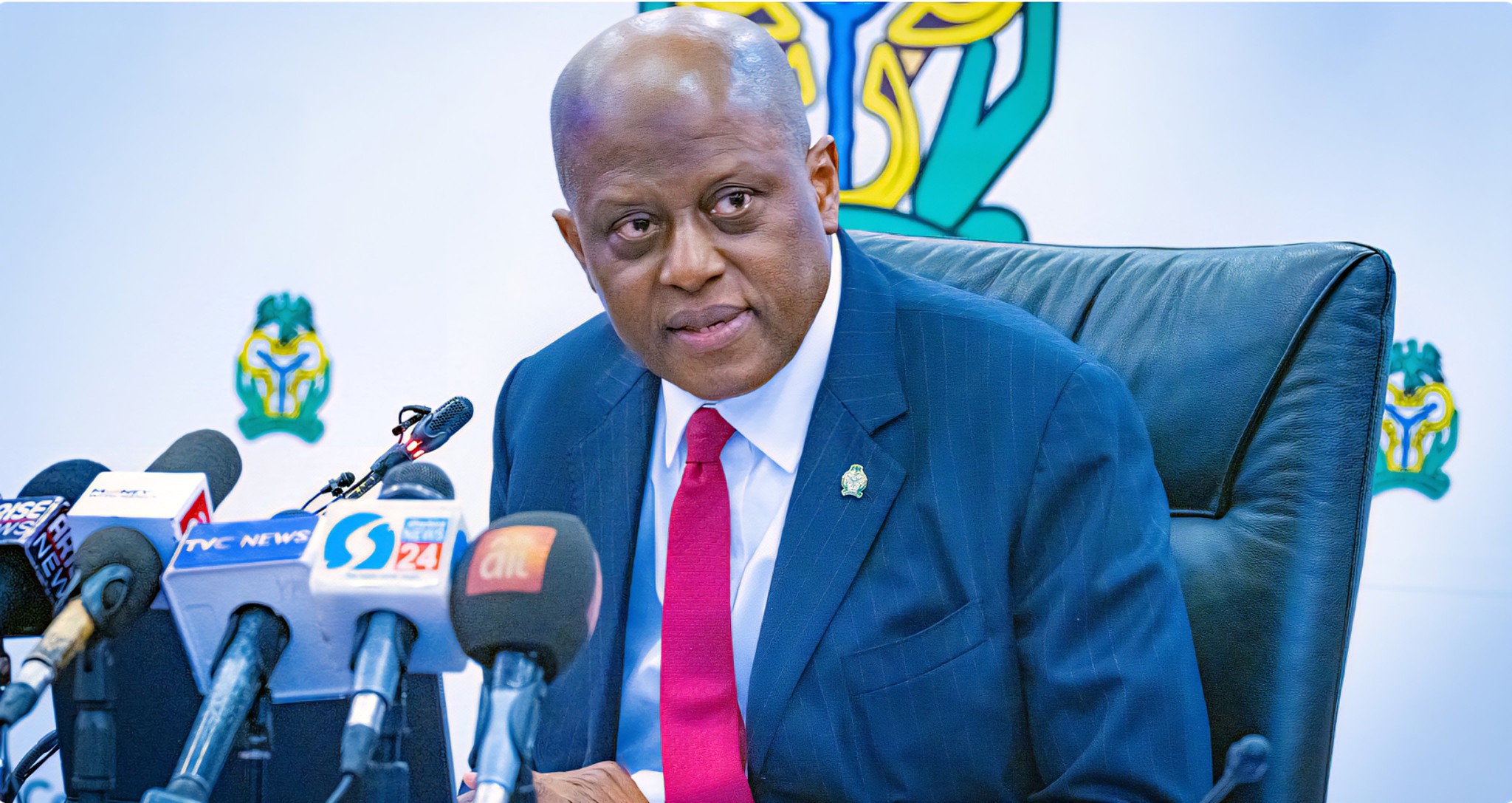
CBN Governor, Olayemi Cardoso, has repeatedly stressed that the central bank’s focus is to rebuild confidence, restore policy credibility and return the economy to a path of sustainable growth. Speaking earlier at the 60th Annual Bankers’ Dinner, Cardoso reaffirmed that Nigeria’s banking system remains resilient, even as the apex bank maintains vigilance over emerging risks.
At the event, he outlined the CBN’s priorities for 2026, which include strengthening the banking sector, ensuring price stability, modernising the payments system, deepening financial inclusion and supporting responsible fintech innovation. He also highlighted the expansion of digital payments, the growth of contactless cards, improved agent banking controls and Nigeria’s exit from the Financial Action Task Force grey list as key confidence boosters.
He concluded by restating the bank’s commitment to disciplined, transparent and forward-looking policies to keep the economy stable and attractive to investors.
The current gains did not come overnight. Nigeria’s economic reset began in 2023 when the new administration, working with a reconstituted CBN leadership under Cardoso, embarked on a series of bold and often controversial reforms aimed at correcting deep-rooted imbalances.
These reforms included the liberalisation and unification of the foreign exchange market, the discontinuation of central bank financing of fiscal deficits, and the removal of fuel subsidies. At the same time, the government strengthened revenue collection and took steps to rein in inflation, which had surged to record highs.
Since the reforms were introduced, Nigeria’s external reserves have steadily increased, access to foreign exchange through official channels has improved, and confidence has slowly returned to the market. The country also successfully returned to the international capital market late last year and has since received rating upgrades, reflecting improved investor sentiment.
A new domestic private refinery, operating in a deregulated market, has further repositioned Nigeria up the value chain, reducing dependence on imported fuel and easing pressure on the naira. Currency reforms and reduced central bank intervention in the FX market have also encouraged inflows from foreign investors.
The unification of exchange rates and the clearance of over $7 billion in FX backlog were particularly significant, restoring credibility to the FX market. Multilateral institutions, including the World Bank, have described the reforms as bold steps toward long-term economic sustainability.
Nigeria’s sovereign risk spread has also dropped to its lowest level since January 2020, erasing the premium accumulated during the pandemic and subsequent economic strain. These developments have combined to improve Nigeria’s investment outlook and reinforce capital inflows.
In its push to tame inflation and strengthen policy communication, the CBN recently hosted the 2025 Monetary Policy Forum, bringing together fiscal authorities, legislators, private sector leaders, development partners and experts under the theme “Managing the Disinflation Process.”
At the forum, Cardoso explained that managing disinflation requires coordination between fiscal and monetary authorities to anchor expectations and sustain investor confidence.
“Managing disinflation amidst persistent shocks requires not only robust policies but also coordination between fiscal and monetary authorities to anchor expectations and maintain investor confidence. Our focus must remain on price stability, the planned transition to an inflation-targeting framework, and strategies to restore purchasing power and ease economic hardship,” he said.
He added that the CBN is maintaining a disciplined, forward-looking and adaptive approach to monetary policy to stabilise the economy.
“As we shift from unorthodox to orthodox monetary policy, the CBN remains committed to restoring confidence, strengthening policy credibility, and staying focused on its core mandate of price stability,” Cardoso stated.
He also explained that recent monetary policy easing was informed by improving inflation trends.
“The committee’s decision to lower the monetary policy rate was predicated on the sustained disinflation recorded in the past five months, projections of declining inflation for the rest of 2025 and the need to support economic recovery efforts,” he said.
Beyond monetary tightening, the CBN has activated multiple foreign exchange sources to boost dollar inflows and improve access for businesses and individuals. These include reforms to diaspora remittance channels, licensing of new International Money Transfer Operators, adoption of a willing buyer-willing seller FX model and improved naira liquidity access for IMTOs.
These measures have supported reserve accretion and naira stability. Diaspora remittances, estimated at about $23 billion annually, remain one of Nigeria’s most reliable FX sources, and the CBN aims to double formal remittance receipts through improved confidence and transparency.
Market operators say the reforms are already changing perceptions. Director of Trading at Verto, Charlie Bird, noted that dollar liquidity has become more balanced, with foreign investors and airlines now able to repatriate funds.
Speaking at a Cordros Asset Management seminar titled “The Naira Playbook,” Bird said Nigeria is fast becoming attractive to foreign investors again due to improved dollar liquidity driven by CBN reforms.
According to Cardoso, the economy has moved from crisis management to recovery building over the past year.
“After nearly a decade in which real GDP growth averaged about 2 per cent, reforms have restored momentum and confidence in our macroeconomic environment. Our economy grew by 4.23 per cent in the second quarter of 2025, the strongest pace in four years,” he said.
He added that inflation, though still high, has moderated sharply.
“From a peak of 34.6 per cent in November 2024, it has more than halved to 16.05 per cent in October 2025. This marks seven consecutive months of disinflation. Food inflation fell to 13.12 per cent in October,” Cardoso said.
“This steady decline is restoring purchasing power and demonstrates disciplined execution. Price stability is the foundation of sustainable growth, and our transition to an inflation-targeting framework is gaining traction,” he concluded.
As Nigeria presses on with reforms, many analysts note that the Q3 2025 BOP surplus remains a powerful signal that the strategy is beginning to work, though authorities insist sustained discipline will be critical to locking in long-term gains.