Follow Us on Google

By Gabriel Dike
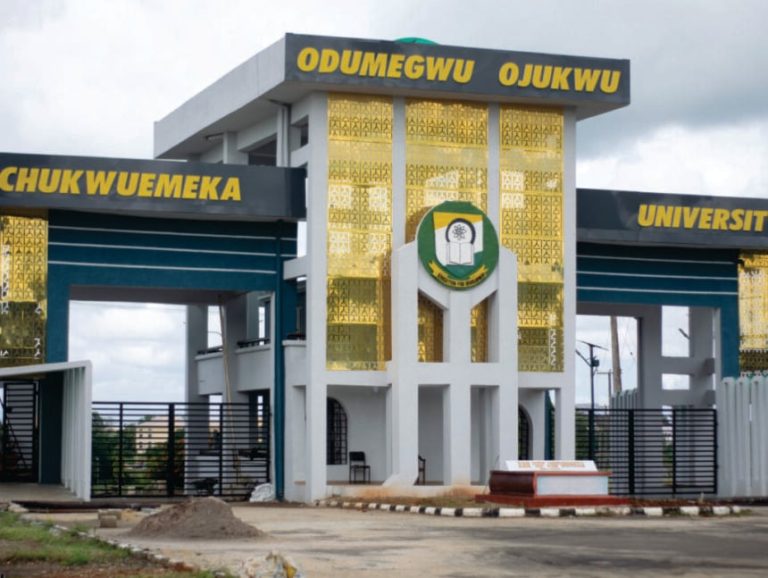
As at the last count, nine universities have disowned the purported list of fake professors ascribed to them in a story currently making the rounds that the National Universities Commission (NUC) recently uncovered.
More universities are expected to disclaim the names on the list, which has already generated ripples in the NUS with university management rushing to issue statement disowning the names.
On December 2019, The Education Correspondent of Daily Sun stumbled on a document submitted to the then Executive Secretary of NUC, Prof. Abubakar Adamu Rasheed on the discovering of 100 fake professors in the NUS.
The NUC bulletin of December 2019 did not mention or list names nor state the universities that produced the fake professors. While Daily Sun published the 100 fake professors story on Monday, December 2nd, 2019, others published on Tuesday, December 3rd, 2019.
THE REAL STORY
About 100 fake professors have been uncovered by the National Universities Commission (NUC) says the Executive Secretary of the commission, Prof. Abubakar Adamu Rasheed.
Prof Rasheed said the 100 fake professors’ details were posted on the NUC website and the commission had to send the names to the various universities for verification.
He disclosed this at the 2019 retreats for vice – chancellors and thanked them for their cooperation with the NUC Strategy Advisory Committee (STRADVCOM), which had published, among other things, directory of full professors in the Nigeria University System (NUS); statistical Digest of the NUS 2017-2018; refinement and modernisation of instruments for accreditation of undergraduate, postgraduate, part-time, affiliate, open and distance learning programmes and institutional as well as state of university education in Nigeria 2017- 2018.
The NUC boss said that the updated version of those documents would be published by December 2019 and that professors in their respective universities uploaded their curricula vitae on the website which was used in compilation of the directory of full professors in the NUS and had helped in identifying fake professors in the system.
He encouraged the VCs to have accurate statistics of staff, students and other components in their respective universities off-hand. He applauded them for ensuring that institutions, as he also cautioned them to be mindful while signing certificates of students especially those of affiliate institutions under their purviews.
Rasheed stressed that the fight against fake professors was a collective responsibility.
The Executive Secretary informed the vice-chancellors of a recent meeting held with the Director-General, National Youth Service Corps (NYSC) where the latter complained that some Corp members’ degree certificates purportedly obtained from some prestigious universities were questionable.
The NUC boss directed that the VCs should check the excesses of their affiliate institutions, noting that lecturers hardly spend time with their students and argued that Ph.D. supervisions had lacked the necessary quality time required and desired as both the lecturers and students did not create time for each other.
He called on universities to spearhead the fight against academic corruption, which must be tackled by all stakeholders, appealing that universities should also inform the commission on any criminal case in their institutions.
Rasheed also clarified that lecturers were not permitted to teach in more than two universities, while a minimum teaching for eight hours should be enforced and the practice where lecturers move from three to four universities must stop.
Minimum stanards For attaining full professorial rank in NUS
According to NUC, attaining the rank of full Professor in the NUS is metaphorically like a camel through the eye of the needle. The process is one of the most stringent in Africa and when global comparisons are made, the minimum standards are comparable to what obtains in older university systems in Europe and North America.
The commission says the first level qualification is to have a doctorate degree in the area of specialisation. For medical scientists, a recognised professional Fellowship is generally accepted although in a few years’ time, insistence on a doctorate degree in the special area of medicine with the acceptable minimum.
The second filter is to have put in at least three years of teaching (in a university or other tertiary-level institution), research and community service at each level of lectureship. There are four such levels- Lecturer Grade 2, Lecturer Grade 1, Senior Lecturer and Associate Professor. Hence, before being considered for promotion or appointment to the rank of full Professor, the academic/scholar would have put in a minimum of twelve years of university teaching and research.
The third and about the most important filter is the assessment of scholarship. This involves evaluation of the published works of the full Professorial candidate by seasoned (senior) full Professors in the field of the candidate. Typically, a minimum of 60 internationally published works (about 80% being articles in high-impact international journals) will qualify a candidate to receive a positive assessment.
At least one of the assessors is expected to be from a well-ranked university outside Nigeria, preferably from Europe or North America. At least two positive assessments will qualify the candidate for the final step, which is screening via a rigorous oral interview.
The interview is a composite assessment of the candidate on teaching (length and quality) research (scores returned by the eternal assessors) and community service (internal and external).
With an overall score exceeding a set minimum by the university, the candidate is then processed to the University Council for appointment. The variations from one university to another in Nigeria are marginal although the older universities would appear to pitch higher than these minima.