Follow Us on Google
From Okwe Obi, Abuja
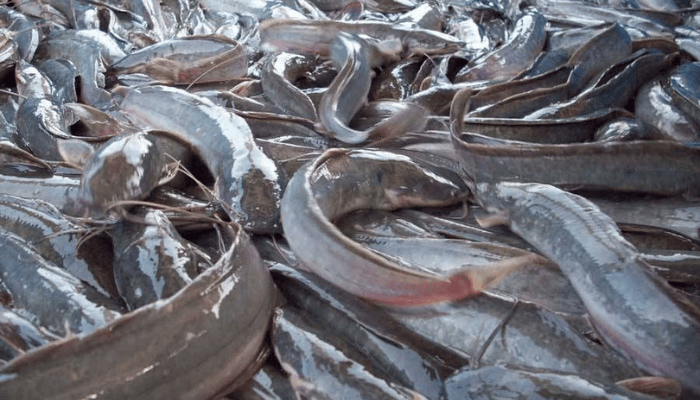
Rising fish feed costs are forcing many fish farmers across Nigeria to adopt insect-based feed as a cheaper and more sustainable alternative, industry operators have said.
Farmers said the soaring cost of conventional aquafeed, particularly fish meal, now accounts for as much as 70 per cent of production expenses, threatening the viability of fish farming businesses.
According to the Food and Agriculture Organisation (FAO), aquafeed accounts for between 50 and 70 per cent of fish production costs.
A fish farmer based in Ibadan, Oyo State, Oyesola Peter, said many producers are now replacing conventional fish meal with insect meal made from cultured earthworms, houseflies and black soldier flies to reduce costs and sustain production.
Speaking exclusively to Daily Sun, Peter said the alternative is already gaining global acceptance, noting that the European Union approved seven insect species for use in aquafeed in 2017.
“We culture insects and gather their larvae/pupae en masse, processing them to replace the most expensive and scarce fish meal.
“It’s working. All we farmers need for sustainable production of animal protein from insects is not much compared to what fish meal has taken from us in the past,” he said.
He added that insect meal can replace between 25 per cent and 100 per cent of soymeal or fishmeal in animal diets without adverse effects, citing a 2014 FAO review on catfish, tilapia, rainbow trout and other fish species, as well as crustaceans, chickens and pigs.
“FAO said fish farming has grown by more than 200 per cent as a result of consumer demand in recent decades,” he said.
Peter also cited research by WorldFish, saying Nigeria produces nearly one million metric tonnes of fish annually, with most of the output consumed locally and about 10 per cent exported.
“Following a great deal of research and practical realities, the price of feeds takes at least 70 per cent of the production cost, from which fish meal plays a pivotal role in determining the success of the venture,” he said.
Other News
He explained that overfishing of anchovies, sardines and other species traditionally processed into fish meal has worsened the supply challenge.
“This indicates that such action is not sustainable as they keep on killing fish to feed animals and aquaculture.
“To this end, research and means of ensuring sustainability have driven some of us to discover a very good protein source as an alternative to the depleting fish meal which is highly expensive now and that is insect meal,” he added.
Peter, however, urged the government, non-governmental organisations and other stakeholders to support fish farmers in adopting alternative feed technologies.
Also speaking, former National Secretary of the Fisheries Cooperative Federation of Nigeria, Usman Shettima, said the high cost of fish feed, which accounts for about 70 per cent of production costs, has compelled many farmers to seek cheaper alternatives.
“Another problem is the lack of modern fishing practices. If we can equip our farmers with modern skills, it would assist us in producing more.
“We also need budgetary allocation from the three tiers of government. We are not happy with what is being captured in the budget. The fish sector is not well recognised. We also have post-harvest losses which also count against us.
“Inadequate data of fisheries. We do not have data to tell us the kind of fish Nigerians want, the quantity and location where the fish are produced. The data of farm fish,” he said.
Chairman of Fish Sellers at Kado Market in the Federal Capital Territory, Ibrahim Mohammed, corroborated the concerns, saying many fish farmers have already embraced insect-based feed to remain in business.
Meanwhile, Bembet Organic Farm, in a training video on alternative fish feeding through maggot farming, said farmers could significantly cut feed costs by combining black soldier fly larvae with conventional feed.
The farm advised fish farmers to adopt a 50-50 feeding ratio using black soldier fly larvae and conventional feed, saying the method enables producers to lower production costs while maintaining profitability.