Follow Us on Google
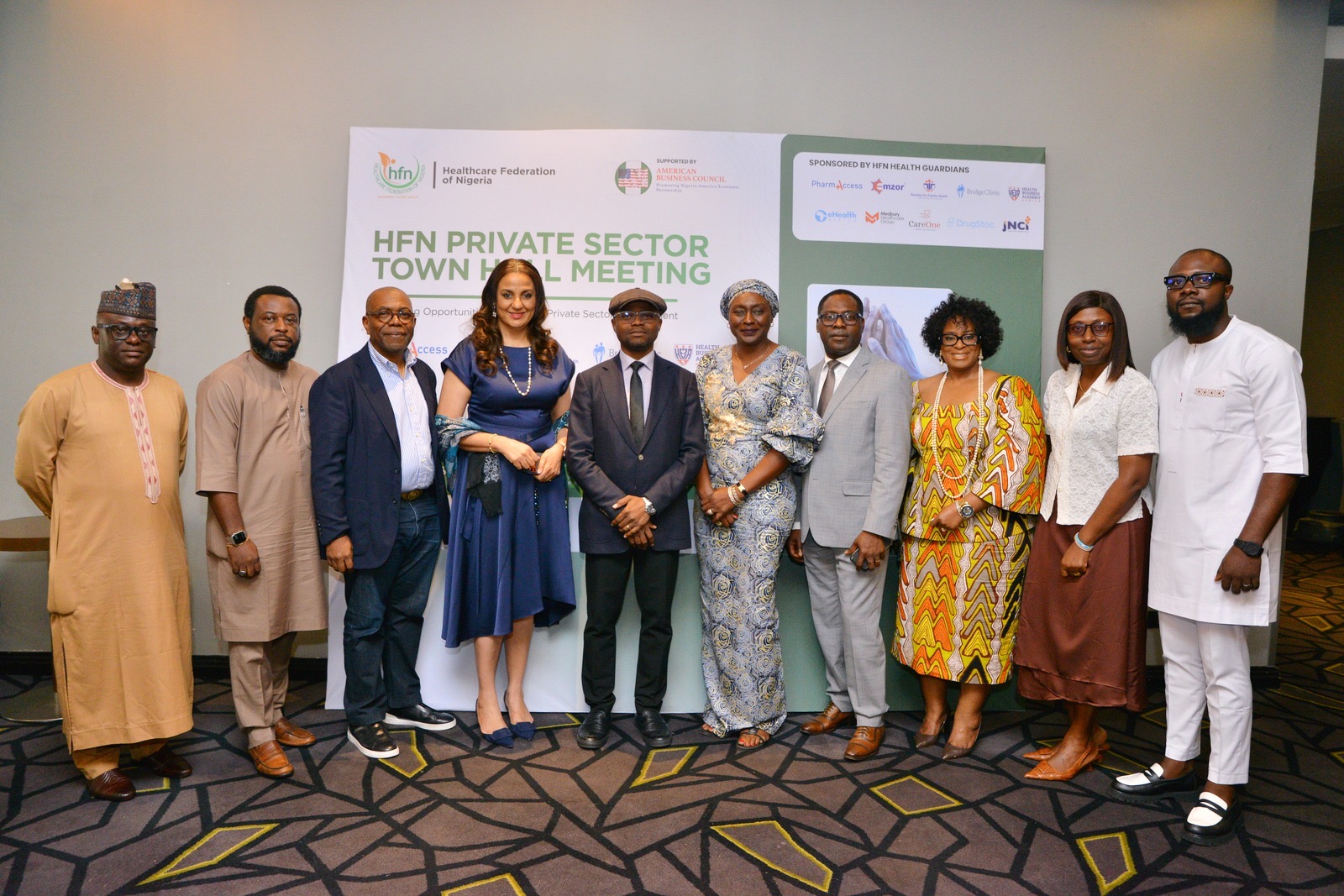
The Healthcare Federation of Nigeria (HFN) has begun a new phase of engagement with the Federal Government on the role of private healthcare providers in the Basic Healthcare Provision Fund (BHCPF), following its appointment as the private-sector representative on the Fund’s Ministerial Oversight Committee.
The development took centre stage at HFN’s Private Sector Town Hall in Lagos on Friday, where government officials, World Bank representatives and private healthcare stakeholders examined how private providers can participate in publicly financed primary healthcare and what changes will be required to make that participation viable.
The discussions focused on practical pathways for private healthcare providers to participate in the BHCPF, with attention to strategic purchasing, provider requirements, reimbursement, quality standards, financing and the integration of private-sector experience into implementation.
Also in attendance were representatives of associations of nurses, private providers, the Association of Local Governments of Nigeria (ALGON), radiologists, Original Equipment Manufacturers (OEMs), the Health and Managed Care Association of Nigeria (HMCAN), and other private-sector representatives.
A key focus was how the BHCPF can move beyond traditional public-sector delivery models to strategically purchase healthcare services from capable providers, creating a framework in which private facilities can contribute to expanding access to publicly financed primary healthcare.
Delivering the keynote address, Senator Dr. Lanre Tejuoso, former Chairman of the Senate Committee on Health and Member of the HFN Board of Trustees, called for a stronger and more deliberate partnership between government and private healthcare organisations in advancing the BHCPF.
He said the private sector brings more than financial resources, pointing to its capacity in technology, innovation, supply-chain management, specialist expertise, data and management systems, and stressed the need for a framework built on clear responsibilities, appropriate incentives and accountability for results. “Perhaps this is one of the most important contributions the private sector can make to the BHCPF: helping government move gradually from buying things to buying results,” he said, citing opportunities in diagnostics, energy, equipment maintenance, medicines and other health services.
Tejuoso added that successful private-sector participation would require greater predictability in how government engages and pays providers and investors. “Government must make public-private partnerships investable, while the private sector must make it valuable,” he said, stressing that both sides must be accountable for their respective commitments and performance.
Speaking on the BHCPF framework and the role of strategic purchasing, Dr. Olumide Okunola, Senior Health Specialist at the World Bank Group, explained that the emerging approach creates a pathway for government to purchase healthcare services from capable providers across both the public and private sectors. He described the shift as significant, noting that “perhaps the most fundamental reform in that guideline is moving the public finance system from a public integrated system to a public contract system.”
Okunola explained that strategic purchasing separates the purchaser from the provider, allowing a purchaser with resources to contract both public and private providers based on defined requirements and services. He also noted that much of the healthcare currently delivered in Nigeria is provided by private-sector organisations, making the question of how that existing capacity can be incorporated into publicly financed healthcare an important part of the BHCPF conversation.
Dr. Uzoma Nwankwo, Lead of the BHCPF MOC Secretariat, said the formal participation of the private sector creates an opportunity to harness the capacity of private providers while strengthening quality and efficiency in the use of BHCPF resources. He emphasised that the immediate task is to understand how the Fund is currently operationalised and identify where private-sector capacity can add value within the existing framework.
For HFN President, Njide Ndili, the Federation’s formal inclusion in the MOC represents a significant development for private-sector participation in publicly financed healthcare. Reflecting on the development, she said, “The BHCPF historically did not make provision for the inclusion of the private sector in healthcare service delivery. So this opens up the gateway for the private sector to actually receive funding from government to provide services, especially for those covered by the equity fund.”
Ndili said HFN’s role is to organise and aggregate the voice of the private healthcare sector, rather than speak only for individual organisations. “HFN is not here to dominate. We’re here to organize our voices,” she said, adding that the Federation’s participation in the MOC gives the private sector a formal platform to present issues affecting providers directly to government and other stakeholders. HFN President, Njide Ndili, will serve as the representative for an initial one-year period.
Ahead of the next MOC meeting on October 6, 2026, HFN will be submitting a memo showcasing private-sector investments and other activities that can strengthen the health delivery system in support of government objectives.
The dialogue that followed brought these issues into sharper focus, with private-sector stakeholders engaging government and development partners on provider accreditation, reimbursement, quality requirements, financing, data, technical capacity and the practical conditions required for sustainable participation in publicly financed healthcare. Participants also raised the importance of strengthening local pharmaceutical and medical manufacturing, technology transfer and domestic capacity to meet Nigeria’s healthcare needs.
The Town Hall marked an early step in HFN’s new role on the BHCPF Ministerial Oversight Committee and provided a platform for government, development partners and private-sector stakeholders to begin addressing the practical questions that will shape that participation.
HFN is a coalition of private healthcare sector stakeholders dedicated to supporting the achievement of Universal Health Coverage through private-sector engagement and activation. HFN works to strengthen the private health sector through advocacy, capacity building, access to finance, strategic partnerships and engagement with government and other stakeholders.